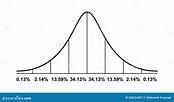
Standard deviation: Definition, Formulas, Uses, and Examples

STANDARD DEVIATION

In statistics, a standard deviation is a measure of the variability of a set of data points. It is also used to measure the spread of data from the average value. In data analysis and interpretation, the study of standard deviation is very essential. The term standard deviation is very helpful to identify unusual data … Read more

Limit of a function: Definition, Types, Properties, and Calculations

limit of a function

In 1861, first-time mathematician Karl Weierstrass defined a limit by using the epsilon-delta. To represent the limit of the function, he used the symbol lim. In 1908, Hardy was the first to use the arrow sign below the limit in the book “A Course of Pure Mathematics”. Derivation, integration, and continuity is some important application … Read more

144 beads were distributed among some children| If there were 3 children fewer each child would have got 16 beads | How many children shared the beads?

Question: 144 beads were distributed among some children. If there were 3 children fewer each child would have got 16 beads . How many children shared the beads?Solution: Let the number of children be x.Therefore if there would be 3 children less then each would have get 16 beads. That means number of children now=x-3 … Read more

1/(1+x^(b-a)+x^(c-a) )+1/(1+x^(a-b)+x^(c-b) )+1/(1+x^(b-c)+x^(a-c) )=1

The text form of this sum (1/ (1+x^(b-a)+x^(c-a) )+(1/(1+x^(a-b)+x^(c-b) )+(1/(1+x^(b-c)+x^(a-c) )=1 is given below. So that students may not get confused with the text form of the sum. Watch video or see this solution:First term: (1/ (1+x^(b-a)+x^(c-a) )=(1/ (1+x^b*x^a)+x^c*x^a))=(x^a/ (x^a+x^b+x^c))Second term: (1/ (1+x^(a-b)+x^(c-b) )=(1/ (1+x^a*x^b)+x^c*x^b))=(x^b/ (x^a+x^b+x^c))Third term: (1/ (1+x^(b-c)+x^(a-c) )=(1/ (1+x^b*x^c)+x^a*x^c))=(x^c/ (x^a+x^b+x^c))ThereforeFirst term+Second term+third term=(x^a/ (x^a+x^b+x^c))+(x^b/ (x^a+x^b+x^c))+(x^c/ (x^a+x^b+x^c))=((x^a+x^b+x^c)/ … Read more