
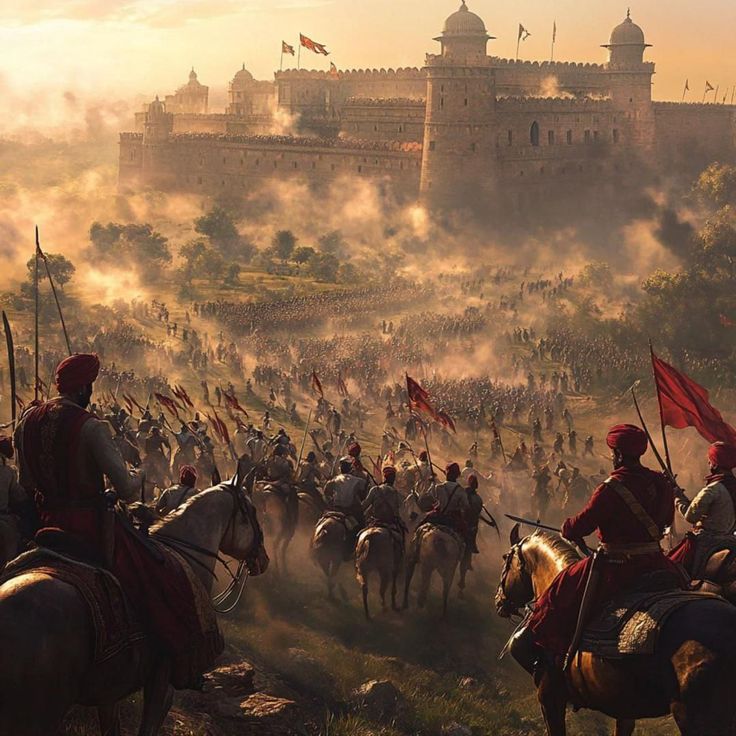
The Revolt of 1857 was a major uprising against British rule in India and marked the first large-scale challenge to colonial authority. It began in Meerut in May 1857 when Indian sepoys in the British army revolted due to political, economic, military, and religious grievances. Unjust land revenue policies, annexation of Indian states, destruction of traditional industries, and discrimination against Indian soldiers created widespread discontent. The immediate cause was the introduction of the Enfield rifle cartridges, which were believed to be greased with cow and pig fat, offending both Hindu and Muslim sentiments. Although the revolt was ultimately suppressed, it exposed the weaknesses of British rule and became a turning point in Indian history, leading to the end of Company rule and the beginning of direct British Crown administration.
Answer the following questions on the chapter of Revolt of 1857-Sepoy Mutiny as per the given instructions:
Fill in the Blanks
- Dinabandhu Mitra wrote the play Nil Darpan.
- The British suppressed the Revolt of 1857 by the beginning of 1859.
- The middle class or educated class kept away from the revolt.
- The British economic policies ruined the artisans and craftsmen.
Write whether the Statements are True or False
- The Rajputs participated in the Revolt of 1857. — False
- The Indians had no avenues of promotion beyond the rank of Subedar. — True
- The British gifted land to the tribal peasants. — False
- The earlier revolts were widespread and powerful. — False
- There were widespread riots against the exploitation of Indigo planters in 1859. — True
Tick the Correct Answer
- The Revolt of 1857 began at:
✅ (c) Meerut - The Vellore Mutiny took place in:
✅ (b) 1806 - Mangal Pandey was hanged in:
✅ (b) April 1857 - The Santhal Revolt occurred in:
✅ (a) 1855–56 - The Doctrine of Lapse was associated with:
✅ (b) Lord Dalhousie
Answer the Following in 1-2 Sentences on Revolt of 1857:
- What were tribal revolts?
Ans: The British annexed large tracts of tribal land for growing cash crops like indigo and jute, which affected the tribals. Their customary rights like forest and pasture rights were taken away. Soon the tribals consolidated their army, and the most legendary tribal revolt was that of the Santhals of Bihar and Bengal in 1855–56.
- Why did tribal revolts take place?
Ans: The tribal revolts took place because the land of the tribals was snatched from them by the British, and their customary rights like forest and pasture rights were forcefully taken away. This was the major reason for the tribal revolts.
- What were the economic causes of the Revolt of 1857?
Ans: The economic causes of the Revolt of 1857 were the introduction of a new land revenue system, destruction of artisans and craftsmen, and the influx of British-manufactured goods into India, which ruined the indigenous industries.
- Discuss a few causes for the failure of the Revolt of 1857.
Ans: Lack of new political ideas, limited uprising, no effective leadership, limited resources, and no participation of the middle classes were a few causes for the failure of the Revolt of 1857.
- Why were the kings and zamindars unhappy with the British?
Ans: The kings and the zamindars were unhappy with the British due to the policies of Subsidiary Alliance, annexation, and Doctrine of Lapse.
- What were the positive results of the revolt?
Ans: The positive results of the revolt were abolition of the Doctrine of Lapse, honouring treaties with Indian states, focus on welfare of the people, no interference in the social and religious customs of the people, promotions based on merit, and an increase in the number of British soldiers in the army.
- Mention the minor revolts prior to the Revolt of 1857.
Ans: The Chuha Rebellion in 1796, Santhal Revolt in Bihar and Bengal in 1855–56, and Vellore Mutiny in 1806 were some minor revolts that took place prior to the Revolt of 1857.
- Why were the peasants and zamindars dissatisfied with the British?
Ans: The peasants and zamindars were dissatisfied with the British because the revenue laws had dispossessed many peasants of their lands. Therefore, the peasants destroyed government records, moneylenders’ accounts and books, police stations, and revenue offices of the British in the countryside.
Explore the Study Guide on Expansion of the British Rule ICSE Class 8 History
Read an essay on History as my favourite subject
Answer the Following in 5-6 Sentences on Sepoy Mutiny-Revolt of 1857:
- State the causes of discontent among the sepoys.
Ans: The discontent among the sepoys was due to the following reasons:
They were considered inferior to English soldiers and subjected to abuse.
An Indian sepoy was paid less than a European sepoy of the same rank.
Indians had no avenues of promotion beyond the rank of Subedar.
The withdrawal of ‘Batta’ (extra pay) for foreign service reduced their income.
In 1856, Lord Canning issued the General Service Enlistment Act which forced sepoys to serve overseas.Sepoys from Awadh, recruited mostly from high castes, disliked such policies due to caste sensitivities.
- What was the immediate cause of the Revolt of 1857?
Ans: The immediate cause of the revolt was the introduction of the Enfield rifle with greased cartridges. These cartridges were rumoured to be greased with cow and pig fat. The caps had to be bitten off, which offended both Hindu and Muslim religious beliefs. The unrest began in Barrackpore and Berhampur. Mangal Pandey rebelled against their use on March 29, 1857, and was hanged on April 8 the same year.
- Why did the middle class stay away from the Revolt of 1857?
Ans: The emerging middle class, which was influential, kept away from the revolt. They believed that British rule could reform and modernise Indian society. The English-educated middle class, rich merchants, traders, bankers, moneylenders, and zamindars of Bengal supported the British.
- The Revolt of 1857 cannot be considered the First War of Independence. Do you agree with this statement? Give reasons to substantiate your answer.
Ans: Yes, I agree that the Revolt of 1857 cannot be considered the First War of Independence because:
Limited Uprising: It was not widespread—Sindh, Rajputana, Kashmir, parts of Punjab, and the South didn’t participate.
No Effective Leadership: Leaders like Tatya Tope and Rani Lakshmibai were brave but few.
Limited Resources: The rebels lacked men, money, and equipment. The British had enough resources and support from England.
No Participation of Middle Class: The educated middle class and elite Indians supported the British instead.
- How were the British affected by the revolts?
Ans: The British were shaken by the intensity and scale of the revolt. It exposed the flaws in their administration and military system. The British Crown took over rule from the East India Company. They restructured the army to avoid similar rebellions. They became more cautious in dealing with Indian customs and society.
- What was the impact of the revolt on the political scenario of our nation?
Ans: The Revolt of 1857 marked the end of the Mughal Empire and Company rule. In 1858, the British Crown took direct control of India through the Government of India Act. A new era of British Raj began with Queen Victoria’s proclamation. The administrative structure was reorganized, and the British began to follow a policy of divide and rule.