The Cholas ICSE Class 9: Complete One-Stop Study Guide for 2026 Exams
INTRODUCTION
Why this chapter matters for your ICSE exams
Imagine a dynasty that ruled for over five centuries, built temples so tall they touched the clouds, created bronze statues that are worshipped even today, and had a village-level government that put modern democracies to shame. That is the Chola Empire – one of the longest-ruling dynasties in world history.
For ICSE Class 9 students, the chapter “The Cholas” is a fascinating journey into South Indian history. It is regularly tested in school exams, prelims, and board papers. Questions about Chola administration (especially village assemblies), the Brihadishwara Temple, and Chola bronze sculptures appear frequently.
In this guide, you will learn:
- ✅ The main sources that tell us about the Cholas – inscriptions, temples, and literature
- ✅ The Brihadishwara Temple – why it is a UNESCO World Heritage Site
- ✅ Names of Chola kings in chronological order (memorize this easily)
- ✅ How the Chola administration worked – from the king to the village council
- ✅ Chola art – bronze sculptures, paintings, and temple architecture
- ✅ 100+ exam-style questions with answers
Let us turn this chapter into your high-scoring revision tool.
CHAPTER OVERVIEW
The Chola dynasty was one of the most powerful and influential dynasties of South India. They ruled from approximately the 9th century CE to the 13th century CE. The Imperial Cholas (the most powerful period) began with Vijayalaya in 850 CE and reached its zenith under Rajaraja Chola I (985–1014 CE) and Rajendra Chola I (1014–1044 CE).
Key themes you will master:
- Sources of Chola history – Inscriptions (the most important), temples, bronzes, and Tamil literature.
- Brihadishwara Temple – The crown jewel of Chola architecture built by Rajaraja I.
- Chronological order of kings – Vijayalaya → Aditya I → Parantaka I → Rajaraja I → Rajendra I → later kings.
- Chola administration – Central government, provincial divisions, and the famous village assemblies (Ur, Sabha, Nagaram).
- Chola art – Temple architecture, bronze sculptures (Nataraja), and mural paintings.
LEARNING OBJECTIVES
After reading this guide, you will be able to:
- ✔ Name the main sources of Chola history and explain their importance.
- ✔ Describe the Brihadishwara Temple – who built it, its features, and its significance.
- ✔ List the important Chola kings in correct chronological order.
- ✔ Explain the Chola administration system – from the king to the Ur and Sabha.
- ✔ Identify the unique features of Chola art, especially bronze sculptures.
- ✔ Answer any ICSE-style question – from 1-mark MCQs to 8-mark long answers.
DETAILED EXPLANATION OF THE CHAPTER
Sources of Chola History – How Do We Know About Them?
Historians rely on different types of sources to reconstruct Chola history. For the Cholas, inscriptions are the most important source because they left behind thousands of engraved records on stone and copper.
1. Inscriptions (The Most Important Source)
The Cholas were master record-keepers. They engraved details of:
- Grants of land to temples and Brahmins
- Tax collection and village administration
- Military victories and conquests
- Temple construction and donations
Famous inscriptions for ICSE:
| Inscription | Location/Details | What it tells us |
|---|---|---|
| Thanjavur Temple Inscriptions | Brihadishwara Temple walls | Detailed accounts of Rajaraja’s administration, donations, and temple staff (400+ inscriptions) |
| Uttaramerur Inscriptions | Kanchipuram district | How village assemblies (Sabha) functioned – election process, qualifications, rules |
| Copper Plate Grants (e.g., Tiruvalangad plates, Anbil plates) | Various locations | Genealogy of Chola kings, land grants, and political history |
Remember This Box ⭐
ICSE often asks: “Why are inscriptions considered the most important source for Chola history?”
Answer: Because they are authentic, contemporary records, and the Cholas engraved thousands of them on temple walls and copper plates.
2. Brihadishwara Temple as a Source
The temple itself is a historical document! Its walls contain over 400 inscriptions that provide details about:
- The extent of the Chola Empire
- The wealth and resources of the temple
- Names of officers, priests, dancers, and musicians employed
- Land measurements and tax rates
3. Other Sources
- Bronze Sculptures: Chola bronzes (especially Nataraja) tell us about religious beliefs, metallurgy skills, and artistic achievements.
- Tamil Literature: Kalingattuparani (poem about Rajendra Chola’s victory over Kalinga), Periyapuranam (saint’s lives).
- Accounts of Foreign Travellers: Chinese and Arab traders described Chola ports and trade.
Did You Know? The Cholas had a special department for engraving inscriptions – like a government printing press of ancient times!
The Brihadishwara Temple – Crown Jewel of Chola Architecture
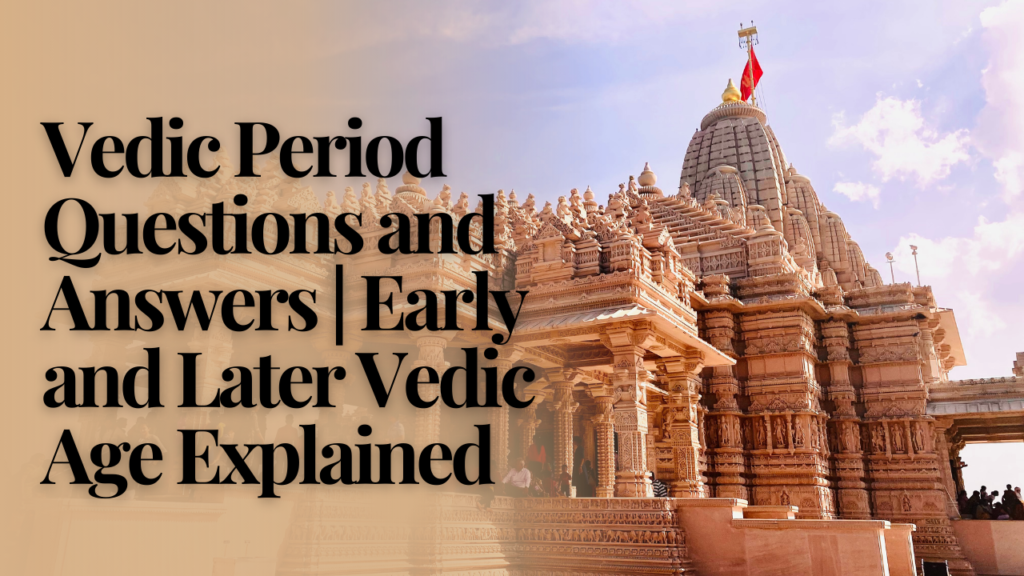
The Brihadishwara Temple (also called Rajarajesvaram or Peruvudaiyar Kovil) is located at Thanjavur (Tanjore), Tamil Nadu. It was built by Rajaraja Chola I in 1010 CE.
Why is it famous?
- UNESCO World Heritage Site (Great Living Chola Temples group)
- One of the largest temples in India
- The vimana (tower over sanctum) is 216 feet (66 metres) tall – one of the tallest in the world
- The top of the vimana is a single piece of granite weighing approximately 80 tonnes
- Built entirely of granite – no mortar used! Stones were interlocked
Key architectural features:
| Feature | Description |
|---|---|
| Vimana | Pyrarmid-shaped tower over the main shrine; 13 storeys |
| Nandi (sacred bull) | Massive monolithic statue of Nandi at the entrance (16 feet long, 13 feet high) |
| Sanctum (Garbhagriha) | Houses a huge Shiva lingam (12 feet tall) |
| Mandapas | Pillared halls for worship and gatherings |
| Fresco paintings | Chola murals on the walls – later overpainted by Nayakas but recently restored |
| Inscriptions | 400+ inscriptions on the temple walls – a historical archive |
Exam Tip: Always mention the height (216 ft), the single-piece granite top (80 tonnes), and that it was built by Rajaraja I in 1010 CE.
Names of Chola Kings in Chronological Order
For ICSE Class 9, you need to know the Imperial Cholas (from Vijayalaya onwards). Here is the correct chronological sequence:
| S. No. | King | Reign Period (approx.) | Key Achievement |
|---|---|---|---|
| 1 | Vijayalaya | 850–871 CE | Founded the Imperial Chola dynasty; captured Thanjavur |
| 2 | Aditya I | 871–907 CE | Defeated the Pallavas and Pandyas; built many Shiva temples |
| 3 | Parantaka I | 907–955 CE | Captured Madurai; known for gold-plated roof of Chidambaram temple |
| 4 | Sundara Chola (Parantaka II) | 957–970 CE | Revived Chola power after a brief decline |
| 5 | Rajaraja Chola I | 985–1014 CE | Greatest Chola ruler – built Brihadishwara Temple; conquered Kerala, parts of Karnataka, northern Sri Lanka |
| 6 | Rajendra Chola I | 1014–1044 CE | Son of Rajaraja; conquered up to Ganga (took title Gangaikonda Chola); built new capital Gangaikonda Cholapuram; sent naval expedition to Srivijaya (Indonesia) |
| 7 | Later Cholas | 1044–1279 CE | Empire declined gradually; ended by the Pandyas in 1279 CE |
Mnemonic to remember the order: “Very Angry People Should Respect Rajarajendra”
- V – Vijayalaya
- A – Aditya I
- P – Parantaka I
- S – Sundara Chola
- R – Rajaraja I
- R – Rajendra I
Remember This Box ⭐
Trick: All ICSE questions will focus on Rajaraja I (temple builder) and Rajendra I (naval expedition, Gangaikonda Cholapuram). Do not mix them up!
Chola Administration – How Did They Rule?
The Chola administration is famous for being highly organised, efficient, and decentralised. Unlike the Mauryan Empire which was very centralised, the Cholas gave significant power to local bodies.
Levels of Administration (from top to bottom)
| Level | Name | Description |
|---|---|---|
| 1 | King (Emperor) | Supreme head – called Rajakesarivarman and Parakesarivarman. Advised by ministers and court officials. |
| 2 | Mandalam | Province – there were 9 mandalams (example: Chola Mandalam, Kongu Mandalam) |
| 3 | Valanadu | Division (Commissionary) – several valanadus in each mandalam |
| 4 | Nadu | District – looked after by Nattar (district assembly) |
| 5 | Kurram | Sub-district / group of villages |
| 6 | Gramam | Village – with three types of village assemblies (explained below) |
The Most Unique Feature – Village Assemblies (Local Self-Government)
This is a favourite ICSE topic. The Cholas had three types of village assemblies:
| Assembly | Meaning | Where found | Features |
|---|---|---|---|
| Ur | General village assembly | Ordinary villages | All adult men; managed village affairs, tanks, roads, temples |
| Sabha | Assembly of Brahmins | Brahmadeya villages (villages donated to Brahmins) | Exclusive to Brahmin men; elected committees; managed education, temples, irrigation |
| Nagaram | Merchant/trade assembly | Towns and trading centres | Looked after trade, markets, and tolls |
Uttaramerur Inscriptions – The Election Manual
The famous Uttaramerur inscriptions (near Kanchipuram) describe how the Sabha elections were conducted. Rules included:
- Members must own at least a certain amount of land
- They must know Vedas and be well-versed in administration
- They must not be above 70 years or below 35 years
- They cannot have been on any committee for the past 3 years
- Names were written on palm leaves and picked by a young boy
Why was this system so advanced?
- It allowed people to participate directly in governance.
- It prevented corruption through strict qualifications.
- It kept the central government free to focus on military and foreign affairs.
- It is considered one of the earliest democratic, decentralised systems in the world.
Army and Navy
- The Chola army was well-organised with infantry, cavalry, elephants, and chariots.
- They had a powerful navy – the first Indian dynasty to project naval power across the seas. Rajendra I sent a naval expedition to Srivijaya (Indonesia).
Revenue System
- Land revenue was the main source – usually one-third of the produce.
- Detailed land surveys were conducted.
- Tax was collected in cash or kind (rice, grain, gold).
- Inscriptions record every transaction – no black money!
Common Mistake: Students often confuse Ur and Sabha. Remember: Sabha = Brahmin only villages. Ur = ordinary villages.
Chola Art – Architecture, Sculpture, and Painting
Chola art is considered the golden age of South Indian art. ICSE focuses on three forms:
1. Temple Architecture (Dravidian Style)
Features of Chola temple architecture:
- Vimana – Tall, pyramidal tower over the sanctum (Brihadishwara is the best example)
- Gopuram – Ornate gateway towers (later Chola period)
- Mandapa – Pillared halls for rituals
- Nandi mandapa – Separate pavilion for the bull
- Walls decorated with inscriptions and sculptures
Famous Chola temples for ICSE:
- Brihadishwara Temple, Thanjavur (built by Rajaraja I) – UNESCO site
- Gangaikonda Cholapuram Temple (built by Rajendra I) – smaller than Thanjavur but equally artistic
- Airavatesvara Temple, Darasuram (built by Rajaraja II) – UNESCO site
2. Bronze Sculptures – Masterpieces of Chola Art
The Cholas perfected the lost-wax (cire perdue) process to create beautiful bronze statues. The most famous is Nataraja (Lord Shiva as the cosmic dancer).
Features of Chola bronzes:
- Made using the lost-wax technique – a wax model is covered in clay, wax is melted out, and molten metal is poured in
- Many statues have stone equivalents in temples – bronzes were used for processions
- Extremely detailed – every finger, ornament, and expression is perfectly carved
- The Nataraja represents Shiva dancing the Tandava (cosmic dance of creation and destruction)
Symbolism of Nataraja (popular source-based question):
| Element | Meaning |
|---|---|
| Ring of fire | Cosmic cycle of creation and destruction |
| Drum in upper right hand | Sound of creation |
| Flame in upper left hand | Destruction |
| Fear-not gesture (Abhaya mudra) in lower right | Protection |
| Dwarfed figure under foot | Ignorance (Apasmara) |
3. Chola Paintings
- Fresco paintings on temple walls (Brihadishwara Temple)
- Depicted scenes from Shaivism and mythology
- Later overpainted by Nayaka rulers, but some have been restored
Did You Know? The Chola bronze of Nataraja from the 11th century is considered the most perfect representation of cosmic dance in any art form worldwide. A replica sits at CERN (European nuclear research centre) in Switzerland!
EXAM-ORIENTED STUDY MATERIAL
Important Dates and Events
- 850 CE – Vijayalaya founds the Imperial Chola dynasty
- 985 CE – Rajaraja I becomes king
- 1010 CE – Completion of Brihadishwara Temple, Thanjavur
- 1014 CE – Rajendra I becomes king
- 1023 CE – Rajendra I’s expedition to the Ganges
- 1025 CE – Rajendra I’s naval expedition to Srivijaya (Indonesia)
- 1279 CE – End of Chola dynasty (defeated by Pandyas)
Important Terms and Definitions
| Term | Meaning |
|---|---|
| Vimana | Pyramidal tower over the sanctum of a South Indian temple |
| Mandalam | Province (top-level administrative division) |
| Valanadu | Division (second-level administration) |
| Nadu | District (third-level) |
| Kurram | Sub-district (group of villages) |
| Gramam | Village |
| Ur | General village assembly (ordinary villages) |
| Sabha | Brahmin village assembly (Brahmadeya villages) |
| Nagaram | Merchant/trade assembly |
| Brahmadeya | Land donated to Brahmins (tax-free) |
| Devadana | Land donated to a temple |
| Muvendavelans / Nattar | District-level officers |
Important Personalities with Roles
| Personality | Role/Achievement |
|---|---|
| Vijayalaya | Founder of Imperial Chola dynasty; captured Thanjavur |
| Aditya I | Defeated Pallavas and Pandyas; built many temples |
| Parantaka I | Captured Madurai; gold-plated roof of Chidambaram |
| Rajaraja Chola I | Built Brihadishwara Temple; conquered Kerala, Sri Lanka, parts of Karnataka |
| Rajendra Chola I | Gangaikonda Chola; built Gangaikonda Cholapuram; naval expedition to Srivijaya |
| Kundavai | Sister of Rajaraja I; patron of arts and temples |
Timeline of Events
850 CE   ─► Vijayalaya conquers Thanjavur
907 CE   ─► Parantaka I becomes king
985 CE   ─► Rajaraja I ascends throne
1010 CE  ─► Brihadishwara Temple completed
1014 CE  ─► Rajendra I becomes king
1023 CE  ─► Rajendra’s Ganga expedition
1025 CE  ─► Naval expedition to Srivijaya
1279 CE  ─► Chola dynasty ends
Flowchart: Chola Administration
                    King (Emperor)
                           │
                ┌──────────┴──────────┐
                │    Ministers &       │
                │   Court Officials    │
                └──────────┬──────────┘
                           │
                    Mandalam (Province)
                    (9 provinces)
                           │
                    Valanadu (Division)
                           │
                     Nadu (District)
                     (Nattar - district officers)
                           │
                     Kurram (Sub-district)
                           │
                ┌──────────┴──────────┐
                │                     │
            Gramam (Village)      Towns
                │                     │
        ┌───────┼───────┐            Nagaram
        │       │       │        (Merchant assembly)
        Ur     Sabha   (Mixed)
    (General) (Brahmin)
Mnemonic for Village Assemblies
“U.S. Nagar” – Ur, Sabha, Nagaram (three types of Chola village assemblies).
Comparison Table: Cholas vs. Mauryas (Important for ICSE)
| Aspect | Cholas | Mauryas |
|---|---|---|
| Region | South India (Tamil Nadu) | North India (Gangetic plains) |
| Nature of administration | Decentralised; strong local bodies | Highly centralised |
| Village assemblies | Ur, Sabha, Nagaram – elected committees | Gramika (headman appointed by state) |
| Main source of history | Temple inscriptions (Brihadishwara, Uttaramerur) | Ashokan edicts, Arthashastra |
| Art form specialisation | Bronze sculptures (Nataraja), Dravidian temples | Pillars (Sarnath Lion Capital), Stupas |
| Navy | Powerful navy – reached Indonesia | No significant navy |
Summary Notes for Quick Revision (One Page)
- Sources: Inscriptions (most important – Uttaramerur, Thanjavur), Brihadishwara Temple, bronze sculptures, Tamil literature.
- Brihadishwara Temple: Built by Rajaraja I (1010 CE), Thanjavur. 216 ft vimana, single-piece granite top (80 tonnes). UNESCO site.
- Chronology: Vijayalaya → Aditya I → Parantaka I → Sundara Chola → Rajaraja I → Rajendra I.
- Rajaraja I: Temple builder, conquered Kerala, Sri Lanka, Karnataka.
- Rajendra I: Gangaikonda Chola, new capital Gangaikonda Cholapuram, navy to Srivijaya.
- Administration: Mandalam → Valanadu → Nadu → Kurram → Gramam. Village assemblies: Ur (ordinary), Sabha (Brahmin), Nagaram (merchant).
- Art: Dravidian temple architecture, lost-wax bronze statues (Nataraja), fresco paintings.
QUESTIONS & ANSWERS SECTION (MASSIVE BANK)
Very Short Answer Questions (1 Mark)
Q1. Who built the Brihadishwara Temple?
Ans. Rajaraja Chola I.
Q2. Where is the Brihadishwara Temple located?
Ans. Thanjavur (Tanjore), Tamil Nadu.
Q3. In which year was the Brihadishwara Temple completed?
Ans. 1010 CE.
Q4. What is the height of the Brihadishwara temple’s vimana?
Ans. 216 feet (66 metres).
Q5. Who founded the Imperial Chola dynasty?
Ans. Vijayalaya.
Q6. What title did Rajendra Chola I take after his Ganga expedition?
Ans. Gangaikonda Chola.
Q7. Who built the new capital Gangaikonda Cholapuram?
Ans. Rajendra Chola I.
Q8. Name the most famous Chola bronze sculpture.
Ans. Nataraja (Shiva as the cosmic dancer).
Q9. What is the lost-wax technique?
Ans. A method of making metal sculptures (bronze) using a wax model that is melted away.
Q10. Which inscription describes the working of the village Sabha?
Ans. Uttaramerur inscriptions.
Q11. What was the main source of revenue for the Cholas?
Ans. Land revenue (usually one-third of produce).
Q12. Name the three types of village assemblies in the Chola Empire.
Ans. Ur, Sabha, and Nagaram.
Q13. To which country did Rajendra Chola I send a naval expedition?
Ans. Srivijaya (Indonesia).
Q14. What is a Brahmadeya village?
Ans. A village donated tax-free to Brahmins.
Q15. Which Chola king defeated the Pallavas and Pandyas?
Ans. Aditya I.
Short Answer Questions (2–3 Marks)
Q16. Why are inscriptions considered the most important source for Chola history?
Ans. Inscriptions are authentic contemporary records. The Cholas engraved thousands of inscriptions on temple walls and copper plates. They record land grants, temple donations, tax details, village administration, and military victories. The Uttaramerur inscriptions even describe election procedures – information not found in any other source.
Q17. What are the main features of the Brihad
FAQ Schema Questions with Answers (Chola Empire)
1. Who founded the Chola Empire?
Vijayalaya Chola founded the Imperial Chola Empire in the 9th century CE. He captured Thanjavur and established Chola power in South India.
2. What is the Brihadishwara Temple famous for?
Brihadishwara Temple is famous for its magnificent Dravidian architecture, massive vimana (tower), detailed sculptures, and beautiful frescoes. It is also a UNESCO World Heritage Site and one of the finest examples of Chola architecture.


3. Who built the Brihadishwara Temple?
Rajaraja I built the Brihadishwara Temple at Thanjavur around 1010 CE to demonstrate the glory and power of the Chola Empire.
4. What were the main sources of Chola history?
The main sources of Chola history include inscriptions, copper plates, temple records, literature, and foreign accounts. Tamil inscriptions found in temples provide detailed information about administration, taxation, trade, and social life during the Chola period.
5. How was the Chola administration organized?
The Chola administration was highly organized and efficient. The empire was divided into provinces called mandalams, which were further divided into districts, villages, and local units. The Cholas maintained a strong central administration while allowing local self-government through village assemblies.
6. What are the features of Chola art?
Chola art is famous for bronze sculptures, temple architecture, stone carvings, and paintings. The bronze statues of Shiva as Nataraja are considered masterpieces of Indian art. Chola temples also featured detailed sculptures and grand architectural designs.


7. What was the role of village assemblies (Ur and Sabha) in the Chola Empire?
Village assemblies such as the Ur and Sabha played an important role in local administration. They managed village affairs, collected taxes, maintained irrigation systems, settled disputes, and supervised public works. These assemblies show that the Cholas had an advanced system of local self-government.
8. Who was the greatest Chola ruler?
Rajaraja I is considered the greatest Chola ruler because he expanded the empire, strengthened administration, promoted trade, and built the famous Brihadishwara Temple. His reign marked the peak of Chola power and cultural achievement.