
Tribals, Dikus and the Vision of a Golden Age Class 8: Complete Notes, Important Questions, and Revision Guide
If you are preparing for Class 8 History exams, this chapter is one of the most important ones to understand clearly. It explains tribal life, colonial interference, the meaning of dikus, and Birsa Munda’s struggle for a better future.
This chapter is not just about facts. It helps students understand how forests, land, identity, and power changed under colonial rule. That is why it is a common topic for board-style questions, revision notes, PDFs, MCQs, and short-answer practice.
Chapter Overview
This chapter focuses on tribal communities in India, especially how they lived, worked, and reacted to British colonial policies. It also explains how tribal people saw outsiders such as moneylenders, traders, landlords, missionaries, and the British as dikus—people who disrupted their lives.
The chapter ends with the inspiring story of Birsa Munda, who imagined a “golden age” for the Mundas, a time when tribal society would be pure, just, and free from exploitation. For board exam students, the chapter is important because it combines social history, tribal movements, and colonial impact in one unit.
Historical Background
Before British rule became powerful, tribal communities had their own ways of life, customs, and local leadership systems. Many tribes depended on forests for food, shelter, medicine, grazing, hunting, and shifting cultivation.
British rule changed this balance. Forest laws restricted tribal movement, landlords and moneylenders increased pressure, and commercial interests took over land and resources. These changes created deep anger among tribals and led to many revolts.
Detailed Explanation of the Chapter
Who were the tribals?
Tribals were communities that lived in close connection with forests, hills, and local natural resources. They did not all live the same way. Some were shifting cultivators, some were hunter-gatherers, some were herders, and some practiced settled cultivation.
This diversity is important for students to remember. In exam answers, do not write that all tribals lived in the same way. Instead, mention the different occupations and environments.
Different ways of tribal life
The Khonds of Odisha lived mainly by hunting and gathering forest products. The Gaddis of the Himalayas were shepherds, while some tribal groups in central and eastern India practiced jhum cultivation.
Jhum cultivation means shifting cultivation. In this method, a patch of forest land is cleared, burnt, and used for farming for a short period. After the soil loses fertility, people move to another area and repeat the process.
Meaning of “dikus”
The word dikus referred to outsiders who were seen as exploiters by tribal communities. These included traders, moneylenders, landlords, missionaries, and colonial officials.
Tribals believed these outsiders took away their land, charged unfair interest, pushed them into debt, and disturbed their traditional way of life. In school exams, this is often asked as a “why were dikus hated?” question.
British control over forests
The British wanted forests for timber, railway lines, and revenue collection. They declared many forests as state property and restricted tribal access to them.
This caused serious problems for shifting cultivators, who needed free movement within forests. When they were stopped from entering forests, their farming and survival systems were badly affected.
Why tribal chiefs lost power
Before colonial rule, tribal chiefs had local authority and controlled land, forest use, and community rules. Under British rule, their power was reduced because the British wanted direct control over resources and people.
The chiefs were still kept in place in some areas, but they had to obey colonial laws and collect revenue. This made them less powerful than before and weakened traditional tribal leadership.
British policies and tribal hardship
The British introduced land settlements and taxes in tribal areas. They also encouraged settled farming because it was easier to control than shifting cultivation.
This caused conflict because many tribal communities could not easily adapt to plough cultivation. In many places, tribals were forced to work in tea plantations, coal mines, or as laborers when their forest-based life collapsed.
Tribal resistance
Tribals did not remain silent. They resisted through local rebellions, attacks on outsiders, and reform movements. Some revolts tried to remove the dikus, while others tried to restore older ways of life.
These uprisings are important because they show that tribal communities had their own political ideas and did not accept colonial domination quietly. This is a frequent board-exam theme.
Birsa Munda and the vision of a golden age
Birsa Munda is the most important personality in this chapter. He belonged to the Munda tribe of Chotanagpur and became a leader who inspired people to reform society and fight oppression.
Birsa’s idea of a golden age was a remembered past when the Mundas lived peacefully, cultivated their land, respected each other, and were not controlled by outsiders. He asked people to stop drinking liquor, give up superstition, and clean their villages.
This vision appealed to tribals because it gave them hope, identity, and a dream of justice. In exam answers, connect Birsa’s ideas with social reform and anti-colonial resistance.
Important Dates and Events
19th century: British forest laws began affecting tribal life.
1831-32: Kols revolt.
1855: Santhal rebellion.
1870s: Birsa Munda was born in Chotanagpur.
1895: Birsa was arrested.
1897: Birsa was released and resumed his movement.
1900: Birsa died of cholera.
1930s: Forest satyagraha in Central Provinces.
Important Personalities
Birsa Munda: Tribal reformer and freedom fighter.
Verrier Elwin: Studied tribal life and recorded Baiga songs.
British officials: Introduced forest and land policies that harmed tribals.
Tribal chiefs: Local leaders whose powers were reduced under colonial rule.
Timeline of Events
Early 19th century: British expansion in tribal areas – Began land and forest control
1831-32: Kols revolt – Early tribal resistance
1855: Santhal rebellion – Major anti-colonial uprising
1870s: Birth of Birsa Munda – Future tribal leader
1895: Birsa arrested – British feared his influence
1897: Birsa’s movement revived – Tribal mobilization continued
1900: Birsa died – Movement became legendary
Causes and Effects
Causes of tribal unrest
Loss of forest rights.
Heavy taxes and debt.
Interference by traders and moneylenders.
Weakening of tribal chiefs.
Cultural intrusion by missionaries and colonial officials.
Effects of colonial policies
Tribals lost land and forest access.
Many became laborers in plantations and mines.
Tribal revolts increased.
Birsa’s movement became a symbol of tribal identity and resistance.
Key Terms and Definitions
Tribal: A community living in close relation with forests, hills, or local nature.
Dikus: Outsiders seen as exploiters by tribals.
Jhum cultivation: Shifting cultivation where land is moved after fertility drops.
Golden age: An ideal past of justice and harmony imagined by Birsa.
Forest satyagraha: Non-violent protest against forest laws.
Important Questions and Answers
MCQs
1. What does “dikus” mean?
A. Friends
B. Outsiders
C. Farmers
D. Teachers
Answer: B. Outsiders
2. Birsa belonged to which tribe?
A. Gonds
B. Mundas
C. Santhals
D. Khonds
Answer: B. Mundas
3. What is jhum cultivation?
A. Rice terrace farming
B. Shifting cultivation
C. Permanent farming
D. Cash crop farming
Answer: B. Shifting cultivation
4. Which book gives NCERT-style answers for this chapter?
Answer: NCERT chapter solutions and notes are commonly used for practice.
Very Short Answers
1. Who were the dikus?
Answer: Traders, moneylenders, landlords, missionaries, and British officials who exploited tribals.
2. Why did the British want tribals to settle down?
Answer: Because settled cultivators were easier to control and tax.
3. Who was Birsa Munda?
Answer: A tribal leader from the Munda community who led a reform and resistance movement.
Short Answers
1. How did forest laws affect shifting cultivators?
Answer: Forest laws restricted movement, stopped access to forest land, and made shifting cultivation difficult.
2. Why were tribal chiefs weakened?
Answer: Their administrative powers were reduced, and they had to obey British rules and collect revenue.
3. What was Birsa’s message to his followers?
Answer: He asked them to give up liquor, superstition, and dirty habits, and to rebuild a just tribal society.
Long Answers
1. Explain the impact of colonial rule on tribal life.
Answer: Colonial rule changed tribal life in many ways. The British controlled forests, introduced taxes, encouraged settled farming, and allowed outsiders to exploit tribals. Tribal chiefs lost power and many tribal people were forced into wage labor in plantations and mines. These changes destroyed traditional systems and created anger, which led to revolts and reform movements like Birsa’s.
2. Describe Birsa Munda’s vision of a golden age.
Answer: Birsa imagined a golden age in which the Mundas lived honestly, worked on their land, and followed pure habits. He wanted people to stop drinking liquor, reject witchcraft, and rebuild a community free from exploitation. His idea was powerful because it connected social reform with freedom from colonial control.
Assertion and Reason
Assertion: Tribals opposed the British forest laws.
Reason: Forest laws reduced their access to land and resources.
Answer: Both are true, and the reason correctly explains the assertion.
Source-Based Question
Source idea: A song lamenting taxes and hardship under British rule.
Question: What does such a song tell us about tribal life?
Answer: It shows that tribals suffered under taxation, loss of land, and outside control, and that they expressed their pain through songs and oral traditions.
Competency-Based Question
Why did Birsa’s movement become more than a protest?
Answer: Because it was not only against British rule but also a call to reform tribal society, restore dignity, and create a better future.
Previous Year Board Questions
UP Board
Explain the meaning of “dikus” and why tribals disliked them.
Describe the impact of forest laws on tribals.
Bihar Board
Write short notes on Birsa Munda.
What was jhum cultivation?
RBSE
Why did tribal chiefs lose power under British rule?
Explain the golden age idea of Birsa.
MP Board
Trace the causes of tribal revolts in British India.
Give a timeline of major tribal movements.
Important Exam Notes
Always define dikus before explaining tribal anger.
Use 3-part answers: cause, change, effect.
Mention Birsa Munda in almost every long answer on tribal resistance.
For 2-mark answers, write in short bullets and keep the language simple.
For 5-mark answers, include both colonial policies and tribal response.
Common Mistakes Students Make
Thinking all tribals lived the same way.
Writing only about Birsa and forgetting forest laws.
Confusing jhum cultivation with plough cultivation.
Forgetting that missionaries were also seen as dikus.
Missing the connection between forest rights and livelihood.
Memory Tricks and Mnemonics
Dikus = outsiders who disturbed tribal life.
Jhum = Jump to another field after the soil loses fertility.
Birsa = reform + resistance + golden age.
Remember tribal life with H-H-H-S: Hunting, Herding, Harvesting, Shifting cultivation.
Chapter Summary / Quick Revision Notes
Tribals lived in forests, hills, and remote areas.
Dikus were outsiders seen as exploiters.
British forest laws hurt tribal livelihoods.
Tribal chiefs lost authority under colonial rule.
Birsa Munda led a reform movement and imagined a golden age.
Tribal resistance included protests, revolts, and reform movements.
FAQs
What is the meaning of dikus in Class 8 History?
Dikus means outsiders such as moneylenders, traders, landlords, missionaries, and British officials who were seen as exploiters by tribals.
Why is Birsa Munda important?
Birsa Munda became a symbol of tribal reform and resistance against colonial injustice.
What is jhum cultivation?
It is shifting cultivation in which people clear a patch of land, use it, and then move to another area later.
Why did tribals revolt against the British?
They revolted because of land loss, forest restrictions, taxes, and exploitation by outsiders.
What was Birsa’s golden age?
It was his vision of a peaceful and just tribal society free from exploitation and bad habits.
Conclusion
This chapter is important because it helps you understand how colonial rule changed tribal life and why resistance movements grew. If you revise the timeline, key terms, and Birsa Munda’s ideas, you will be well prepared for board exams and school tests.
Suggested Internal Links
/class-8-history-chapter-3-notes
/class-8-history-important-questions
/tribal-revolts-in-india-notes
/birsa-munda-important-questions
/class-8-history-pdf-notes
Suggested Image Ideas
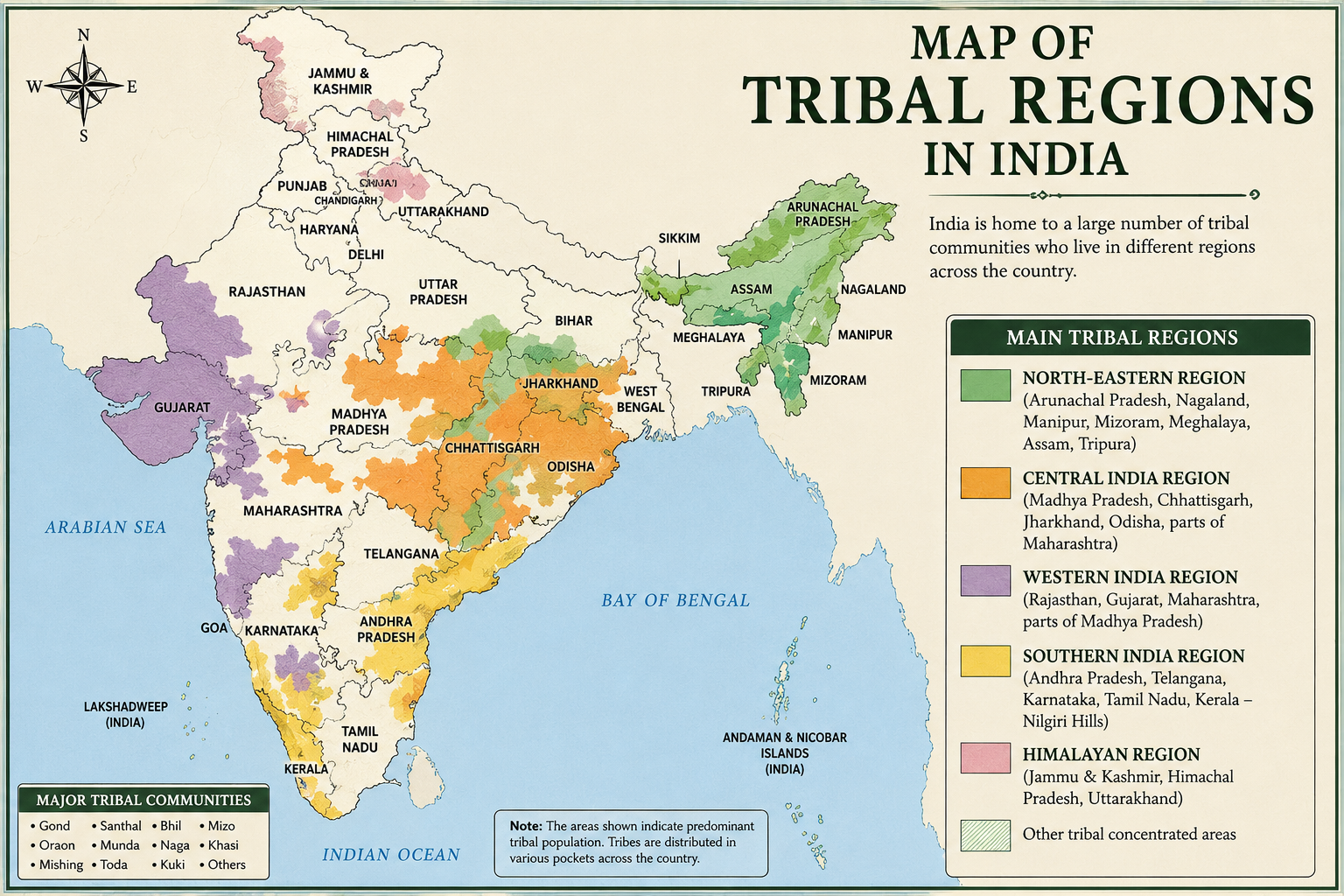
1. Map of tribal regions in India.
2. Birsa Munda portrait or illustration.
3. Diagram of jhum cultivation steps.
4. Infographic showing “tribals vs dikus.”
5. Timeline of tribal revolts.
Suggested Schema Markup Opportunities
FAQPage schema for the FAQs.
Article schema for the blog post.
HowTo schema for revision steps.
BreadcrumbList schema for navigation.
VideoObject schema if you add a teaching video.
ImageObject schema for infographic and image SEO.
External Authoritative Reference Suggestions
NCERT textbook chapter PDF.
NCERT-style solution pages for practice.
Museum or history archive pages on Birsa Munda.
Government education portals for class notes and revision material.