Women, Caste and Reform | Class 8 History Notes, Summary & Exam Questions
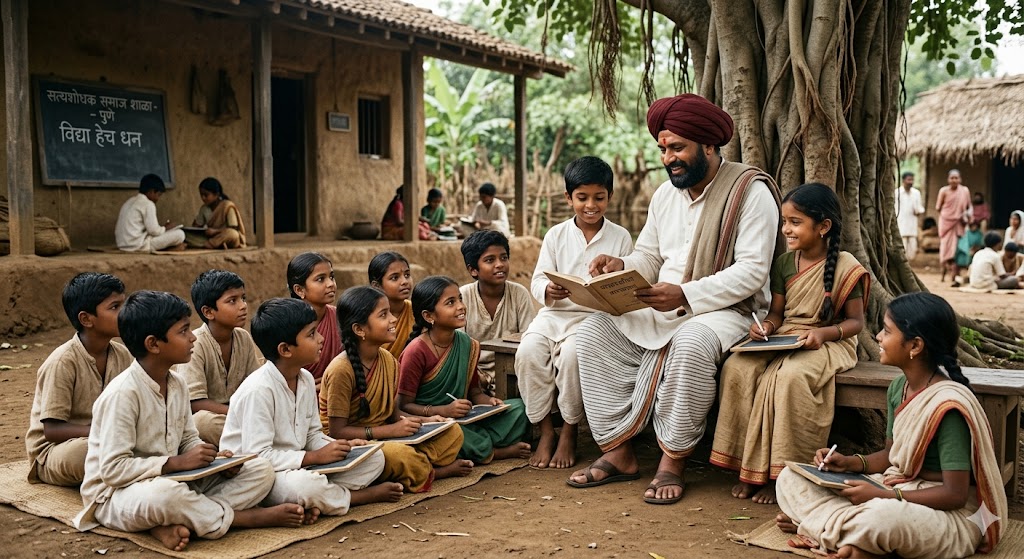
An image depicting the 19th-century Indian social reformer Mahatma Jyotiba Phule teaching a group of young, diverse children in an outdoor village school setting. Jyotiba Phule, wearing a traditional white dhoti, kurta, a shawl, and a prominent maroon turban, sits on a wooden bench under a large banyan tree, smiling as he holds an open book. Around him, boys and girls sit attentively on the ground and on benches, holding small slate boards and chalk, engaged in learning. The background features simple mud houses, a thatched roof structure, and a blackboard with Marathi script written on it, evoking the historic atmosphere of early social reform and education in rural Maharashtra.

  Women, Caste and Reform – Class 8 History Introduction This chapter highlights the social reform movements in 19th and 20th century India. It focuses on how reformers challenged practices like child marriage, sati, caste discrimination, and lack of education for women. For UP Board, Bihar Board, RBSE, MP Board, Jharkhand Board, Chhattisgarh Board, Haryana … Read more
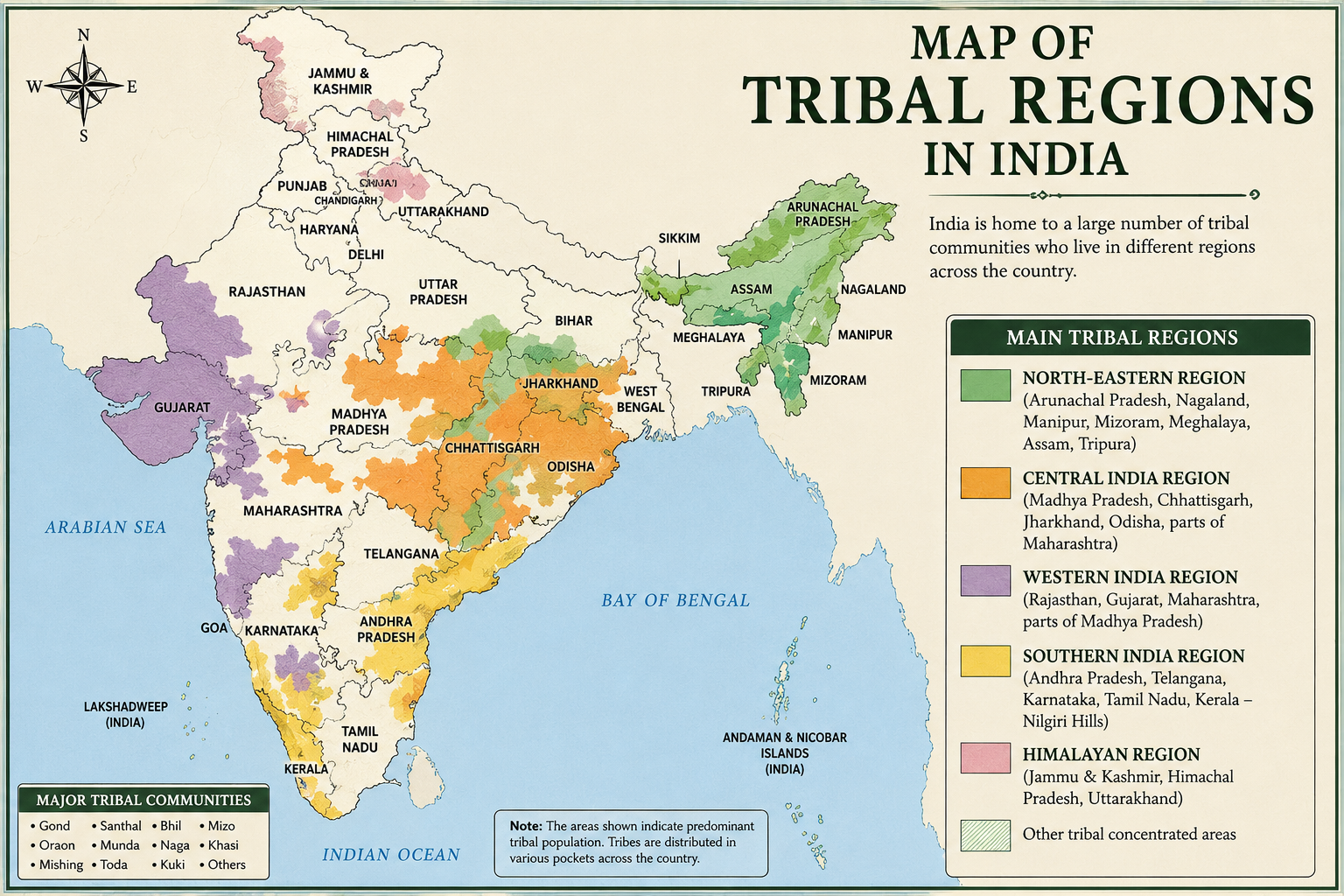
Tribals, Dikus and the Vision of a Golden Age Class 8: Complete Notes, Important Questions, and Revision Guide

Illustrated map of India highlighting major tribal regions and indigenous communities across central, northeastern, eastern, and southern parts of the country.

Tribals, Dikus and the Vision of a Golden Age Class 8: Complete Notes, Important Questions, and Revision Guide If you are preparing for Class 8 History exams, this chapter is one of the most important ones to understand clearly. It explains tribal life, colonial interference, the meaning of dikus, and Birsa Munda’s struggle for a … Read more

How, When and Where Class 8 Notes: History Chapter 1 PDF (UP Board, MP Board Exam Guide)

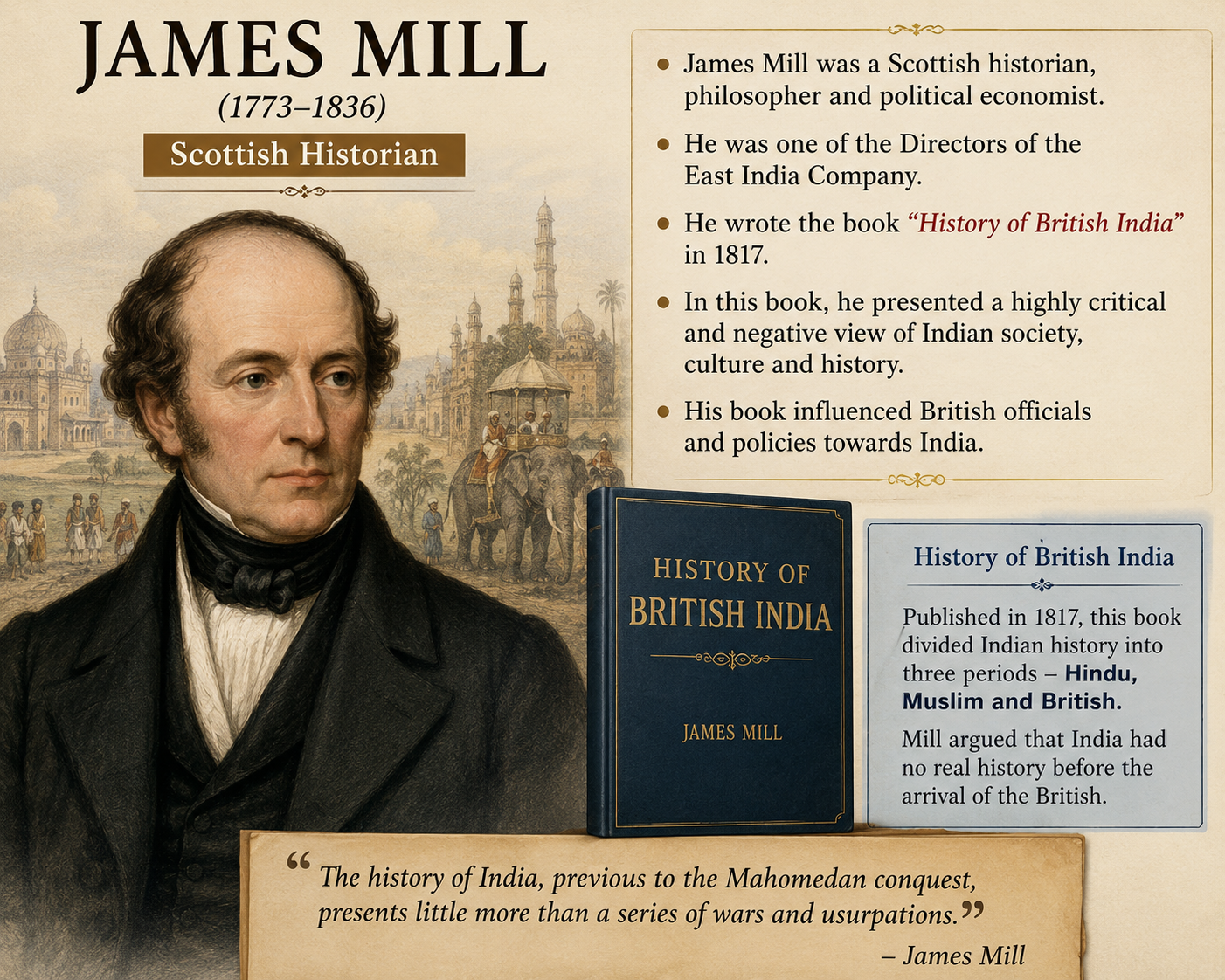
Educational poster of James Mill, the Scottish historian who wrote The History of British India, featuring his portrait, key facts about his life, and information about his views on Indian history during British rule.

  Introduction: Why Do We Divide History into Periods? Have you ever noticed that history is always divided into “Ancient,” “Medieval,” and “Modern”? But have you ever stopped to ask: Who decided these divisions? Why is the British rule called “Modern” or “Colonial”? Is that division fair? Welcome to Class 8 History Chapter 1: “How, … Read more

Ruling the Countryside Class 8: Complete Notes, Revenue Systems & Exam Guide (UP/Bihar Board)

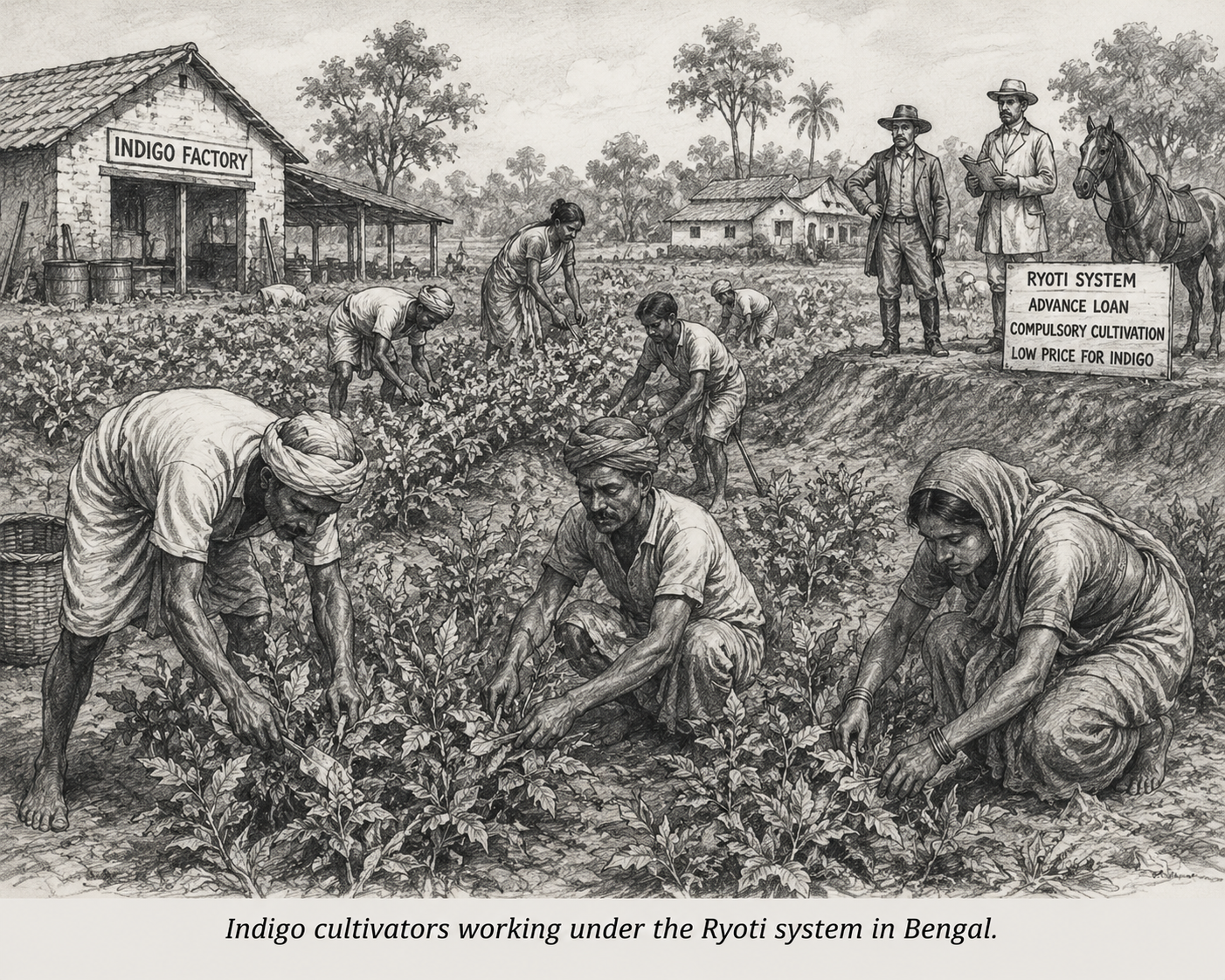
Indigo cultivators working under the Ryoti system in Bengal, shown as peasants laboring in an indigo plantation under the supervision of colonial planters during British rule.

  Ruling the Countryside Class 8: The Ultimate Exam Guide Are you a Class 8 student struggling to understand the complex revenue systems introduced by the British? Do terms like “Permanent Settlement,” “Ryotwari,” and “Mahalwari” confuse you? You are not alone. Many students find Ruling the Countryside Class 8 difficult because it involves economic policies … Read more

Civilising the “Native”, Educating the Nation | Class 8 History Notes, Summary & Exam Guide

Civilising the “Native”, Educating the Nation | Class 8 History Notes, Summary & Exam Guide Here’s your complete SEO-optimized, exam-oriented, long-form blog post on Civilising the “Native”, Educating the Nation for Class 8 NCERT (Hindi Belt Boards). SEO Metadata Overview SEO Title: Meta Description: Focus Keyword: Civilising the Native Educating the Nation Class 8 History … Read more