
The Elevator Summary and Analysis
Introduction
The Elevator by William Sleator is a psychological thriller that deals with the fear of a twelve years old boy, Martin. Martin is an immensely imaginative boy who is in his adolescent age. He is claustrophobic and doesn’t know how to deal with it. Throughout the story, one can find dominant catalysts who are instrumental in increasing poor boy’s fear. Moreover, he is not offered any parental guidance and support. His father hurts him more rather than listening and understanding the innocent boy.
The Elevator William Sleator Summary| The Elevator William Sleator Plot Summary
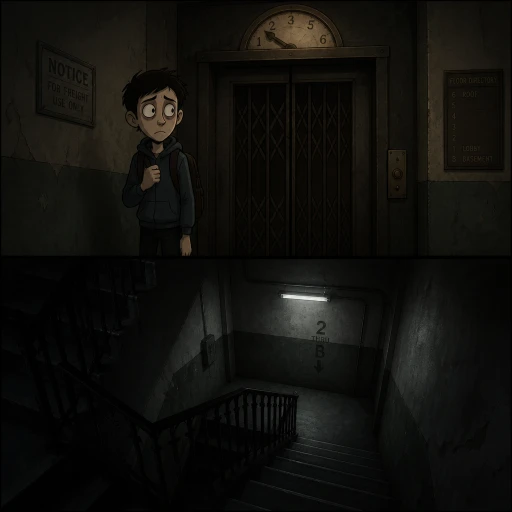
Martin, a timid twelve-year-old boy, fears the old elevator in his apartment building. His anxiety grows after repeated encounters with a mysterious, silent, overweight woman who seems to appear wherever he goes. As his fear intensifies, the story ends with a chilling, ambiguous moment, highlighting themes of fear, imagination, isolation, and psychological suspense.
Critical analysis on the elevator by William Sleator
Setting as Character
The Elevator as the main character-first anatgonist
The most intriguing part of the short story is the dramatic use of elevator and staircase. These two non-living entities act like monsters entrapping the boy. The description of the elevator and the staircase show discomfort. In fact, the title of the story is also “The Elevator” which gives the readers clue that they are going to read about something related to the elevator. There is something special about the elevator can also be predicted by the use of the definite article “the”. It means that this elevator has got some uniqueness about itself in comparison to other normal elevators. The elevator is acting like a character whose role is crucial to the plot of the story.
“It was an old building with an old elevator – a very small elevator, which could carry only three people.”
The story starts with the description of the elevator. Where is it present? It is present in an old building. The building as well as elevator are old. Its carrying capacity is less i.e., it has very less space. It can also be interpreted in this way that the elevator is acting as the main character. The story is beginning with the elevator and the title is also “The Elevator”. Sleator did this intentionally in the initials of the story so that he could implicitly tell his readers –“Every one , pay attention to this elevator and don’t make the mistake of forgetting about it.”
Martin- the second important character- second protagonist
Then, we are introduced to another character, Martin who has somewhat an uncomfortable relationship with elevators. Now, this is one of the important moments to increase the suspense and interest of the readers. Because someone who dislikes elevator is forced to use it every day. This increases the interest of the readers and retains till the end of the story. So, why is the boy afraid of the moving machine? His fears stems from his phobias. Martin had the feeling, which is shared by many people, that the elevator can fall any time. But the situation was more terrible here- the elevator was “unpleasant”, had “poor lightning”, “dirty walls” and due to the old technology, it” never stayed open long enough”. It used to slam with a loud noise. There used to be a shuddering problem with the machine and it always looked crowded even with few people.
So, it is not at all in good condition. It looks horrible and acts as a best catalyst in inciting the fear of a boy who is already claustrophobic. It is not a sin to be afraid but the case with Martin is different. Martin lacks all the emotional and physical support to get rid of these fears. He is bullied at school and his father is no good for him too. He is irritated at the cowardice of his boy. He prefers a child who is fearless. Martin, therefore tries to fulfill the expectations of his father by himself. On the other hand, the external factors accentuate the psychological, imaginative fears of the boy. The elevator becomes a dreadful space for Martin every day.
The staircase as another character
But Martin is not someone to limit himself. He tries to find other options like stairs. But to the despair of twelve years old, “it [The stairs] were no better”. The stairs lacked windows, good lightnings and echoed terribly. It forced him to loose his breath. Therefore, the staircase also refused to be helpful and understanding to Martin.
Martin used to think that the elevator would stop suddenly, and he can be trapped there for long hours. But the situation is no better with people in the elevator. They don’t offer any relief to the boy. They look unapproachable for help. It means that the people in that building appeared strange.
Symbols and Metaphor
Why is martin’ psychology behaving this way? Brain misinterpreting normal situations
Simply, Martin’s brain was misinterpreting the situations. It signalled to Martin that closed spaces are dangerous. This anxiety stems from a lack of control, breathlessness due to closed spaces, fear of being trapped and heights.
So, if the spaces are critically analyzed, we can observe that elevators are closed spaces and the staircases also lacked windows. The situation is worsened with the absence of good lightings.
Elevator as symbolic representation of Martin’s mind
The elevator is a physical manifestation of Martin’s claustrophobia and trapped mental state. Martin lacks control over his thoughts. He needs counselling and guidance to repel them. When the machine ascends, his anxiety also spikes. The physical space of the elevator and its activity is the symbolic representation of mind of Martin and his psychological tensions.
Stairs are metaphor of difficult path of escape
On the other hand, the stairs are metaphor of a hard path chosen by the protagonist to escape pain and fear. However, the stairs become a painful escape when Martin broke his leg while using the stairs.
The old fat lady-second antagonist and symbolic of Martin’s fear
While Martin was dealing with his claustrophobic fears, the entry of the old, fat lady come as an aggravation of his fears. The old lady behaved more terribly towards Martin than the elevator and the stairs. She exhibited bizarre disposition. Her behaviour is that of a bully who gains pleasure in terrifying children. Her dressing is symbolic of fear that crushes the people. It is suffocating, heavy and assertive. When the lady climbed in the elevator with Martin, she almost squeezed the thin boy. She also harassed the elevator by her weight. The lady is the metaphor of Martin’s fear, squeezing him till the lees. Now, the boy needed to deal both with the elevator and the bully, fat lady.
Matin having no control over his mind
Now, after meeting this lady, martin is not able to stop thinking about her. Where did she come from; on which floor she lived; is their any relative of her in that building and so on and so forth. This depicts the lack of control over the evolving thoughts. The boy is not able to shut down these thoughts. What should he do with his fear? Whom should he approach now? Martin wanted to maintain his calm and composure.But he was failing in doing it.
Martin’s emotionless relation with his father
The boy tried to get advise from his father. But his father, Mr Martin calls him coward indirectly. The boywas skinny, weak and bad at sports so now he didn’t want to add coward to the list.
“When are you going to grow up and act like a man? Are you going to be timid all your life?” this statement broke the confidence of the boy. He cries his heart out after his father leaves.
The main focus should be on the working of the psychology of the boy. He feels that the lady was already waiting for him in the lift. The lady’s demeanour is strange but this doesn’t guarantee she wanted to harm Martin. It can be interpreted that she liked teasing the boy but at the same time, it can also be inferred that she used to smile like that naturally. So, everything is vague. This vagueness is kept deliberately to ignite the suspense, fear, mystery and tension. It is a technique used by the author to bring in creepiness and eerie feelings.
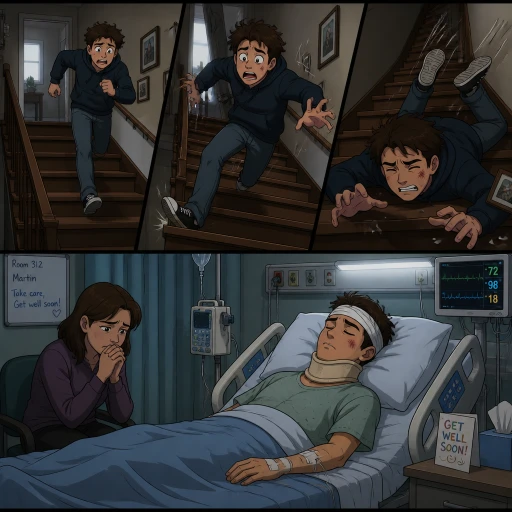
Now, Martin’s fears don’t know nay boundaries. They are busted and he runs like anything to save his life. The stairs condition described initially was a foreboding to some unfortunate incident later in the story. The unfortunate incident is Martin’s accident. He breaks his leg while running down the stairs. The accident could have been prevented if Martins father took the efforts to understand his boy. He could have given him lesson on how to use elevators and taught him about the imagination that instills fear in us. He could have took the initiative of introducing martin with the people in that building. But the ego of an unaffectionate father towards his innocent boy is truly harsh. The story also acts as a teaching for the parents as to how to deal with the children facing such fears. Children develop such fear and it is up to the parents to ensure safety. Martin’s father fails terribly at his parental duties. The boy tried hard to deal with his fears.
Narrative voice, Linguistic style and structure
The story is told from third person point of view, focussing minutely on Martin. The story is highly psychological in nature, totally reflecting Martin’s thoughts, fears and imaginations. Martin is a claustrophobic boy who is uncomforatble with using the elevators. Moreover, the elevator is totally constructed in a disgusting manner that escalates the boy’s fear. The lighting is poor and the space is not sufficient for smooth use. It is eerie and strange. This becomes difficult for a boy like Martin to use the elevators.
William Sleator employs a simple, direct, and descriptive language that is easy to understand while effectively creating psychological tension.
Frequently Asked Questions (FAQs)
What is the summary of The Elevator by William Sleator?
The Elevator is a psychological thriller about a twelve-year-old boy named Martin, who suffers from claustrophobia and has an intense fear of elevators. After moving into an old apartment building, Martin is forced to use a small, unsettling elevator every day. His fear grows when he repeatedly encounters a mysterious, overweight woman whose strange behaviour intensifies his anxiety. The story explores fear, imagination, and the psychological effects of isolation and emotional neglect.
What is the main theme of The Elevator?
The central theme of The Elevator is fear and psychological anxiety. The story also explores themes of claustrophobia, imagination, emotional neglect, adolescence, courage, and the impact of parental support on a child’s emotional well-being.
Why is Martin afraid of the elevator?
Martin is afraid of the elevator because he suffers from claustrophobia, the fear of enclosed spaces. The elevator’s cramped interior, poor lighting, strange noises, and old condition make him feel trapped and unsafe, causing his imagination to magnify his fears.
What does the elevator symbolize in the story?
The elevator symbolizes Martin’s trapped mind and psychological fears. It represents his claustrophobia, lack of control, emotional insecurity, and the overwhelming anxiety that he struggles to overcome throughout the story.
Who is the fat lady in The Elevator?
The fat lady is a mysterious resident of Martin’s apartment building. Her intimidating appearance and unusual behaviour make her seem threatening to Martin. Symbolically, she represents the fears and anxieties that continue to haunt him, although the story never confirms whether she intends to harm him.
What is the role of Martin’s father in The Elevator?
Martin’s father represents emotional neglect and misunderstanding. Instead of comforting or supporting his son, he dismisses Martin’s fears and expects him to behave courageously. His lack of empathy contributes to Martin’s growing anxiety and isolation.
Is The Elevator a psychological thriller?
Yes. The Elevator is a psychological thriller because it focuses on Martin’s mental state, fear, suspense, and imagination rather than physical violence. The story creates tension by exploring the psychological effects of fear and uncertainty.
What literary devices are used in The Elevator?
William Sleator uses several literary devices, including symbolism, metaphor, foreshadowing, imagery, suspense, irony, repetition, characterization, and an ambiguous ending. These techniques help create an atmosphere of mystery and psychological tension.
What is the narrative style of The Elevator?
The story is written in the third-person limited point of view, focusing closely on Martin’s thoughts, emotions, and experiences. The language is simple yet descriptive, and the linear structure gradually builds suspense and psychological tension.
What is the ending of The Elevator about?
The ending leaves readers with a sense of uncertainty and suspense. Martin’s fear reaches its peak after his frightening experiences, and the story concludes without fully explaining the fat lady’s intentions. This open ending encourages readers to consider whether the real danger lies in the external world or within Martin’s imagination.
Conclusion
The Elevator by William Sleator is a compelling psychological thriller that examines the power of fear, imagination, and emotional vulnerability. Through Martin’s struggle with claustrophobia and his encounters with the mysterious fat lady, the story demonstrates how fear can distort reality when left unchecked. It also highlights the importance of empathy, parental support, and understanding the emotional challenges faced by children. With its symbolic setting, suspenseful narrative, and psychological depth, The Elevator remains a thought-provoking and memorable short story.