
SHORT ANSWER QUESTIONS
Question 1:What is the full name of Pablo Neruda?
Ans:The full name of Pablo Neruda is Neftali Ricardo Reyes Basoalto.
Question 2: When was Neruda awarded the Nobel Prize for Literature?
Ans: Pablo Neruda was awarded the Nobel Prize for Literature in 1971.
Question 3: Explain the metaphor in the line: “The night is stary and the stars are blue and shiver.”
Ans: The given lines generally represent the condition of the poet after his love’s demise and how coldness is filled between him and his love where once warmth used to exist.
Question 4: Why has the night been referred to as immense?
Ans: The night has been referred to as immense because the poet is going through loneliness after hisbeloved him and his love.
Question 5:What is the significance “ THe same night whitening…the same”?
Ans: The significance of the given line is that it is the same night whitening the trees but the poet and his beloved are not together as they used to be in unison.
Question 6: WHat does repetition signify?
Ans: The repetitions of the lines signify the melancholic state of the poet over the loss of his beloved as well as it represents the most intense pain of being separated.
LONG ANSWER QUESTIONS
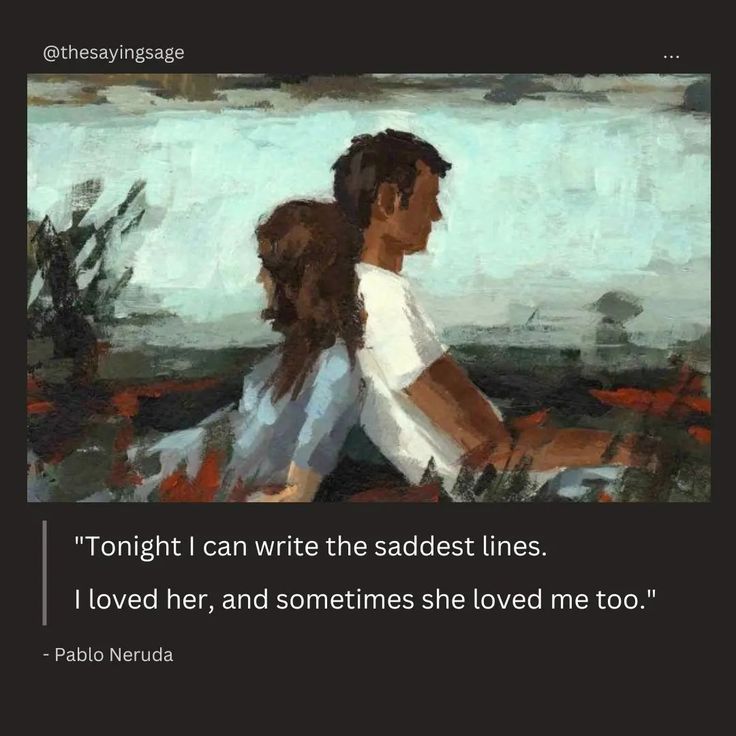
Question 1: “ She loved me, sometimes I loved her too”-ANalyse Neruda’s emotions in the context of the poem.
Ans: The poem “ Tonight I can Write” by Pablo Neruda is basically a mournful poem upon the loss of a beloved. The poet is in a melancholic state and he is expressing his agony over the loss of his beloved. The poet mentions about his past memories when he was with his lady love in those nights. But now it is the same night but the poet is alone. The night is starry but the stars are blue and shiver. The stars are blue and shivering because once love used to exist between the lovers but there is coldness filled between them. The poet states that he used to love her and sometimes she loved him too. This primarily signifies that the woman was responsible for their separation. But in line 9 of the poem the poet states that she loved him and sometimes he used to love her too. This leads to the intermingling and suspicion of who is responsible for the separation of the lovers. Therefore, it can be concluded that the poet is in so much pain that he is not able to recognise the reason for their separation.