

- Summary (Class 10 ICSE): What is the Story of The Last Lesson About?
- Critical Analysis: Themes, Symbolism, Characters & Literary Significance
- Historical Background: Franco-Prussian War and Its Impact on French Identity
- How Language Represents National Identity in The Last Lesson
- Character Analysis of Franz
- Character Analysis of Mr. Hamel
- Major Themes: Patriotism, Language, Identity and Regret
- Symbolism in The Last Lesson
- Why The Last Lesson Remains Relevant for Students Today
- SEO FAQs
- Conclusion

The Last Lesson by Alphonse Daudet Class 10 ICSE Summary, Explanation and Critical Analysis
The Last Lesson Summary| What is the story The Last Lesson about?
The story is written from first person point of view. The narrator is a school kid who is terrified of French lesson. This story is of one such day that was going to change many things in the life of the narrator. He commences by saying that he woke up late that morning. The first thing that knocked him was the thought of participles which their French teacher, Mr. Hamel was going to ask. The narrator as aschool boy thought of several ays to escape the lessons- he thought of not attending the school. The day was warm and bright; birds were chirping; and the Prussian soldiers were busy drilling. The story is written in the content- Franco-Prussian war. The Prussians were trying hard to eradicate the French language and culture. The whole scenic description is romantic bu the mention of Prussian soldiers makes the readers think that something is not at all right.
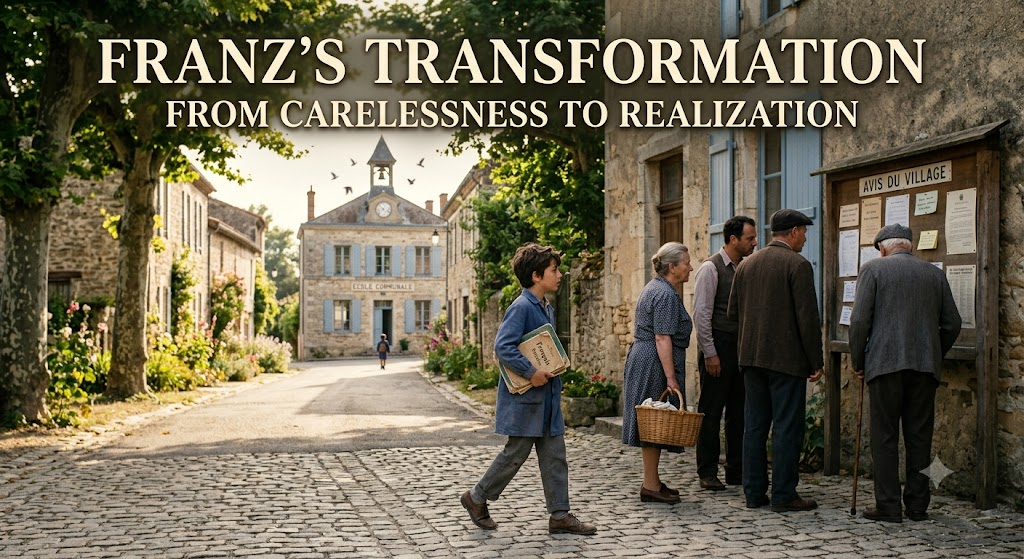
The next thing the narrator sees the crowd that attracted the attention of the locals. It was the source of all the bad news-the lost battles, the draft, the orders of the commanding officer and so on. But now, the narrator is also curious why so many people are there at the bulletin board.
The narrator is quite an observant kid who could assess that something is not right. Usually, there used to be a lot of hustle and bustle with sounds of French lessons chanted loud. But this was not the scenario on this particular day. The narrator, frantz comes late to his classes but Mr. Hamel doesn’t scold him that day. He used to fear his French master for not maintaining discipline. What next Frantz notices is that the seats at the back were empty and the locals were sitting there. They sat there to listen and respect their mother tongue, French which they didn’t do when they were kids.
That day, Mr Hamel came to school well dressed- an attire that represented French culture. This dress was worn by him only on special days. When everyone settles down, Mr Hamel announces that this class will be their last French lesson. The Prussians attacked France and wanted German to be the new language to be used in schools and other public places. The whole atmosphere exuded guilt of the people for not paying respect that the language deserved.
This news comes as a shock to the narrator because he was not happy to find that they were no more attending the French lessons. He felt sorry for wasting his time and not taking his French classes seriously.
When so many thoughts rambled through Frantz’s brain, he could listen his name being called out loud. Mr Hamel asked him to read the passage. Frantz made mistakes but Mr. Hamel was very patient with the boy.
Then, Mr Hamel says something crucial that holds the whole essence of the story-the importance of mother tongue. He says that students felt frustrated with the language of being difficult. But the fact is that the language is an important part of one’s identity. Now, the opponents will get the chance of mocking Frenchmen for not knowing the language. How are the native French going to protect their land? According to Mr Hamel, ones native language is the key to ones prison.
The narrator shares his emotion with the readers that it is the first time in his life that the French lessons became appealing. He could understand everything that day. Nothing seemed overwhelming.
Everyone in the class also learnt writing that day. Frantz looked at his teacher and thinks how sad was for Mr Hamel to leave the country with his sisters. But being a teacher, he was committed to his job. He did it with full responsibility. This was his last class but he wraps up his lessons with unforgettable dignity.
They also had history classes as well as lessons in grammar. When the class reached its end , Mr Hamel was in tears. When the clock struck twelve, the Prussian trumpets blew together showing their victory.
Now, it was the very end of everything and Mr Hamel wanted to say something. He couldn’t bring himself to utter the words. He wrote in emotional burst Vive La France. The class was dismissed with loads of guilt and sorrow.

Critical Analysis
The story “The Last Lesson” is written from first person point of view. Here, in this case the narrator is a boy Frantz who is narrating the whole story. He goes school daily but gets overwhelmed and frustrated by the French lesson. He also fears his French teacher, Mr Hamilton who is a strict person especially with French lessons. The story revolves around the lesson in French language which was going to be their last lesson.
The story is written in the context of Franco-Prussian war in the French districts of Alsace and Lorraine. The then Prussian state came as victorious. Prussia a historically dominant German state centered on the North European Plain, with its capital in Berlin. The Prussians came as victorious and wanted to assert their control over France. The first thing they wanted to be changed was the language of the people. They wanted to control the political, social, economical system of the country. Above all, they wanted ideological changes by enforcing their own language German. This was important to have full knowledge of ongoing events and scenarios within the country. Slowly, they wanted to remove French as official language in administrative sectors, schools and various government departments. First, they targeted the schools because it is this place where the future citizens are shaped and developed. They wanted the grooming of French children in German language. Targeting the language will help them to target French culture.
Mr Hamilton tells that how these Germans will comment on the local people who are ignorant of their own language. They don’t even know to communicate properly in their own language properly. Then, it will become very easy for the Prussians to subjugate the French. In this context, Mr. Hamilton says
Now those fellows out there will have the right to say to you: ‘How is it; you pretend to be Frenchmen, and yet you can neither speak nor write your own language?’
The sense of duty is strong in Mr Hamilton. He knows that even though it is the last day of his work at the school, he needs to take his class properly. He asks the children to read their lessons in French. Frantz makes a mistake but Mr Hamilton doesn’t scold the boy. He comments, “But you are not the worst, poor little Franz. We’ve all a great deal to reproach ourselves with.” They need to condemn themselves because they have not paid the respect to their own language and culture. Subsequently, they have failed their own country.
Mr Hamilton points the reason of their degeneration. Their parents prefer their children to work in the fields and farms to earn a little more money. What they didn’t realise is that without proper development and grooming of their children, they are making themselves weak. They need to know that other countries will be able to take control if they don’t make themselves aware, skilfull and updated. Mr Hamilton blames himself for making the school children to water his plants sometimes. He also feels guilty for only taking a day off so that he could enjoy fishing. The sense of responsibility becomes heavy on the shoulder of the teacher. He wants the kids to prosper and become the face of their country, France. But all the elders acted selfishly for their own greed and made these children to carry out their errands.
Being a teacher, Mr Hamilton acknowledges his mistake and he feels guilty for it. He points out the reasons too and blames the elder. They have failed their nation. They have betrayed their own children who were the future of France. Now, the enemies have taken control over them. But Mr Hamilton says that even though they can be subjugated physically but psychologically they will still be free from the enemies ideologies if they focus on their native language.
The classroom’s atmosphere is sorrowful. They are regretting for their behaviours. There is a strong love for their language, culture and nation. Little Frantz is a mature boy who is regretting his decision of not taking his French lessons seriously.
Mr Hamilton tells the history of language; makes the grammar lesson interesting and easy; properly conduct the writing lesson ; and at last they had their history lessons.
That day everyone’s eyes showed love and guilt for their dear language. They listened and cherished the lesson that was delivered for the last time in that classroom by Mr Hamilton.
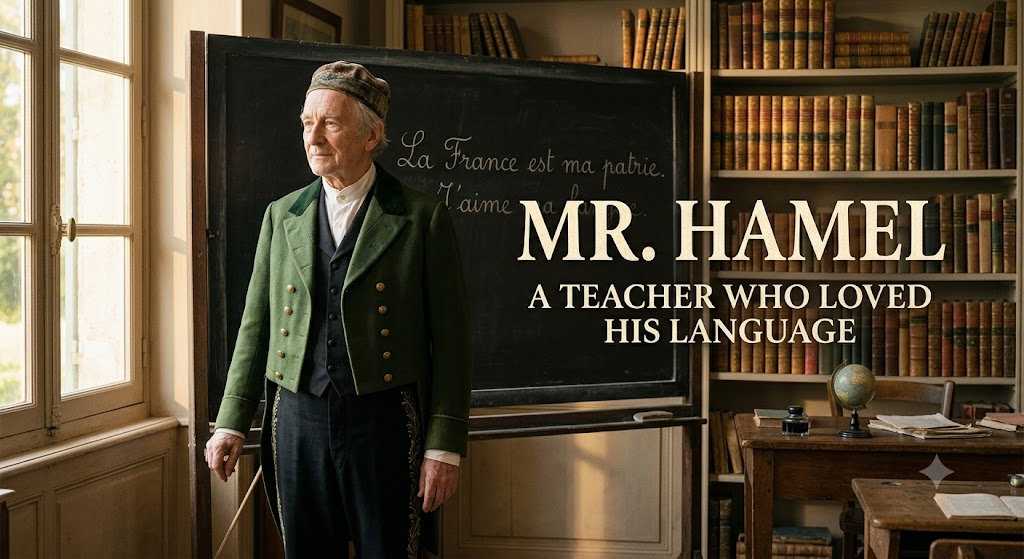
At twelve in noon, the Prussian trumpets went on to blow their victory. The French lesson just got ended and Mr Hamilton stood there pale. He wrapped up the class by writing “Vive la France” . This scene hold strong symbolic meaning. The moment the class in French ended, the Germans showed their triumph by blowing up their trumpets. From that time onwards, French was no longer the official language. People in France will now be forced to learn and respect German. This was the moment that made Mr Hamilton pale and numb. He wanted to say many things but the scenario and situation didn’t permit him to do so. He could only write on the board what he wanted which is “Long live France.”
Read the whole short story “The Last Lesson” by Alphonse Daudet.
FAQ
What is the story The Last Lesson about?
Alphonse Daudet’s “The Last Lesson” is about the loss of language that acts as important part of one’s own identity. The story is written in the context of Franco-Prussian war when the Germans were trying to take control of Alsace and Lorraine regions of France. The story revolves around the last lesson taken in French where people gathered to pay respect for their mother tongue.
What is the theme of The Last Lesson by Alphonse Daudet?
The theme of The Last Lesson is the loss of language that acts as an important entity of one’s own language. The people only realize their mother language’s importance when it is going to be removed from their daily life.
What is the summary of The Last Lesson by Alphonse Daudet?
What is the irony in The Last Lesson?
The irony in the short story “The Last Lesson” is that people realize the importance of the mother tongue only when it was snatched away from them.
Who is the main character in the story The Last Lesson?
The main character in the story is Franz.
What is The Last Lesson symbolize?
The Last lesson symbolize the importance of one’s own native tongue and the removal of the mother language from the native people.
Is The Last Lesson a true story?
No, the last lesson is not a true story. It is a fiction written in the context of Franco-Prussian War.
Why is The Last Lesson important for ICSE Class 10 English Literature?
It explores patriotism, language, identity, and education, making it a key ICSE text.
What is the moral of The Last Lesson?
People often realize the value of language and education only after they are about to lose them.
What are the major symbols in The Last Lesson?
The French language, Mr. Hamel’s dress, the classroom, and ‘Vive La France’.
Why did Franz regret missing his French lessons?
He realized the value of French only when it would no longer be taught.
Why did the village elders attend the last lesson?
To honor their mother tongue and express regret.
Conclusion
The Last Lesson highlights the importance of language, identity, patriotism, and education. Through Franz and Mr. Hamel, the story reminds readers to value their mother tongue before it is lost.