
Introduction
The period between 1922 and 1939 was a pivotal era in the Indian National Movement. Following the suspension of the Non-Cooperation Movement, the Struggle for Freedom (1922-1939) saw a shift in strategies—from the legislative entry of the Swaraj Party to the mass defiance of the Civil Disobedience Movement. This guide provides comprehensive Struggle for Freedom (1922-1939) questions and answers specifically tailored for Class 8 ICSE students to help them excel in their history exams.
Table of Contents
- Overview of the Chapter
- Key Terms / Definitions
- Background and Context
- Important Topics / Concepts
- Important Personalities
- Important Questions and Answers
- Important Dates
- Quick Revision Notes
- Common Mistakes to Avoid
- Exam Preparation Tips
- Frequently Asked Questions (FAQs)
Overview of the Chapter
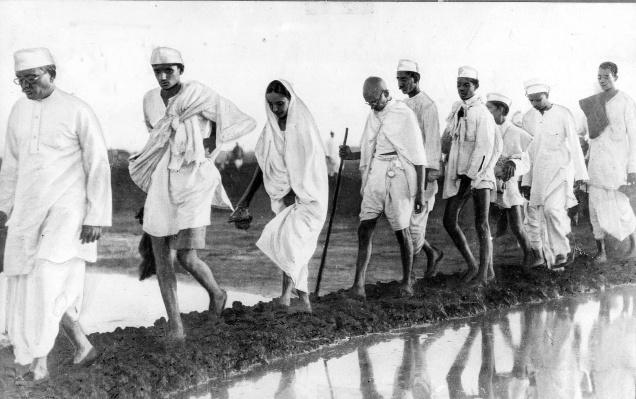
The Struggle for Freedom (1922-1939) covers the transition of the Indian national struggle from a phase of “Constructive Work” to the demand for Purna Swaraj (Complete Independence). It highlights the arrival of the Simon Commission, the iconic Dandi March led by Mahatma Gandhi, and the constitutional changes brought by the Government of India Act, 1935.
Key Terms / Definitions
- Swarajists: Members of the Congress who wanted to enter the Legislative Councils to oppose the British from within.
- Purna Swaraj: A Sanskrit term meaning “Complete Self-Rule” or total independence from British rule.
- Constructive Programme: A set of social reforms introduced by Gandhiji focusing on self-reliance, unity, and the removal of social evils.
- Provincial Autonomy: The power given to the provinces to govern themselves independently under the Government of India Act, 1935.
Background / Causes / Context
After the Chauri Chaura incident in 1922, the movement faced a lull. The Congress split into “Pro-changers” (who wanted to enter councils) and “No-changers” (who wanted to focus on village work). However, the British appointment of the all-white Simon Commission in 1927 reignited the flame of protest across India.
Important Topics / Concepts
Topic 1: The Swaraj Party
Founded in 1923, the Swaraj Party aimed to “wreck the reforms from within.” By winning seats in the councils, they successfully blocked several unjust British legislations.
Topic 2: The Civil Disobedience Movement
Launched in 1930, this movement was unique because it involved the deliberate breaking of salt laws. It shifted the movement from “non-cooperation” to active “disobedience.”
Topic 3: The Government of India Act, 1935
This was a major constitutional milestone that provided for a Federation of India and granted autonomy to provinces, though the British still held the “veto” power.
Important Personalities
Chittaranjan Das & Motilal Nehru
The founders of the Swaraj Party who believed in fighting the British through the legislative path.
Abdul Ghaffar Khan
Known as “Frontier Gandhi,” he led the non-violent “Red Shirts” (Khudai Khidmatgar) movement in the North-West Frontier Province.
Important Questions and Answers
Very Short Answer Questions (1 Mark)
Fill in the Blanks
- After 1923 the Congress devoted itself to the Constructive Programme.
- The Swaraj Party party led by Chittaranjan Das and Motilal Nehru fought the elections in 1923.
- Many Khadi bhandars were opened in many parts of the country under Gandhiji’s leadership.
- The resolution of Purna Swaraj was passed in the Lahore session of the Congress.
- The Civil Disobedience Movement started with the Dandi March of Gandhiji.
Match the Following
| Column A | Column B |
| 1. 1923 | Formation of Swaraj Party |
| 2. 1928 | Arrival of Simon Commission |
| 3. 1917 | Russian Revolution |
| 4. 1929 | Lahore session of the Congress |
| 5. 1935 | Government of India Act |
Write whether True or False
- The Swaraj Party aimed to enter legislative councils. (True)
- The Simon Commission included Indian members. (False)
- The Lahore session demanded Dominion Status. (False)
- Khadi promoted self-reliance among Indians. (True)
- Civil Disobedience Movement involved peaceful breaking of laws. (True)
Tick the Correct Answer (MCQs)
- Who founded the Swaraj Party?(a) Gandhiji (b) Chittaranjan Das (c) Subhas Bose (d) Tilak
- When did the Simon Commission arrive in India?(a) 1925 (b) 1927 (c) 1928 (d) 1930
- Where was Purna Swaraj declared?(a) Bombay (b) Calcutta (c) Lahore (d) Delhi
- When did the Civil Disobedience Movement begin?(a) 1928 (b) 1929 (c) 1930 (d) 1932
- Government of India Act was passed in:(a) 1919 (b) 1935 (c) 1942 (d) 1947
Short Answer Questions (2–3 Marks)
Question 1: What was the main aim of the Swaraj Party? Name some of its leaders.
Ans: The main aim of the Swaraj Party was to enter legislative councils and oppose British policies from within. It wanted to expose the weaknesses of colonial rule. The party tried to block unjust laws. Its leaders included Chittaranjan Das and Motilal Nehru.
Question 2: Describe the activities of the Constructive Programme Committee.
Ans: The Constructive Programme focused on promoting khadi and village industries. It worked for Hindu-Muslim unity and removal of untouchability. It also spread basic education and self-reliance. These activities strengthened the national movement at the grassroots level.
Question 3: Why was the Simon Commission set up? How did the Indians react to it?
Ans: The Simon Commission was set up to review constitutional reforms in India. However, it had no Indian members. This angered Indians, and they boycotted it. Protests were held across the country with slogans like “Simon Go Back.”
Question 4: What was the importance of the Lahore session of 1929 in the history of India?
Ans: The Lahore session, led by Jawaharlal Nehru, declared Purna Swaraj as the goal of India. It marked a shift from moderate demands to complete independence. It also decided to celebrate 26 January as Independence Day. This strengthened the freedom struggle.
Question 5: What led to the Civil Disobedience Movement in 1930?
Ans: The failure of British reforms and rejection of Indian demands led to the movement. Gandhiji chose the salt tax as a symbol of oppression. The British policies were unjust and exploitative. This led to the launch of the movement in 1930.
Question 6: Explain the role of the princely states and the communist parties in the freedom movement.
Ans: People in princely states began movements against their rulers for rights and reforms. Communist parties mobilized workers and peasants. They spread ideas of equality and justice. Both contributed to strengthening the freedom struggle.
Question 7: Explain the provisions under the Government of India Act, 1935.
Ans: The Act introduced provincial autonomy and allowed elected governments in provinces. It proposed a federal structure. It expanded voting rights. However, real power remained with the British authorities.
Question 8: Why did Gandhiji undertake the Dandi March?
Ans: Mahatma Gandhi undertook the Dandi March to protest against the salt tax imposed by the British. Salt was essential for all people. By breaking the salt law, he challenged British authority. It became a symbol of resistance.
Question 9: Who was Abdul Gaffar Khan?
Ans: Abdul Ghaffar Khan was a freedom fighter from the North-West Frontier Province. He was known as the Frontier Gandhi. He founded the Khudai Khidmatgar movement. He strongly believed in non-violence.
Question 10: What was the significance of the Dandi March?
Ans: The Dandi March marked the beginning of the Civil Disobedience Movement. It united people across India. It showed the power of non-violent protest. It attracted global attention to India’s freedom struggle.
Question 11: What was the role of khadi in the national movement?
Ans: Khadi promoted self-reliance and reduced dependence on British goods. It provided employment to villagers. It became a symbol of nationalism. It supported the Swadeshi movement.
Question 12: What was the impact of Civil Disobedience Movement?
Ans: The movement spread across India and involved masses. People broke laws peacefully. It weakened British authority. It strengthened the demand for independence.
Long Answer Questions (5–6 Marks)
Question 1: How did the Russian Revolution influence India’s freedom movement?
Ans: The Russian Revolution inspired Indians by showing that an oppressive government could be overthrown. It spread ideas of equality and socialism. Workers and peasants in India became more politically aware. It led to the growth of communist movements. Leaders began focusing on social and economic justice. It added a new dimension to the freedom struggle.
Question 2: What was the economic significance of khadi in the process of the National Movement?
Ans: Khadi reduced dependence on British manufactured goods. It revived village industries and created employment. It promoted self-reliance among Indians. It became a symbol of resistance and unity. People boycotted foreign goods and adopted swadeshi. This strengthened the economic base of the national movement.
Question 3: What was the significance of 26th January 1930 in the history of India?
Ans: On this day, Indians celebrated Independence Day for the first time. It followed the declaration of Purna Swaraj. People took a pledge to fight for complete independence. It united the country in a common goal. This date later became India’s Republic Day. It remains historically important.
Question 4: What were the provisions under the Government of India Act, 1935?
Ans: The Act introduced provincial autonomy and allowed elected governments to function. It proposed a federal system including princely states. It expanded the electorate. Governors retained special powers. The British controlled defense and finance. Though limited, it was an important constitutional development.
Question 5: Explain the causes of the Civil Disobedience Movement.
Ans: The movement was caused by British refusal to grant self-rule. Economic hardships and heavy taxation affected Indians. The Simon Commission and failure of reforms increased dissatisfaction. Gandhiji chose the salt tax as a unifying issue. The Lahore session declaration of Purna Swaraj also inspired people. All these factors led to the launch of the movement in 1930.
Important Dates
- 1923: Formation of the Swaraj Party.
- 1927: Appointment of the Simon Commission.
- 1928: Simon Commission arrives in India.
- 1929: Lahore Session (Demand for Purna Swaraj).
- Jan 26, 1930: First “Independence Day” celebrated.
- March 12, 1930: Commencement of the Dandi March.
- 1935: Passing of the Government of India Act.
Quick Revision Notes
- The Swaraj Party sought to fight the British from inside the councils.
- The Struggle for Freedom (1922-1939) was fueled by the rejection of the Simon Commission.
- Purna Swaraj became the ultimate goal after the 1929 Lahore session.
- The Dandi March was the catalyst for the Civil Disobedience Movement.
- The 1935 Act introduced Provincial Autonomy but kept key powers with the British.
Common Mistakes to Avoid
- Confusion in Dates: Don’t confuse the appointment of the Simon Commission (1927) with its arrival in India (1928).
- Purna Swaraj vs. Swaraj: Remember that Purna Swaraj means “Complete Independence,” not just “Self-rule” within the British Empire.
- Salt Law: Always mention that Salt was chosen because it was a basic necessity for both the rich and the poor.
Exam Preparation Tips
- Map Work: Practice marking Dandi and Lahore on the map of India.
- Keywords: Use terms like “Provincial Autonomy,” “Purna Swaraj,” and “Constructive Programme” in your long answers.
- Timeline: Memorize the sequence of events from 1922 to 1939 to handle chronological questions.
Frequently Asked Questions (FAQs)
Q: Who was the President of the Lahore Session in 1929?
A: Jawaharlal Nehru was the President of the Lahore Session.
Q: Why was salt chosen for the Civil Disobedience Movement?
A: Salt was a basic necessity for every Indian, regardless of caste or religion. Taxing it was seen as the most oppressive act of the British.
Before the struggle of the 1920s, learn about the Rise of Nationalism and the Non-Cooperation Movement to understand why Gandhiji suspended the movement in 1922.
Conclusion
The Struggle for Freedom (1922-1939) was a period of intense political activity that united the masses under the banner of complete independence. Understanding the shift from council entry to mass civil disobedience is crucial for scoring well in Class 8 History.
Learn more about the life and contributions of Jawaharlal Nehru and his role in the 1929 Lahore Session at the Nehru Memorial Museum & Library.
Image Details for WordPress:
- Image Alt Text: Indian freedom fighters protesting against the Simon Commission with banners.
- Image Title: Simon Commission Protest 1928
- Caption: Indians united to boycott the all-white Simon Commission.
- Description: A historical copyright-free image depicting the mass protests in India during 1928 against the British constitutional reforms.
Focus Keyphrase: Struggle for Freedom (1922-1939)