
Introduction
The Struggle for Freedom (1905-1922) marks one of the most transformative eras in Indian history. Moving from the moderate phase of petitions to the radical phase of mass mobilization, this period witnessed the rise of Mahatma Gandhi and the fiery spirit of the Extremists. In this guide, we explore the Struggle for Freedom (1905-1922) through detailed ICSE Class 8 History notes and solved questions to help you ace your exams.
Table of Contents
- Overview of the Chapter
- Key Terms / Definitions
- Background & Context
- Important Topics & Concepts
- Important Personalities
- Important Questions and Answers
- Important Dates
- Quick Revision Notes
- Common Mistakes to Avoid
- Conclusion
Overview of the Chapter
This chapter covers the intensification of the Indian National Movement. It begins with the controversial Partition of Bengal in 1905 and follows the timeline through the Swadeshi Movement, the birth of the Muslim League, the First World War’s impact, and the iconic Non-Cooperation Movement led by Gandhiji, which ended abruptly in 1922.
Key Terms / Definitions
- Satyagraha: A method of non-violent resistance initiated by Mahatma Gandhi, based on the power of truth.
- Swaraj: Self-rule or independence.
- Dyarchy: A system of double government introduced by the Act of 1919.
- Boycott: Rejection of British goods and institutions as a form of protest.
- Radicals: Nationalist leaders who advocated for aggressive methods to achieve immediate independence.
Background / Causes / Context
The early 20th century saw growing resentment against British policies. The primary catalyst for the Struggle for Freedom (1905-1922) was Lord Curzon’s decision to partition Bengal, which was seen as a “Divide and Rule” strategy to weaken the unity of the Indian nationalist movement.
Important Topics / Concepts
The Partition of Bengal and Swadeshi Movement
The partition sparked the Swadeshi and Boycott movements, where Indians burned foreign cloth and promoted local industries. It was the first time the masses, including women and students, participated in the struggle.
The Rise of Mahatma Gandhi
Returning from South Africa, Gandhiji introduced Satyagraha. His early success in Champaran, Kheda, and Ahmedabad established him as a national leader.
The Non-Cooperation Movement (1920-1922)
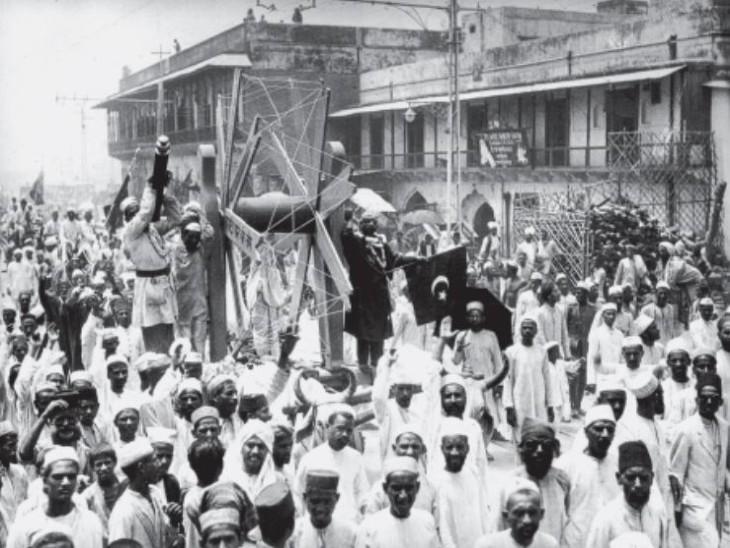
This was the first mass movement under Gandhiji. It aimed at surrendering titles, boycotting schools, and refusing to pay taxes. The Struggle for Freedom (1905-1922) reached its peak during this phase before the Chauri Chaura incident.
Important Personalities
Bal Gangadhar Tilak
Known as “Lokmanya,” he declared, “Swaraj is my birthright.” He used festivals and newspapers like Kesari to spread nationalist feelings.
Mahatma Gandhi
The architect of non-violence who transformed the freedom struggle into a mass mo
Important Questions and Answers
Objective Type Questions
Fill in the Blanks:
- Rabindranath Tagore renounced knighthood after the Jallianwala Bagh tragedy.
- Ali Brothers launched the Khilafat movement.
- The government introduced the Morley-Minto reforms in 1909.
- Gandhiji practiced Satyagraha for the first time in Champaran.
- The Muslim League was formed in 1906 to look after the interests of Muslims in India.
Match the Following:
| Column A | Column B |
| Gopal Krishna Gokhale | Moderates (Internal Link: History of Moderates) |
| Lord Curzon | Partition of Bengal |
| Tilak | Home Rule League |
| General Dyer | Jallianwala Bagh |
| Gandhiji | Kesari Hind (Title) |
True or False:
- The Jallianwala Bagh massacre took place in 1919. (True – Correction: User provided False, but historical date is April 13, 1919)
- Gandhiji was born on 2nd October. We celebrate his birthday as Gandhi Jayanti. (True)
- The main objective of the August Declaration of 1917 was to establish self-government in India. (True)
- The Swadeshi Movement was a direct outcome of the Partition of Bengal in 1905. (True)
- The Rowlatt Act of 1919 was welcomed by the people of India. (False)
Multiple Choice Questions (MCQs):
- Who partitioned Bengal? Lord Curzon
- Who formed the Home Rule Movement? Annie Besant and Tilak
- Who inspired the people with his fiery writings in Indu Prakash? Aurobindo Ghosh
- Who started the Khilafat Movement? Shaukat Ali and Muhammad Ali
- Who started the fight against untouchability (Harijans)? Mahatma Gandhi
Short Answer Questions (2–3 Marks)
Q1: Describe the contribution of Tilak towards the freedom struggle.
Ans: Bal Gangadhar Tilak popularized the slogan “Swaraj is my birthright and I shall have it.” He used the Kesari newspaper to spread nationalist ideas and was a leader in the Swadeshi Movement. He also formed the Home Rule League.
Q2: What were the provisions under the Morley-Minto Reforms?
Ans: These reforms (1909) introduced separate electorates for Muslims and expanded the Legislative Councils. While it gave limited representation to Indians, the real power stayed with the British.
Q3: Why was the Rowlatt Act detrimental to Indians?
Ans: The Rowlatt Act (1919) allowed imprisonment without trial. It violated civil rights, leading to nationwide protests and the tragic Jallianwala Bagh massacre.
Question 4: What was the basic philosophy of Gandhiji’s approach to the freedom movement?
Ans: Gandhiji’s philosophy was based on non-violence (Ahimsa) and truth (Satyagraha). He believed in civil disobedience and mass participation rather than armed struggle. His methods united people against British rule.
Question 5: Where in India did the incident of Jallianwala Bagh take place? Who was responsible for the incident?
Ans: The Jallianwala Bagh massacre occurred in Amritsar, Punjab, on April 13, 1919. General Reginald Dyer ordered the firing on an unarmed gathering.
Question 6: What were the provisions under the Government of India Act 1919?
Ans: The Government of India Act 1919 introduced dyarchy, dividing administration into reserved and transferred subjects. It allowed limited Indian participation in governance but kept real power with the British.
Question 7: Who were the Radical leaders? Why were they so called?
Ans: Bal Gangadhar Tilak, Bipin Chandra Pal, and Lala Lajpat Rai were radical leaders. They were called so because they followed aggressive methods, demanding immediate Swaraj instead of gradual reforms.
Question 8: State the significance of the Lucknow Pact. Why was it so called?
Ans: The Lucknow Pact (1916) was an agreement between the Indian National Congress and the Muslim League to work together against British rule. It was called so because it was signed in Lucknow.
Question 9: Name the Viceroy who proposed the partition of Bengal in 1905. Why did he do so?
Ans: Lord Curzon proposed the Partition of Bengal in 1905 to weaken nationalist movements by dividing Hindus and Muslims.
Question 10: What measures did the government take to restrict the spread of protests?
Ans: The British imposed censorship, arrested leaders, passed restrictive laws like the Rowlatt Act, and used violent force, including the Jallianwala Bagh massacre, to suppress protests.
Long Answer Questions (5–6 Marks)
Q1: How did the people react to the partition of Bengal?
Ans: The partition in 1905 led to the Swadeshi and Boycott movements. People boycotted British goods, burned foreign cloth, and held massive demonstrations. The unity was so strong that the British had to revoke the partition in 1911.
Q2: Why was the Non-Cooperation Movement called off in 1922?
Ans: During the Struggle for Freedom (1905-1922), Gandhiji strictly followed non-violence. In 1922, a violent mob burned a police station in Chauri Chaura, killing 22 policemen. Disturbed by this violence, Gandhiji withdrew the movement immediately.
Question 4: Why was the Non-Cooperation Movement called off in 1922?
Ans: Gandhiji called off the Non-Cooperation Movement in 1922 after the Chauri Chaura incident, where protesters burned a police station, killing officers. He believed in non-violence and withdrew the movement to prevent further violence.
Question 5: What led to the split between the Extremists and the Moderates in 1907?
Ans: In 1907, the Extremists (Tilak, Lala Lajpat Rai, Bipin Chandra Pal) wanted immediate Swaraj, while Moderates (Gokhale, Dadabhai Naoroji) preferred slow reforms. This ideological difference caused the Surat Split.
Question 6: The Jallianwala Bagh massacre marked a turning point in the history of the freedom struggle.
Ans: The Jallianwala Bagh massacre (1919) united Indians against British rule. The brutality led to worldwide condemnation. Gandhiji launched the Non-Cooperation Movement, and Rabindranath Tagore renounced his knighthood.
Question 7: How did the political scenario outside the country inspire Indians?
Ans: The Russian Revolution (1917) and Ireland’s independence struggle inspired Indians. Leaders like Subhas Chandra Bose admired international movements for freedom.
Question 8: What were the aims of the Muslim League?
Ans: The Muslim League aimed to protect Muslim rights, promote loyalty to the British, and later sought an independent Pakistan.
Important Dates
- 1905: Partition of Bengal.
- 1906: Formation of the Muslim League.
- 1907: Surat Split (Moderates and Extremists).
- 1916: Lucknow Pact.
- 1919: Rowlatt Act and Jallianwala Bagh Massacre.
- 1920: Launch of Non-Cooperation Movement.
- 1922: Chauri Chaura Incident.
Quick Revision Notes
- The Struggle for Freedom (1905-1922) saw the transition from “Political Mendicancy” to “Mass Action.”
- The Lucknow Pact of 1916 was a rare moment of unity between the Congress and the Muslim League.
- Gandhiji’s entry changed the movement into a struggle involving the common man, peasants, and workers.
Common Mistakes to Avoid
- Confusing Reforms: Don’t mix up Morley-Minto (1909) with Montagu-Chelmsford (1919).
- Dates: Ensure you remember that the Partition of Bengal happened in 1905, but was revoked in 1911.
- Leadership: Remember that the Home Rule League was started by both Tilak and Annie Besant, not just one.
Conclusion
The Struggle for Freedom (1905-1922) laid the groundwork for India’s eventual independence. For more resources, check out our Class 8 History Course.