

A Little Grain of Gold – Questions and Answers | Summary, Analysis & Study Guide
A Little Grain of Gold is an important chapter in English Literature that teaches valuable lessons about generosity and gratitude. This chapter summary and question-answer guide will help students prepare for exams and class tests. Here you will find important questions and answers, reference to context, themes, moral lessons, and character insights. Students can use these revision notes as a complete study guide. This educational resource is useful for homework, assignments, and exam preparation.
Children’s stories Questions and Answers
Question 1.Why does the poet compare the golden chariot in the distance to a gorgeous dream?
Answer 1.The poet compared the golden chariot in the distance to a gorgeous dream because the chariot was extremely beautiful and the owner of the chariot will provide him alms.
Question 2. Why does the poet call the rider on the chariot king of all kings?
Answer 2.The poet call the rider on the chariot king of all kings because he expected that all his poverty days will come to an end when arms will be given to him unasked from the owner of the chariot.
Question 3. What makes the poet’s hopes rise on seeing the visitor on the chariot?
Answer 3.The poet’s hope rises on saying the visitor of the chariot because he will provide him the means which will end his poverty.
Question 4. Why is the poet filled with sorrow on discovering the grain of gold?
Answer 4.
Question 5. Where did the chariot stop?
Answer 5.The chariot appeared in the distance like a gorgeous dream and the poet wonddered who was this king of all kings.
Question 6. Why did the man think his evil days were at an end?
Answer 6.The man thought thought that his evil days where at an end because he felt that his luck of life had come to him which will end his poverty .
Question 7. What does kingly JEST mean?Who said what hast thou to give to me?
Answer 7.The meaning of kingly JEST is royal joke.The given line had been said by the king to the beggar.
Reference to the Context
1-“The chariot stopped where I stood. Thy glance fell on me and thou camest down with a smile .I felt that the luck of my life had come at last. Then all of a sudden thou didst hold out the right hand and say what the has to give to me.”
Question a. Where did the chariot stop?
Answer a.The chariot appeared in the distance like a gorgeous.
Question b. Who came down with a smile?
Answer b.The rider of the chariot who is the king came down with a smile.
Question c. What did he feel?
Answer c.The speaker felt that the luck of his life had come at last.
Question d. The speaker felt that the luck of his life had come at last.
Answer d.The poet took out little grain of corn and give it to the king.
2-“But how great my surprise when at the day’s end I emptied my bag on the floor to find a least little grain of gold among the poor heap. I bitterly wept and waste that I had had the heart to give thee my all.”
Question a. What was the surprise?
Answer a.The surprise was that the king asked something from the beggar to give to him.
Question b. Why did the poet weep?
Answer b.The poet wept because he offered little amount of grain which turned to gold. If he had provided a larger amount then it would have turned into gold.
Question c. Name the poem and its poet.
Answer c.Name the poem and its poet.
3-” My hopes rose high and me thought my evil days where at an end and I stood waiting for arms to be given an asked and for wealth scattered on all sides in the dust.”
Question a. Why did the speakers hopes rise high?
Answer a.The speaker’s hopes rose high because the visitor from the chariot would provide him alms that would end his poor days.
Question b. What was the speaker waiting for?
Answer b.The speaker was waiting for the alms given to him asked from the king.
Question c. Which word in the above line means something unpleasant?
Answer c.The word in the above lines which means something unpleasant is evil.
Question d. What does “at and end means”?
Answer d.The words at an end means that it has come to an end.
4-“Ah what a kingly just was it to open diaper to a beggar to beg I was confused and stood and decided and then from my wallet I slowly took out the least little grain of corn and give it to thee.”
Question a. What does kingly jest mean?
Answer a.Kingly jest means joke which is royal.
Question b. Why was the speaker confused?
Answer b.The speaker was confused because the king asked alms from him.
Question c. What did he take out from his wallet?
Answer c.The poet took out a little grains of corn from his wallet.
Question d. Which figure of speech is used in the above lines?
Answer d.The figure of speech used in the above lines is alliteration that is present in the words beggar to bed and the least little grain.
Anne Arrives at Green Gables – Questions and Answers | Summary, Character Sketch & Analysis
Anne Arrives at Green Gables is a heartwarming story from the famous novel Anne of Green Gables. This study guide includes chapter summary, important questions and answers, character sketches, themes, and analysis. Students can use these notes for quick revision and exam preparation. The chapter highlights kindness, friendship, family values, and acceptance. These workbook answers are designed to help students understand the story easily.
Children’s story: Anne Arrives at Green Gables Questions and Answers
Question 1. How does any realise that she is not wanted by the children Cuthbert? How does she feel?
Answer 1.When Anne heard the conversation between Matthew and Marilla, she came to know that she was not wanted by the Cuthberts
During the conversation between Marilla and Mathew, Anne kept silent, suddenly she seemed to grasp the full meaning of what had been said and started crying. Repeating the same verse,”you don’t want me ! you don’t want me because I am not a boy!”.
Question 2. How do you know that Marilla is changing her mind about Anne? why does this happened?
Answer 2.When Marilla took Anne to Mrs Spencer, on the way Anne told Marilla about herself. She related her tragic story , that she was eleven last March and by this time she had already stayed with two families helping the ladies to look after their children, when their desire was over she was put back into the orphanage at Hopeton. When Marilla told Mrs Spencer about the mistake of sending a girl child instead of a boy she immediately thought of sending Anne to Mrs Peter Blewett. As Marilla knew Mrs Blewett, she had a pity on Anne and thought of taking her back with her.
This happened because Marilla had got the detailed life story of Anne, which was very sorrowful.
Question 3. What kind of a person is Mrs Blewett?
Answer 3. Mrs Blewett wa a bad tempered lady. Marillla knew this from the servant girls, she had a family of quarrelsome children.
Question 4. Describe the character of Methew and Marilla.?
Answer 4.Mathew was a simple kind and a very gentle person. He was loving and very polite person . He did not want to hurt the feeling of little Anne. He was caring , So he did not leave Anne alone in the station, instead brought her home for her safely.
Marilla was a positive minded lady. She had a pity for little Anne but she wanted a boy to help them in their farm work. Marilla took Anne back to Mrs Spencer to return her back but when she came to know Mrs Spencer and dhad decided to send this girl to a troublesome family she forgot about her own interest and decided to take the little girl back to her own house . This shows how generous and kind hearted she was.
Lucy Maud Montgomery was Canadian author. She was best known for her series of novels like Anne of Green Gables, The Story Girls etc.
Athos, Porthos and Aramis – Questions and Answers | Summary & Study Notes
Athos, Porthos and Aramis introduces readers to the brave and adventurous musketeers. This chapter summary and question-answer guide provides important exam questions, character analysis, and revision notes. Students will learn about courage, friendship, loyalty, and teamwork. These English Literature notes are useful for school examinations and assignments. Read the complete study material for better understanding of the chapter.
Children Story: Athos, Porthos and Aramis Question and Answers
Question 1. What quality did Athos, Porthos, Aramis and D. Artagnan have in common ?
Answer 1. Athos, Porthos, Aramis and D’Atrgnan were all musketeers. They were brave and bold
Question 2. What did D’Artagnan decide to remember if he survived the duels? Why did he decide this?
Answer 2. D’Artagnan decided to remember to be more polite in furture if he survived the duels.
He decided so because he already knew that he had made a bad impression on Monsieur de Trville. To be a musketeer he will have to satisfy and win over the monsieur de Treville. Politeness can only get him his wishes.
Question 3. What does the motto of the Three musketeers’ means?
Answer 3. The motto of the musketeers means ‘one for all and all for one’. This means they will all join hand together for a good purpose and all will work together.
Question 4. What did the three musketeers think of D Artagnan, when they met him at the dwelling ground.?
Answer 4.The musketeers thought D’Artagnan to be a worthy opponents they also knew that he was very brave and respected him.
Question 5. Write the character of D’Artagnan in about 10-15 lines?
Answer 5. D’Artagnan was a brave man ; who wanted to be musketeer, he was helpful, polite and wanted to help others in distress. But he accepted challenges and wanted to rectify himself.
……….Three Musketeers………………….
Fight Manju Fight – Questions and Answers | Summary, Theme & Moral
Fight Manju Fight is an inspiring story of determination, courage, and self-belief. This chapter summary and study guide contains important questions and answers, character analysis, themes, and moral lessons. Students can use these revision notes for exams and classroom discussions. The story motivates readers to overcome challenges and follow their dreams. These educational notes provide a complete understanding of the lesson.
Children Story: Fight Manju Fight Question and Answer
Question 1. Manju wanted to paint. What were the problem she faced?
Answer 1. Manju wanted to paint but she had malformed fingers, two on each hand. She also had the problem because of the cost of the materials she would need.

Question 2. Did her family encouraged her? Who do you think was most encouraging?
Answer 2. No, All the memebers of her famil didn’t encouraged her escept her mother. She was encouraged by her mother and her brother. Her father was the person who objected to Manjula’s painting, because he thought he will not be able to fulfill the demand of his daughter when she would ask for oil paints and drawing papers, as they costs more. He also thought Manjula would be more fit to the kitchen work and household activities. Manjula’s mother goes more encouraging as she gave money to M to buy paper and paints. She was also given brushes by her brother.
Question 3. Why did Mr Parelkar not give money to buy water couler papers. ?.
Answer 3. Parelkar wanted her to do something that would be of practical use.
Question 4. Who was Rich Belanger?
Answer 4.Rich Belanger was a sportsman, who played soccer with his artificial feet. He lived in New Hampshire.
Heidi – Questions and Answers | Summary, Analysis & Revision Notes
Heidi is a classic children’s story loved by readers around the world. This chapter summary and question-answer guide includes important questions, reference to context, character insights, and themes. Students can use these notes for exam preparation and quick revision. The story celebrates nature, happiness, friendship, and innocence. These study materials help learners understand the chapter in a simple way.
Children Story: Heidi Question and Answer
Question:1. What is the Hay compared to?
Answers: 1. The hay is compared to gold because as Heidi opened her eyes, a beam of sunlight came through the hole in the wall making hay shine like gold.
Question:2.Why was Heidi glad to leave Ursula?
Answers: 2. Heidi was glad to leave Ursula because she had to stay indoors so that the old woman could see her and couldn’t go to play outside because Ursula was deaf and cold and had to sit by the kitchen fire to stay warm.


Question:3.Why was Heidi delighted?
Answers: 3. Heidi was delighted because she could go to the pasture with Peter.
Question:4.Why was Heidi gathered flowers?
Answers: 4. Heidi gathered flowers so that she could take them home and stick among the hay in her bedroom so that it would look like a meadow.
Question:5.What was Heidi doing behind the little hillock ?
Answers: 5. Heidi was smelling the primulas behind the little hillock because it had the most delicious scent.
Heidi is a young girl whose parents are dead and she is living with her grandfather in the mountains. As she cheerfully wakes up, she is glad to be living with her grandfather and is happy leaving old Ursula because she never got a chance to go out.
She leaps from her bed and gets up ready to see that Peter was waiting with the heard and grandfather was bringing Daisy and Dusky from the stall. She cleans herself with water and looks like a boiled lobster. She was delighted to go with Peter to the pasture. The sky was clear and deep blue and the flowers were blooming.
Heidi rushed to and fro at the sight of blue gentian, primroses and dainty yellow rock-roses. Peter was having a hard time watching the goats and Heidi at the same time. Peter and Heidi continued going further when Heidi’s apron was full of flowers.
By ……. Johanna Spyri ………
My Childhood – Questions and Answers | Summary & Character Analysis
My Childhood by Rabindranath Tagore offers a fascinating glimpse into the author’s early life. This study guide contains chapter summary, important questions and answers, themes, and character analysis. Students can use these class notes for revision and examinations. The lesson explores childhood experiences, education, and family life. These workbook solutions are useful for school assignments and test preparation.
Children Story: My Childhood Question and Answer
Question 1.Which line in the lesson tells us that life in those days was simple?
Answer 1. The line that tells us that life in those days was simple , ” The standard of living was then, as a whole, much more simple than it is now.”
Question 2. What did the servants do to save themselves from troubles?
Answer 2.The children were under the rule of the servants . To save themselves from troubles they suppressed their right of free movement.
Question 3. When did the Children complain?
Answer 3.The children never complained for being less properly dressed except when old Niyamat, the tailor, would forget to put a pocket into one of their tunics.
Question 4. Why does the writer say, “Nothing ever came so easily to us”?
Answer 4.The elders of the children used to maintain a distance from them. They were beyond their reach. Children hardly used to spend time with them. So, certain desirable things were obtained by them in difficulty.
Question 5. What was Rabindranath Tagore afraid of?
Answer 5.One of the servant of the author’s house Shyam would put him into a selected spot, tracing a chalk line all round, warned him seriously and threatened him with a uplifted finger of going beyond that ring. The author was afraid of going beyond the ring because of his thoughts regarding SITA who went through troubles due to crossing the ring drawn by Lakshman.
Question 6. Who would squeeze out his wet towy over his head?
Answer 6.One of the neighbors would prevent complete immersion in the water butbe content with only squeezing his wet towel repeatedly over his head.
Question 7. .Once the bathing place was silent, who remained there?
Answer 7.Once the bathing place was silent, ducks would remain there, paddling about after water snails, or by preening their feathers, the livelong day.
Parables – Questions and Answers | Summary, Moral & Study Guide
Parables contains valuable stories that teach important moral lessons. This chapter summary and question-answer guide includes important questions, themes, moral values, and exam notes. Students can use these revision materials for quick learning and preparation. The stories encourage kindness, forgiveness, compassion, and understanding. These English Literature notes provide complete chapter coverage.
Children Story: Parables Question and Answer
Complete the sentences:
Answer 1. The priest and the Levite pass the man who was badly hurt, without stopping because he has no mercy for the injured man.
Answer 2. According to the parable, a neighbour is a person ; who lived very close to a person, take pity on the others and help them in their needs.
Answer 3. The phrase “Good Samaritan has passed into common languagel It means the people of samaria are helpful and good.
Answer 4.The lesson that the parable teaches us is to love and help others in needs .
………………. This is Part 1 of the chapter Parables from the Bible …………..
Question answer 2nd Part Parables from the Bible English Literature Class 5 Question:1.How did the younger son behave when he realised that he had made a bad mist?
Answers: 1.When the younger son realised that he had made a mistake, he thought of going back to his father and apologising for the mistake he had done. He realised that by disobeying his father he had sinned against heaven and his father . He also thought of repenting by working as a servant for his father.
Question:2.How did his father receive him when he returned home?
Answers: 2. When the son was returning home, his fathersaw him and was filled with pity for him. He ran to his son, threw his arms around him and kissed him.
Question:3.What does the father means when he says, “This brother of yours was dead and is alive again ” ?
Answers: 3. The father ment when he says, This brother is alive again- he had fallen into bad and evil habits, but he has now reformed.
Question:4. Why was the elder son angry?
Answers: 4.The elder son was angry because he stay with his father in the absense of his brother , but his father had never given money to him to enjoy with his friends. While his younger brother took his share and wasted the money. According to the brother his father should be angry with his younger brohter , instead of rejoicing at his return.
Question:5.Do you thinkthe father did the right thing by accepting his younger son ?
Answers: 5. Yes, the father did the right thing by accepting his younger son because quite often people do a mistake unknowingly , such people should be given an opportunity to correct themselves.
Silver – Questions and Answers | Summary, Analysis & Literary Devices
Silver by Walter de la Mare is a beautiful nature poem filled with vivid imagery and poetic charm. This study guide contains summary, analysis, literary devices, important questions and answers, and reference to context. Students can use these revision notes for exams and assignments. The poem explores the beauty of moonlight and nature. These literature notes help readers understand the poem in depth.
The poem “Silver” is written by Walter de la Mare. The poem talks about the moon observing each and everything and how its moon light casts upon trees and animals.
There is serenity all over, the night is shiny with the silvery shine of the moon. All the things and animals are drenched in the silvery shine of the moon.The poem begins with the moon moving slowly and silently with her silver shine and then she peers and sees the silver fruits upon silver trees. Then, the casement catches her beams beneath the silvery thatch. The dog is compared to a log who is couched and sleeping in his kennel with his silvery paws.
Children Poem: Silver Question and Answer
Question 1. What does the word “shoon” mean?
Answer 1.The word “shoon” is the past participle of “Shine”.
Question 2. How does the moon move?
Answer 2.The moon moves slowly and silently.


Question 3. What does the moon see on the silver trees?
Answer 3. The moon sees silver fruits on the silver trees.
Question 4. The poem ‘silver’ contains many words describing different actions. Find these words and group them in the way you think is the most suitable.
Answer 4. The words which define different actions are, slowly, walks, peers, couched, scampering.
Question 5. What has the dog been compared to? Which figure of speech has been used to show the similarity?
Answer 5. The dog has been compared to the ‘log’. A simile is used to show the similarity.
Question 6. Where are the doves ? How do they look? What are they doing?
Answer 6. The doves are silver-feathered, where the white breasts peep from the shadowy cote. The doves are sleeping.
REFERENCE TO CONTEXT
1.”A harvest mouse goes scampering by,
With silver claws, and silver eye;
And moveless fish in the water gleam,
By silver reeds in a silver stream.”
Question a. Pick out the rhyming words.
Question b. Why does the mouse appear to have silver claws and silver eye?
Question c. Which word in the above lines means ‘shine’?
Question d. Where is the fish ?
Answer a. By-eye, gleam-stream
Answer b. The mouse appears to have silver claws and silver eyes because the moon light is shining on him.
Answer c. The word gleam means shine
Answer d. The fish is in a stream
2.” One by one the casements catch
Her beams beneath the silvery thatch;
Couched in his kennel, like a log;
With paws of silver sleeps the dog. .”
Question a. Identify the rhyme scheme of the above lines.
Question b. Which figure of speech is used in the above lines?
Question c. Why does the poet refer to the thatch as ‘silvery’?
Question d. Which line tells us that the moon is moving?
Answer a. The rhyme scheme in the above line is “AABB”, where the rhyming words are catch-thatch, log-dog.
Answer b. The figure of speech, Simile is used in the above lines.
Answer c. The poet refers to the thatch as silvery because the moon light is shining upon it.
Answer d. The lines in the first stanza, “Slowly and silently……” tell us that the moon is moving
3.”Slowly silently now the moon,
Walks the night in her silver shoon;
This way and that, she peers , and sees
Silver fruit upon silver trees. “
Question a. Pick out any two words which show that the moon is referred to as a living being.
Question b. Why do the fruit and trees appear to be of silver?
Question c. Describe the harvest mouse as seen by the moon.
Question d. Name the poem and the poet.
Answer a. The two words ‘walk’ and ‘she’ shows that the moon is referred as a living being.
Answer b. The fruit and trees appear to be of silver because the moon light is shining upon them.
Answer c. The moon sees the harvest mouse scampering by with silver claws and silver eyes.
By:……………….. Walter De la Mar………………………..

The doves are sleeping with their silver feathers and the white breasts peep from the shadowy cote. The moon further sees the scampering mouse with silver claws and eyes. The poem ends with the moveless fish where the reed and stream are silver.
The Ant and the Cricket – Questions and Answers | Summary, Moral & Analysis
The Ant and the Cricket is a famous fable that teaches the importance of hard work and planning. This chapter summary and question-answer guide includes important questions, moral lessons, themes, and analysis. Students can use these exam notes for revision and classroom preparation. The story highlights responsibility, discipline, and the consequences of laziness. These workbook answers provide complete learning support.
Children Poem: The Ant and the Cricket Question and Answer
Question:1.Why did the cricket began to complain? ?
Answers: 1.1. The cricket began to complain when he found out at home that the cupboards were empty with no food and the winter was to come.
Question:2.What did the cricket do in summer months ?
Answers: 2. The cricket sang in the summer months.
Question:3.Describe the condition of the cricket. ?
Answers: 3. The condition of the cricket was that he didn’t have a crumb, flower or a leaf to eat on the snow-covered ground .
Question:4.Whom did the cricket ask for help? ?
Answers: 4. The cricket asked a miserly ant for help.
Question:5.What did the cricket tell her? ?
Answers: 5. The cricket asked the ant whether he would provide him shelter from rain and a mouth full of grain. He also said that he would only borrow and would repay her tomorrow .
Question:6.What does wicket mean? ?
Answers: 6. Wicket means a small gate.
Question:7. What does the word ‘fable’ mean?
Answers: 7. Fable means a short story which has animals as characters and which conveys a moral to its readers.
Question:8.Compare and contrast the character of the cricket and the ant ?
Answers: 8. The cricket in the fable only sings all summer and does not collect any food which proves to be disadvantageous to him during winter whereas the ant is clever and collects food during summer so that he doesn’t have to do any work during winter.

Read the extracts below and answer the questions that follow:
1.
Not a crumb to be found ,
On the snow covered ground,
Not a flower could he see,
Not a leaf on a tree
Question:
a) Give the rhyming words in the above lines.
b)Who couldn’t find a crumb on the snow covered ground?
c)What did he do then?
d)What reply did he get?
Answer
1. a) The rhyming words in the above lines are: Found-Ground See- Tree
b) The cricket couldn’t find a crumb on the snow-covered ground.
c) He went to the ant for help.
d) He got the reply from the ant that he should go and dance the winter away because he didn’t do any work and sang all summer.
2.
My heart was so light
That I saw day and night,
In a very happy way,
You sang, Sir you say?
Question:
a) When and why did the cricket sing?.
b)What is the meaning of ‘ my heat was so light’?
c)Who is the speaker of the last line?
d)Which season is being referred to in the above lines?
Answer
2. a) The cricket sang during summer months because he was happy.
b) ‘My heart was so light’ meant that the cricket was cheerful and carefree.
c) The narrator of the story is the speaker of the last line.
d) Summer season is being referred in the above lines.
The Ant and The Cricket’ English Literature Class 4
…… Anonymous
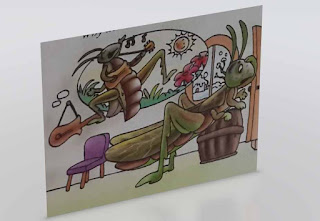
The fable starts with a cricket who is in search of food and warmth in winter because he spent all of his time singing instead of collecting food during summer.
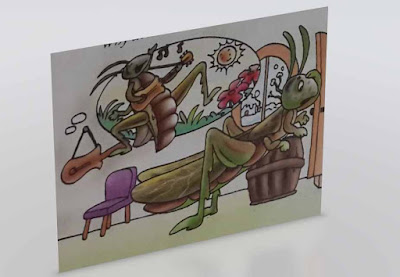

He then sets off to see a miserly ant in hope that he would provide him with grain and shelter but the ant questions why and after knowing that he sang all summer, he hastily makes the cricket go away. So the fable ‘The Ant and the Cricket’ tells us that if we live without work and have a lazy life, we will live without food.
The Arrow and the Song – Questions and Answers | Summary & Question and Answers
The Arrow and the Song is a meaningful poem about the lasting impact of words and actions. This study guide includes summary, important questions and answers, themes, and analysis. Students can use these notes for examination preparation and quick revision. The poem teaches valuable lessons about friendship, kindness, and influence. These educational resources make learning easier and more effective.
Children Story: The Arrow and the Song Question and Answer
Question:1.What are the things that poet sent into the air?
Answers: 1. The poet sent an arrow and a song into the air.
Question:2.Is there ay way of finding out where a song goes?
Answers: 2. No, None has so keen and strong sight that can follow the flight of song. But if someone else repeats the song, then we can make out where it had landed.
Question:3.In poetry, sometimes a word is given a new and unusual form. Can you find any such word in this poem? How would it be written in prose?
Answers: 3. ‘Breath’ to write the simple form of breath in a close we write sang or sing.
Question:4. Where did the poet find the arrow ?
Answers: 4.The poet found the arrow unbroken in an oak. .
Question:5.What do you think the poet means who he says, And the song from beginning to end, I found again in the heart of a friend.
Answers: 5. By these two lines the poet meant that , when he heard the song which he sang long ago from his friend he came to know that the song was deep rooted in the heart of the linsteners and was not forgotten long after it was heard no more. .
The Broken Wing – Questions and Answers | Summary, Character Sketch & Moral
The Broken Wing is a fascinating story that highlights kindness, generosity, and family relationships. This chapter summary and question-answer guide includes important questions, character sketches, themes, and moral lessons. Students can use these revision notes for exams and assignments. The story teaches readers the value of goodness and hard work. These English Literature notes provide a complete understanding of the chapter.
Children Story: The Broken Wing Questions and Answers
Question 1. Why did the two older brothers hate Il-Chung?
Answer 1. Il-Chung was handsome good and hardworking . The other two brothers were ugly and lazy. So, Il-Chung’s faters loved him the most. This made the other two brother hate him.
Question 2. Why was the Il-Cjung thrown out of the house?
Answer 2. Il-Chung’s brothers were jealous of him. When his father died , he was left at the mercy of his two vicious brother. So they threw Il-Chung out of his house.
Question 3. Was the pumpkin seed given by the bird , an ordinary seed? Give two reasons for your answer.
Answer 3. No, the pumpkin seed given by the bird was not an ordinary seed.
i)The seed spout within a night and the pumpkin tree became so big that it spread over the hut and under it and spread as far as Il-Chung could see. ii) The pumpkin tree had many juicy pumpkins which had gold coins inside.
Question 4. Why did Il-Chung wnat to share his goood fortune with his brothers?
Answer 4. Il-Chung wanted to bring over the heart of his brothers . So he wanted to share his good fortune with them. So that they call him back home.
Question 5. Describe the characters of the three brothers. Give examples from the text.
Answer 5. Tong-tongi was the eldest of the three brothers. He was lazy, ugly and jealous. He hated his younger brother and was cruel enough to throw him out of the house ; where his father died.
Sal-saree was the second brother of Il-Chung . He was also ugly, lazy and jealousof his younger brother. He had no intelligence of his own and repeated what his elder brother sai. So he hated Il-Chung.
Il-Chung was a good nature fellow, he was good looking, hardworking and loveable. He loved his brothers and not at all jealous of them and wanted stay with them happily.
The House on the Heath – Questions and Answers | Summary & Study Notes
The House on the Heath is an exciting story filled with adventure and suspense. This study guide includes chapter summary, important questions and answers, character analysis, and themes. Students can use these revision notes for school examinations and homework. The story emphasizes courage, responsibility, and determination. These workbook solutions help learners prepare effectively.
Children Story: The House on the Hearth Questions and Answers
Question 1.Where the chase children arrived after their journey?
Answer 1. The Chase children arrived in London on a cold, wet dark evening after their journey from the north.
Question 2. What were their expectations after arriving in London?
Answer 2.Children expected to be met at the station but no one was there for them. They waited and waited, while the evening grew darker and their toes and noses colder.
Question 3. What are the name of the children? State their condition on arriving in London?
Answer 3.The chase children are four in numbers. Sally, elder girl put her pet dog Snippet inside her coat to keep him warm but he still shivered. Kiwi, a boy stood on the sides of his feet and hung his head, like a tired pony. John seems to be the eldest who frowned and Jinny was the youngest of them all.
Question 4. What did the Children do after waiting for long?
Answer 4. After waiting for a long time, John took the decision at last to take a taxi.
Question 5. Where were their destination after arriving in London?
Answer 5.The children wanted to reach their Grandfather’s house which was their destination.
Question 6. What was the name of their Grandfather’s house?
Answer 6.The name of their grandfather’s house was Ringer’s Roost.
Question 7. Where was Ringer’s Roost situated?
Answer 7.The Ringer’s Roost was situated on Hampstead Heath.
Question 8. What did the Children do after reaching their destination?
Answer 8.After reaching their destination, children did not waste their time and tried to figure out where they were present. The heath was dark and unfriendly. A lamp post shining nearby showed them the name, they had thought they would never see that night-Ringer’s Roost.
Reference to the context:
” We will have to take a taxi. At last it will make a beastly great hole in our hole funds but it’s the only thing.”
Question a. Who said this to whom?
Answer a.The given lines are said by John to Kiwi, Sally and Jinny.
Question b. Why John decided to take a taxi?
Answer b.John decided to take a taxi because they had no option other than waiting at the London station or taking a cab. Therefore John took the decision of taking a taxi because they were fed up with waiting there.
Question c. Were the chase children successful in getting a taxi ?
Answer c.Yes the chase children were successful in getting a taxi.
Question d. Where did they want to reach?
Answer d. The children wanted to reach their grandfather’s house which was situated on hampstead heath named ringers roost.
Question e. What was the behaviour of the taxi driver?
Answer e.The behaviour of the taxi driver was very rude towards the children however somehowthey convinced him to take them to hampstead heath.
2-“A lamp post shining nearby showed them the name they had thought they would never see that night- Ringers Roost.”
Question a. How did the cab driver behave with the children when they reached hampstead heath?
Answer a.When they’ve reached the Hampstead heath the taxi driver reply to them in a very cruel manner well it’s not and you would better get out of my cab and find it he dumped their suitcases on the road and snatched the pound note which Sally was clutching.
Question b. What decision was taken by John?
Answer b.John took a very sensible decision not to waste any time there talking and to find their grandfather’s house ringers roost.
Question c. Were they successful in finding the ringers roost?
Answer c.yes the children were successful in finding their grandparents house which they hoped they would not see that night.
Question d. Who fumbled for the bell and pressed hard?
Answer d.John fumbled for the bell and press it hard.
Question e. What was the condition of the house ringers roost?
Answer e.The Ringer’s roost was situated on dark and unfriendly hampstead heath when John fumbled for the bell and pressed hard there was no one in the house the letter which their mother had written to their grandfather was line in the letter box.
The Music Competition – Questions and Answers | Summary, Character Sketch & Study Guide
The Music Competition is an inspiring story about talent, determination, and family support. This chapter summary and question-answer guide includes important questions, character sketches, themes, moral lessons, and exam notes. Students can use these revision materials for school tests and assignments. The story teaches the importance of balancing studies and extracurricular activities. These English Literature notes provide complete chapter coverage.
Children’s Story: The Music Competition Questions and Answers | Important Questions and Answers
1. Why was Minie sad?
Answer: Minie was sad because her mother was angry with her. Her mother did not want her to participate in the music competition.
2. Why did Minie’s mother ask her father not to praise Minie?
Answer: Minie’s mother did not want Minie to be praised by her father because she believed that praising Minie would distract her from her studies. She felt that studying was the most important thing for her daughter.
3. Why did Minie’s mother not want her to take part in the music competition?
Answer: Minie’s mother did not want her to participate in the music competition because she wanted her to concentrate only on her studies.
4. Why could Minie not sleep before the competition?
Answer: Minie could not sleep before the competition because she was feeling nervous about her performance.
5. Why did Minie’s mother prepare a special dinner for Minie?
Answer: Minie’s mother prepared a special dinner because Minie won the first prize in the music competition. She wanted to celebrate her daughter’s success.
6. What did Minie get for standing first in the competition?
Answer: Minie received a winning certificate and a scholarship for securing the first position in the competition.
Who Said This and To Whom?
1. “I am not too sure.”
Speaker: Minie
Listener: Sweetie
2. “Can you play the guitar? How good are you at it?”
Speaker: Minie’s Father
Listener: Minie
3. “I also agree. Her exams are approaching.”
Speaker: Minie’s Mother
Listener: Minie’s Father
4. “Don’t be upset. Stop crying.”
Speaker: Minie’s Father
Listener: Minie
5. “You will definitely win a prize.”
Speaker: Sweetie
Listener: Minie
6. “So how was it?”
Speaker: Minie’s Mother
Listener: Minie’s Father
The Story of Prahlada – Questions and Answers | Summary, Moral & Analysis
The Story of Prahlada is a famous tale from Indian mythology that teaches faith, devotion, and courage. This study guide includes summary, important questions and answers, themes, and moral lessons. Students can use these notes for exam preparation and revision. The chapter highlights the power of belief and righteousness. These educational resources help readers understand the story clearly.
Children Story: The Story of Prahlada Questions and Answers
Question 1. Who was Hiranyakashipu?
Answer 1. Hiranyakashipu was the king of daityas.
Question 2. Who was Prahlada’s father?
Answer 2. Hiranyakashipu was Prahlada’s father..
Question 3. Why was Hiranyakashipu troubled.
Answer 3. Little Prahlada was a very religious child. He seemed to have inborn ideas about worship and about the god. His father ; who had determined to drive the thought of the deities out of the world , was greatly troubled about him.
Question 4. Whom did Prahlada worship?
Answer 4. Prahlada worship ‘Krishna’.
Question 5. What punishment was given to Prahlada for disobeing his father?.
Answer 5. Hiranyakashipu ordered his guards to take Prahlada and throw him, though he was his own son, down to the bottom of the ocean and throw pile of rocks on top of him.
Question 5. Who helped Prahlada to come ou of the water?.
Answer 5. Lord Krishna helps Prahlada to come out of the water.
Written in March – Questions and Answers | Summary & Analysis
Written in March by William Wordsworth is a beautiful nature poem celebrating the arrival of spring. This study guide contains summary, important questions and answers, themes, literary analysis, and revision notes. Students can use these materials for examinations and assignments. The poem reflects the beauty of nature and seasonal change. These English Literature notes provide complete poem analysis.
Children’s Poem: Written in March Questions and Answers
Question 1. Why does the poet say that the streamisflowing ? What had happened to its earlier?
Answer 1. The poet say that the steam is flowing because this poem written in the month of March; which is begining of spring season. The water on the stream which was frozen in the winter months and started flowing with arival of spring. The stream had frozen during the winter months.
Question 2. How does the lake glitter?
Answer 2. The lake glitter by the relection of the sun light.
Question 3. Who are the people working? Are there any people who are not working?
Answer 3. All the people either oldest or youngest were working with the strangest.
No, there are no such people who were not working.
Question 4. There are forty feeding like one means…..
Answer 4. All forty cattles are eating equally, steadily and with pleasure.
Question 5. Which places are still covered in snow.?
Answer 5. The peak of the mountain are still covered in snow.
Young Night – Questions and Answers | Summary, Theme & Study Guide
Young Night is a delightful poem that captures a child’s imagination and dreamlike experiences. This chapter summary and question-answer guide includes important questions, themes, analysis, and revision notes. Students can use these study materials for exam preparation and classroom learning. The poem celebrates imagination, wonder, and childhood innocence. These educational notes help readers understand the poem more effectively.
Children’s Story: Young Night Questions and Answers
Question 1. What does the child see and when ?
Answer 1. The child saw the people marching by as clearly as he saw during the day time when he wants to go to bed and his mamma put out the light.
Question 2. Do you think the child is afraid of dark ?Answer 2. No he was not afraid of dark instead he enjoyed the sight of armies and emperors and kings .
Question 3. What is the “show” compared to and why?
Answer 3. The show was compared to the circus.
Because there were many beast and man marching in that caravan which is also found in the circus.
Question 4. Where does the caravan lead the child ?
Answer 4. The caravan lead the child to sleep.
Question 5. Why does the show move faster and faster?
Answer 5. The show was moving faster because the child was moving ahead faster to sleep.
Question 6. Is the child happy when he is falling asleep?
Answer 5. No, the child was not happy while falling the sleep because he wanted to see something more about the caravan.
……..By ……. RL Stevenson ……….