
Lotus by Toru Dutt Study Guide : Summary, Analysis, Themes, Literary Devices & Questions
Introduction:
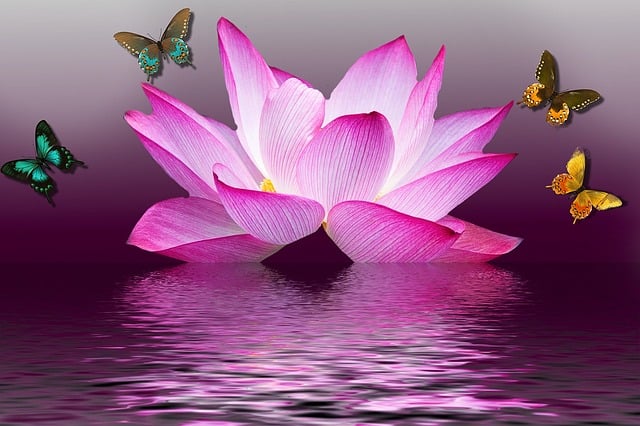
In this poem “Lotus”, Toru Dutt writes in praise of the lotus flower and declares it the ‘queenliest flower of all’. Within the fourteen lines of this sonnet, she describes the closely fought battle between the rose and the lily for the title of the queen amongst flowers, and how the lotus came to be made with the best qualities of both the flowers. With its many references to Greek and Roman mythological gods, the poem has a quaint elegance to it.
About the author Toru Dutt:
Toru Dutt (1856–1877) was an Indian poet who wrote in English and French, and made a mark in literature in spite of her premature death. From Calcutta, she travelled to France, England and Italy. She went to a school in France, where she picked up a flair for the language.
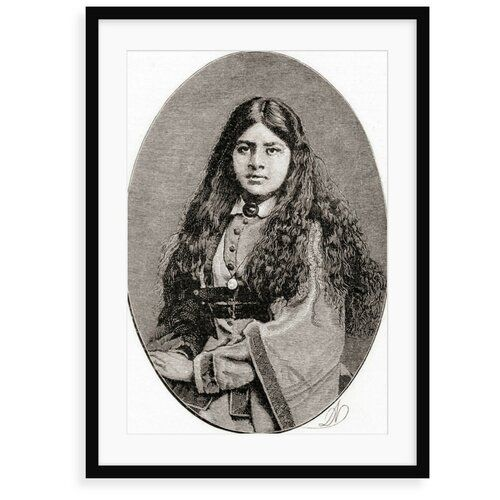
She published several translations and literary discussions, after which she published a Sheaf Gleaned in French Fields, a volume of French poems she had translated into English in 1876. Her elder sister Aru had translated eight of the poems. This volume came to the attention of Edmund Gosse in 1877, who reviewed it quite favourably in the Examiner that year.
At the time of her death, she left behind two unpublished novels—Le Journal de Mademoiselle d’ Arvers (believed to be the first novel in French by an Indian writer) and Bianca, or the Young Spanish Maiden (believed to be the first novel in English by an Indian woman writer)—besides an unfinished volume of original poems in English, Ancient Ballads and Legends of Hindustan. Her father, Govin Chunder Dutt, ensured that these works were published posthumously.
Summary of Lotus:
Love comes to Flora asking for a flower that will suitably represent her. That flower should be the undisputed queen in the bower of Flora. There are two opponents that have been rivals for quite a long time. These flowers are rose and lily. The poets have sung of their beauty and honour for a long time. The rose cannot subdue the influence of lily with its “Juno mein” whereas lily can never beat the loveliness of rose. Now, the question arises who is the better of the two?
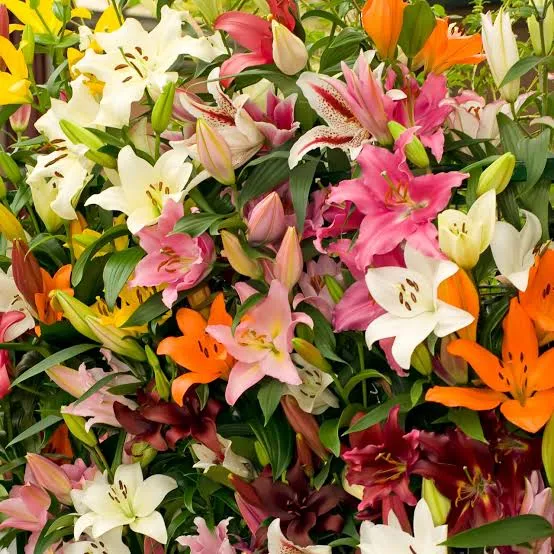
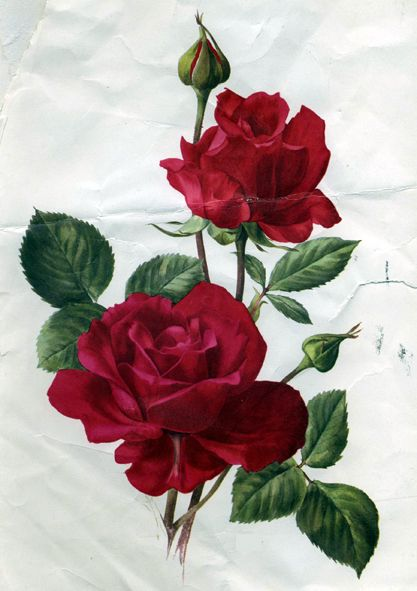
In Psyche’s bower, the flowers went on a debate who is the loveliest of the flowers. Then, the solution comes for a flower that is “as delicious as rose” and “as stately as lily in her pride”. But what should be the colour of such a flower. Then, love says it should be both rose-red and lily-white. To which, Flora gave Lotus to love as the best representative because it is “rose-red dyed and lily-white”. It carries both the important qualities of rose and lily. Lotus goes on to become “the queenliest flower that blows”.
Form and Structure of the poem:
Lotus is written in Petrarchan sonnet style where in the octave the conflict is mentioned and in the sestet the solution is provided. The poem follows a rhyme scheme of abba cdcd cbcb dc.
Literary Devices
Personification
The abstract quality Love and the head of flower, Flora are personified as two women conversing with each other. They are dealing with their issues as humans talk and sort out their problems. Lotus asks from Flora a flower representative to promote the qualities of love. For this post, Rose and Lily act as rivals. They are behaving like humans competiting for a position. The flowers in Psyche’s bower are having a strife among themselves. Now, it is upon Flora to choose a flower for love. She presents her candidate Lotus as the best flower for the position.
Simile
We can find simile in the lines “Give me a flower delicious as rose/And stately as the lily in her pride”. Love asks for a flower that has the qualities of both deliciousness/loveliness and stateliness. She wants both the qualities in a single flower. The word “as” has been used to talk about these features. Hence, simile has been incorporated to talk about different flowers’ exquisiteness.
Allusion
The poet has significantly used Roman and Greek mythological characters in the poem. In Roman mythology, Flora is the revered goddess of flowers, spring, and youthful fertility. Love comes to Flora for a flower-representative.
The Psyche’s bower where flowers are having debate is alluded to Psyche in Greek mythology. In classical Greek mythology, Psyche is a beautiful mortal who personifies the human soul. While there is no specific geographical location called “Psyche’s Bower” in ancient myths, the term refers to her private garden or bridal chamber where she was secretly visited by Cupid (Eros), the god of love.
By using Lotus, Dutt has alluded to Hindu mythology. The lotus (Padma) is a supreme symbol of divine beauty, purity, and spiritual enlightenment
Analysis/ Critical Appreciation
Toru Dutt’s ‘Lotus’ is a Petrarchan sonnet that deals with the issues of crowning a flower as queen. When Love looks for the flower, the choice cannot be made easily. Poets over the years have highlighted different aspects of lily and rose, two contenders for the bright honour and in each case, it seems that one has a better claim over the other. Two arguments — one in favour of Rose and lily are presented in the first eight lines of the poem. As Love search for perfect flower continues the sestet sees the resolution of the argument. Love wants to have the best possible features in the queenliest flower that blooms. In such situation, it is the lotus which is given to Love which was not only ‘rose-red dyed’ but also ‘lily-white’ and is the most suitable candidate for the position of queen of flowers.
At a deeper and symbolic level, the poem deals with the operation Psyche, Love and Flora. Love asks Flora for the best solution to have a happy and peaceful life. At first, Flora points to what is going on in Psyche, the rising and falling of the conflicting hots and feeling — pride (Lily) & sombrity (Rose), purity + Love, stateliness — Deliciousness, life-death. Love then asks for a solution in which contraries merge and transform into a harmonious goal. And Flora offers ‘Lotus’ — the symbol of the unified vision as talked of in Indian Philosophy.
Dutt shows her superb mytho poetic imagination in the poem ‘Lotus’. Love and Flora both are related to Greek and Roman myths. In Latin mythology Love is Cupid. He loved the beautiful maiden, Psyche. Flora in Roman mythology is goddesses of flowers and spring time.
The poem perfectly embodies of the Petrarchan sonnet, the first eight lines of the poem projects the tension generated by the debate between the rival flower faction forwarding the positive and negative points about rose and lily the ultimate claimants of superiority. The next six lines diffuse this tension as the goddesses Flora sets both rose and lily aside and selects Lotus which has deliciousness and redness of rose and stateliness and whiteness of lily. The poem follows a rhyme scheme of abba cdcd cbcb dc.
The figure of speech includes personification (Love, Flora, Rose, Lily), Simile (‘Rose can … Pale lily’) Metaphor (Lotus is considered queenliest of flower). ‘The flowers are rivals’. They think of ‘high honour’. One cannot ‘flower’ the other. The poet has used both dialogues and descriptions in the poem, short dialogues of love shows his curiosity and impatient mind. He fumbles in the choice of beautiful shown through affirmation and negation. As Doctor Marry, Elis, Guison notes ‘In Hindu and Buddhist iconography, the lotus connotes purely and spiritual realization arising from the muck of creation. The Goddess Laxmi (associated with wealth, beauty and wisdom) is often depicted in a full-bloom lotus. Thus, Toru Dutt substitutes her own version of beauty, inspiration and poetic part for conventional European one — the lotus combining the red and white, exceeds even Juno’s beauty. It is also said lotus’s unfolding petals signify the expansion of soul.
Since the lotus is the national flower of India, Dutt may have intended to inject Geo political undertones into this ‘battle’ of beauty. Dutt’s uses her European influences- the poem’s form, language, Roman mythology — in order to establish the Indian and Hindu dominance of the lotus she chooses not to portray the obvious importance of lotus to the Hindu God but rather to show its supremacy to the culture. Lotus presents a harmonious vision of life. The message is that the superiority lies in the simultaneous presence of opposite qualities.
Short Answers Questions (one or two sentence)
- Who is Flora?
Ans: Flora is the goddess of flower and the season of spring in Roman mythology. Love has come to Flora for a flower.
- Who had been the rivals in the family of flower?
Ans: The lily and rose are the rivals in the family of flower to be for the honour of queenliest of all the flowers.
- What is ‘Juno’s mein’?
Ans: Here in the poem Lotus, the appearance and characteristics of lily has been compared to Juno, who is pale in colour but more honourable in nature. Juno was the protector of the state and wife of the Chief God, Jupiter, in Roman mythology.
- Who is Psyche?
Ans: Psyche is a goddess in Roman and Greek mythology who personifies the passion of love.
- Explain the term ‘flower delicious’?
Ans: The term ‘flower delicious’ means the soothing, beautiful, attractive, enchanting and mesmerizing quality of rose.
- Who had been chosen as the queenliest flower?
Ans: Lotus has been chosen as the queenliest flower which is rose-red dyed and lily-white that blows.
Long Answer Questions(4 marks)
Q: Write in brief the message conveyed by Toru Dutt in the poem ‘Lotus’ Discuss in brief the mood of the poem ‘Break, Break, Break.’
Ans: Toru Dutt’s poem is a petrarchen sonnet that deals with the issues of crowning a flower as queen. Love looks for the flower, but the choice cannot be made easily. Poets over the years have highlighted the different aspects of lily and Rose but Love wants the queenliest flower to have all the characteristics. Therefore Flora handovers ‘Lotus’ to Love as the queenliest flower that blows. Therefore the Lotus presents a harmonious vision of life. The message is that superiority lies in the simultaneous presence of opposing qualities. The poem has an airy atmosphere, abstract symbolic characters and an idealistic message.
Conclusion
In conclusion, Toru Dutt’s “Lotus” is a beautifully crafted Petrarchan sonnet that celebrates the lotus as the perfect embodiment of beauty, purity, grace, and harmony. By combining the loveliness of the rose and the stateliness of the lily, the lotus emerges as the “queenliest flower of all.” Through the use of classical mythology, symbolism, and rich poetic imagination, Dutt conveys the idea that true excellence lies in the union of complementary qualities rather than in competition. The poem also reflects her pride in Indian culture, as the lotus—an important symbol in Hindu tradition and the national flower of India—is ultimately presented as superior to its Western counterparts. Thus, “Lotus” conveys a timeless message of balance, unity, and the celebration of ideal beauty.