
Discover a thematic study and detailed analysis of Stephen Leacock’s With the Photographer. Learn how the story satirizes unrealistic beauty standards, edited identities, body image, technology, and the conflict between authenticity and artificial perfection in today’s social media era.
“Take your negative, or whatever it is you call it, — dip it in sulphide, bromide, oxide, cowhide, — anything you like, — remove the eyes, correct the mouth, adjust the face, restore the lips, reanimate the necktie and reconstruct the waistcoat. Coat it with an inch of gloss, shade it, emboss it, gild it, till even you acknowledge that it is finished. Then when you have done all that — keep it for yourself and your friends. They may value it. To me it is but a worthless bauble.”
-With the Photographer, Stephen Leacock
Introduction
The obsession with perfectionism has reached its highest peak in the contemporary times. Everyone is insecure about their appearance. It looks as if everyone wants to get that perfect look which will make others awestruck. But at what cost- at the cost of insecurity and disappointment with ones look; not loving oneself with the way they look; destroying individuality to enter into a race of unfiltered perfectionism; and incessant desire to gain acceptability in a society that judges the book by its cover.
In this article, we are going to see hoe Stephen Leacock is satirizing the trend of looking flawless when everyone knows very well that humans do have flaws. The persistent craving to be come into a mannequin of spotless beauty is eradicating the reality is projected throughout the story.
Nowadays, we can see how social media platforms like Instagram comes with a system of various filters that helps in brightening the skin; removing the spots; fixing the face; doing makeovers and making something of your originality into a piece of game.
When celebrities, famous personalities and influencers are posting their images, I need to post it too is what the reality of today’s world. Therefore, people are investing their never-coming, precious time for something so unnecessary. They are busy clicking photos and garbaging their phone’s memories ceaselessly. There is photo fanaticism going on that can be surveyed through the social media. Youtube, twitter, Instagram, Facebook and Reddit have become garbage where there is multiple copies without any actual content of any value. There is a bombardment of contents and art and photography is losing its value in the marked due to uncontrollable supply.
Identity vs. Alteration (The Authentic Self vs. The Idealized Self)
The narrator simply wants a photograph of him to be taken. The main motive is to possess a photograph that will remind his closest friend and family of him. He wants something original that will resonate with him as he is. But little did the person know, that he has entered a filter machine. He wanted an original but the photographer is busy adding filters. The whole situation acts as a parallel to someone using filters on its face simply because he/she is not comfortable with the reality. Virtuality is preferred to reality. This is also the preference of the photographer.
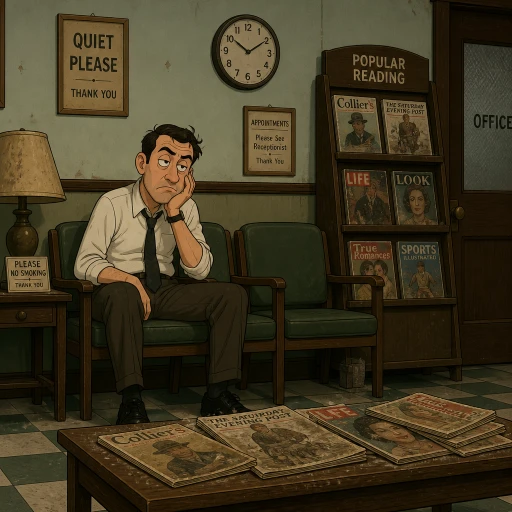
The photographer is a grave looking person who has the aura of a natural scientist. He doesn’t show any emotion and human nature of communication. His actions are mechanical perfectly reciprocating the times of industrial age. The setting of the story is the photo studio-a chamber famously known for destroying reality and the time is before the first world war. There are magazines such as Ladies Companion for 1912, the Girls Magazine for 1902 and the Infants Journal for 1888.
The photographer shows dissatisfaction with every details of the narrator. First, he tries to arrange the setting. next, he examines the face minutely. After that, he orders the narrator to do some facial actions to take a perfect photo. He asks to move th face right, left, up and down. He then thinks moving the waist and pumping the lungs will make difference. This frenzy overwhelms the narrator and he cannot control his frustration. He answers the humiliation with anger and justifies his individuality. The narrator says, “I’ve lived with it for forty years and I know its faults.”
The narrator knows the reality and he is comfortable with it. What is important that he defends his subjectivity. He knows he don’t want to change what originally belongs to him. When the narrator is caught in a frenzy, the photographer takes the photograph. He behaves like a photo taking machine whose job is bereft of sentiments. He doesn’t care about the opinion and feelings of his customers. He only knows to take a photo that resonates with the beauty standards preached by him.
When the narrator comes to collect his photo in expection of getting a copy of reality, he is handed over a glossy sheet that teases his originality. The photographer commits the graver sin of body shaming a person who according to him is unfit for the society in terms of looks. He tells the narrator the different technologies, which can be called filters in modern days terms, used to make him look handsome. But he made him look someone who was not him. He asks the natural scientist to keep the photograph with him as it is of no use to him. He is emotionally abused by the culprit. The narrator breaks down in tears and leaves the studio.

How does Leacock’s “With the Photographer” reflect modern body image anxieties?
With the photographer is a 1913 Prophecy of Digital Manipulation. The story perfectly forebodes the contemporary times. It is highly relatable with 21st century where people incessantly use filters in Instagram and Snapchat to gain a perfect click. This shows the non-acceptability with how one looks. It is a parody of ones originality.
The photographer talks about different technologies-the sulphides, bromides and delphides that acts as parallels for the filters used in social media. He is more obsessed with details-like fixing the ears, eyes and hairs. He becomes successful in making a perfect photo but hurts the customer immensely. He is least bothered with the consquences of such audacity. He loves fixing details as per societal beauty standards. But the narrator is shaken to the core. Being a human, he could not make himself comes to terms with the way the society was functioning. It no longer mattered to body shame and humiliate a person.
Professional Arrogance and Dehumanization
The Photographer as an Institutional Machine:
The photographer is called a nautral scientist because he behaved like a one. He didn’t know how to respect his customers with dignity. He found them as raw materials that needs to be processed for a perfect result that resonates perfectly with unrealistic beauty standards. His photo studio can be called an instrument tha t contains all the scientific instruments for processing the object. He adjusts lightings, asks the narrator to adjust his mouth, chest and waist and continuously calls the head of the narrator not perfect. Later, he employs his disgusting chemicals to improve the narrator’s shortcomings. He treats his customers as raw materials that need immense processing. He disregards the emotions and sentiments of his customers and openly practices dehumanization.
The Mechanical vs. The Human
The photographer almost worships his machine. He calls his machines extraordinary for being able to fix the shortcomings of humans. What he calls shortcomings are actually the uniqueness that make every person different from others. What is the use of being looking same like others. However, these philosophies don’t work for the photographer with his machines in his photostudio. It holds absolute authority in the room. The photographer loves the mechanics of his art over the dignity of his subject.
Literary Craft: How Leacock Builds the Satire
Leacock is satirizing the machine age when humans think machine as more capable than tem. They were hypnotized by the aesthetics of machines and their working. The photographer is also a part of this crowd. The irony lies in the fact that the narrator pays money to get something that resembles his original self. But to his dismay, he is provided a piece of paper that completely erased his original existence. This is no different from todays’ times. People pay money to get Internet to completey erase themselves. What the narrator did completely reflects the modern times.

Frequently Asked Questions
Q1: What does the narrator’s face symbolize in the story?
- Answer snippet: It symbolizes raw, unfiltered human authenticity and self-acceptance before it is subjected to societal judgment.
Q2: Why does the narrator leave without the photograph?
- Answer snippet: Because the heavily edited photograph no longer carries any sentimental value; it is a monument to the photographer’s ego, not a memento of the narrator.
Q3: What is the main message/moral of “With the Photographer”?
- Answer snippet: The story warns against changing ourselves to fit rigid, mechanical standards of beauty and urges us to reclaim our true, authentic identities.
Conclusion
What is important to remember is that one should be proud of his or her originality. This is what makes us human and unique. It creates our identity. Doing changes to original self is equivalent to deleting the reality inch by inch. Following these unrealistic beauty standards come at a great sacrifice. It is not suitable for everyone. What matters is healthy lifestyle that beautifies us in a real way without tampering the originality. One should be proud of oneself as the narrator is proud of himself.