
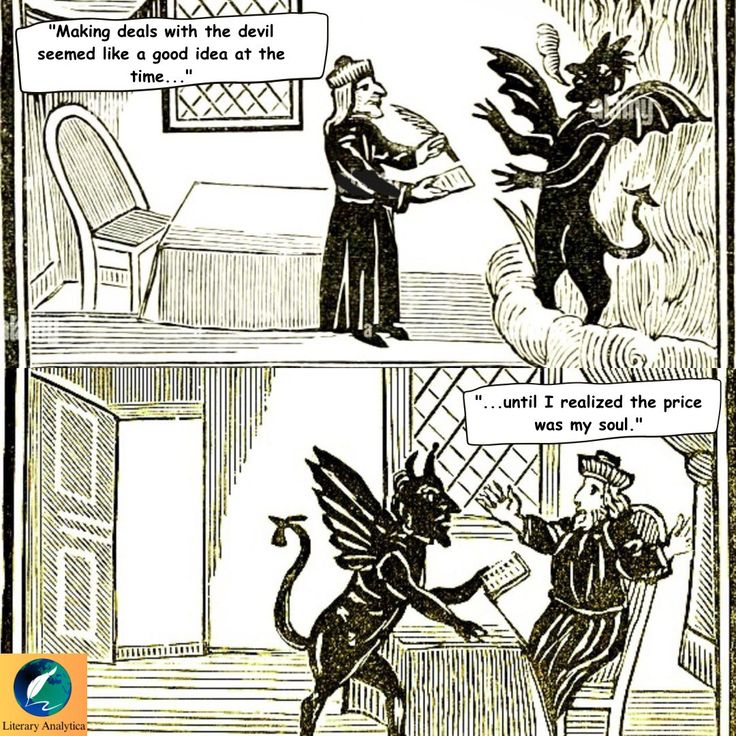
Doctor Faustus as a Renaissance Tragedy and Renaissance Hero
One of the greatest achievement of Christopher Marlowe was that he broke away from the medieval concept of tragedy. In medieval drama tragedy used to revolve only around courtly life dealing with the rise and fall of kings or royal personalities. But Marlowe came up with a different outlook of a tragedy hero. In fact all of Marlowe’s protagonists are overreachers. Tamburlaine, Tamburlaine the Great aspired for power to conquer the world and Barabas from The Jew of Malta hankered after earthly wealth. Doctor Faustus from The Tragical History of Life And Death of Doctor Faustus aspired for ‘infinite knowledge’. Marlowe’s heroes are dominated by ‘inordinate ambition’.
Christopher Marlowe’s Tragic Heroes and Renaissance Ambition
Christopher Marlowe’s protagonists truly reflected the ideals of Machiavelli that composed of human conduct and desires. Machiavelli’s well known book—’The Prince’ preached the doctrine of complete freedom of the individual to gain one’s end by any means fair or foul. Thus we could figure out Marlowe’s hero saturated with inordinate ambition discarding all moral codes and ethical values and plunging oneself into achieving one’s end.
Aristotle’s Concept of the Tragic Hero in Doctor Faustus|Faustus’s Tragic Flaw: Pride, Knowledge, and Self-Conceit
According to Aristotle, one of the most important characteristics of a tragic hero is that he should have some inherent weakness, known as ‘tragic flaw’. But the character should neither be virtuous nor vicious. Doctor Faustus satisfies all the necessary conditions put forward by Aristotle. The serious or tragic flaw in Doctor Faustus is that he is puffed with pride in his knowledge and scholarship. And this it can be figured out from the Chorus—
“Till swollen with cunning, of a self-conceit
His waxen wings did mount above his reach
And melting heavens conspired his overthrow
For falling to a devilish exercise
And glutted now with learning’s golden gifts
He surfeits upon cursed necromancy”
Faustus’s Rejection of Traditional Learning and Human Limitations
In the very first scene of Act I Faustus is discovered in his study room engulfed in interpreting different branches of study. He rejects ‘logic’ as he consider that he has achieved the end of logic which is to argue well. Faustus is also not satisfied with ‘physic’ or medical science. According to Faustus medical science could not procure him the power to give life to a dead man or though it can help him in hoarding wealth but it render a man immortality.
Faustus’s Rejection of Traditional Learning and Human Limitations
“Yet art thou still Faustus, and a man”.
This line reflects the spirit of Renaissance to aspire beyond the human abilities. Finally he rejects both law and divinity and plucks the forbidden fruit from the tree of necromancy.
“O what a world of profit and delight
Of power, of honour, of omnipotence
Is promised to the studious artisan
All things that move between the quiet poles
shall be at my command
A sound magician is a demi-God.”
The Downfall of Faustus: Ambition, Conscience, and Damnation
In spite of all his great learning and scholarship and other human qualities we sadly witness how this flaw or great drawback in his character brings about his ultimate doom and damnation. When he bids adieu to divinity, Faustus perfectly knows that to achieve this uncommon purpose he will have to shun the path of virtue and abjure God and the Trinity.
Good Angel and Evil Angel: The Inner Conflict of Doctor Faustus
But at the same time he was not absolutely void ofconscience and that’s why it is found that the Good Angel and Bad Angel, the symbols of virtue and vice in his soul, making their first appearance just after Faustus’s decision in favour of cursed necromancy. Then at the end of third scene of Act I we find Faustus telling Mephistophilis who has already abjured the Trinity of his own accord and has firmly made up his mind to sell his soul to the devil to gain limitless powers with the help of Mephistophilis as his pliant slave and “to live in all voluptuousness”. To Faustus omniscience means omnipotence and it is the power that will enable to gratify the sensual pleasures of life. This sense of Faustus is also an incidence of Renaissance.
“shall I make Faustus fetch me what I please
Resolve me all of my ambiguities
Perform what desperate enterprise I will”
The Protestant Reformation and the Tragedy of Doctor Faustus
Faustus’s training in Wittenberg as a Reformation Protestant has also been started as one of the reasons of his tragedy. Side by side of Renaissance, an important religious movement called Reformation also took place in Europe. In the prologue we came to know that Faustus went to Wittenberg for his further studies that was a centre of Reformation started by Martin Luther. This is also a cause of Faustus’s tragic fall.
Conclusion | Why Faustus Falls: Pride, Overreaching Ambition, and Renaissance Ideals
Thus it can be said the dominant cause of Faustus’s tragedy was aspiring pride and insolence for which the Lucifer of Milton also fell. Faustus’s last exclaim “I’ll burn my book” clearly suggests the tragedy of a Renaissance man who is doomed because of the knowledge he gained from his books. In his Renaissance zeal he tried to overreach God but failed miserably as a Renaissance man.