
Introduction: Why the Title Mrichchhakatika is Significant
The title “Mrichchhakatika” literally means the little clay cart. It has both literal and metaphoric significance in the play. At the same time, the title bears marks of Sudraka’s originality. A detailed study of the play reveals how the title chosen by Sudraka is both interesting and appropriate.
Sudraka’s Originality in Choosing the Title|Departure from Traditional Sanskrit Dramatic Conventions
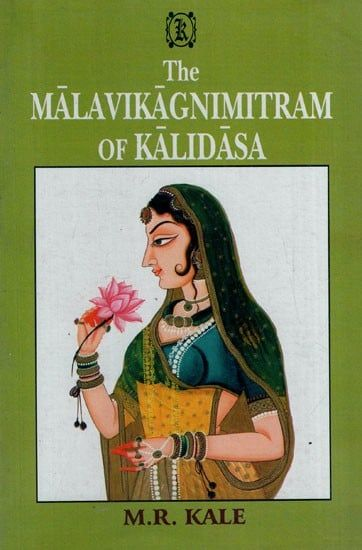
Sudraka, as a playwright, departed from many of the conventions of Sanskrit drama laid down by Bharata in Natyashastra. The title of his play Mrichchhakatika is no exception. Traditionally, a Prakarana used to be named after its Nayaka (hero) and Nayika (heroine). For instance, Malavikagnimitra is the love story of princess Malavika and king Agnimitra. Following this tradition, Sudraka could have joined the names of Charudatta and Vasantasena in his title. However, he shows great inventiveness in conceiving the title Mrichchhakatika without referring to the central characters at all.
Literal Meaning of Mrichchhakatika – The Little Clay Cart
Mrichchhakatika literally means “a little clay cart”. It directly alludes to an episode at the beginning of sixth act where Vasantasena strips herself off all her ornaments. This act symbolically presents Vasantasena’s transformation from “ganika” to “kulavadhu”, a transformation which is a part of the main plot involving Vasantasena’s love with Charudatta. This episode of the little clay cart, although a minor one, is empirically linked to the major themes of the play.
The Clay Cart Episode in Act VI
Rohasena’s Desire for the Golden Cart
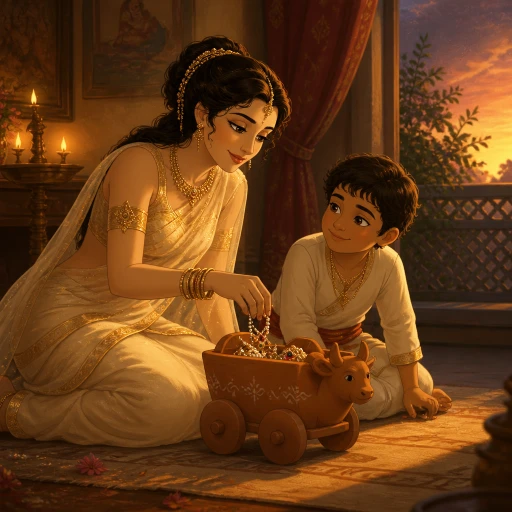
At the beginning of sixth act Rohasena is found crying over a gold cart he was playing with. The cart, belonging to a neighbour boy from a wealthy family, was taken away from Rohasena. Radanika, Charudatta’s maid-attendant, tries to appease him providing him with a clay cart. But Rohasena is adamant and he would have a gold cart only.
Vasantasena’s Transformation from Ganika to Kulavadhu
At that point, Vasantasena, who was staying at Charudatta’s house in the previous night, arrives there. When the child enquires about the identity of the unknown woman, Radanika, believing that Vasantasena will become Charudatta’s wife introduces her as his “mother”. Rohasena refuses to accept her as his mother because his mother Dhuta is a simple woman, and he can’t accept a lady with so much ornament as a mother-figure. This refusal by Rohasena comes as a shock to Vasantasena who realizes that her ornament is the real hindrance in her being accepted as Charudatta’s wife – she begins to cry, bares herself off all the ornaments she put on, and asks Radanika to construct a golden cart with those.
Symbolic Significance of Vasantasena’s Renunciation of Ornaments
The removal of the ornaments is an indication of Vasantasena’s intense [love] for Charudatta, a man who is the real gold for her. It also suggests the culmination of their love in marriage by which Vasantasena will be promoted to the status of kulavadhu, a status which Dhuta enjoys.
The Clay Cart as a Symbol of Domestic Life|The Clay Cart as a Metaphor for Human Values and Virtue|Universal Significance of the Clay Cart Symbol
The clay cart is basically a symbol of domestic life, of ordinary humble world that Charudatta belongs to. Vasantasena’s offering may be seen as her desire to be a part of the domestic earthly world of Charudatta. It is her way of getting her maternal yearnings fulfilled, by renouncing those objects which symbolise her isolation and childless peripheral existence. It is as if she feels that her jewels gain value when placed on that cart. The clay cart, therefore, is a metaphor of the world which Vasantasena wishes to be a part of. She desires to join the world of virtues and goodness with which Charudatta is associated in the play. She renounces wealth for goodness and happiness because the reality is that happiness is in good human virtues and relationship.
Why the Title Mrichchhakatika is Appropriate|Critical Evaluation of the Title Mrichchhakatika
The title “Mrichchhakatika” is a reference to human life, its ground realities rooted in an interesting world. The clay cart episode of Act VI is a metaphor of universal expanse. Rohasena’s desire for the gold cart is the eternal human yearning for prosperity. In offering her jewels to the clay cart, Vasantasena joins the group of characters like Charudatta, Madanika, Radanika, Sarvalaka, who are poor but act in heroic manner. The clay cart is apparently not of any value but it comes to bring out goodness in Vasantasena, offering her the chance to participate in the domestic share of Charudatta’s life.
Conclusion
Sudraka’s main goal is not to ponder on the main protagonists of the play but to deal with a universal theme of goodness and moral values. He projects these values through Charudatta and his domestic life. The little clay cart is symbolic of the simple but value-based life of which Charudatta is the pioneer. Humans do pursue prosperity but it is of material significance. It does not gurantees the satisfaction and tranquility ensured by the ethics and values in life. It can be seen how the humble disposition of CHarudatta influences the wealthy heroine Vasantasena. For the first time in life, she is treated as a human being and not an object of desire. In a patriarchal set up, where women are not treated as humans, Charudatta is the first man in Vasantsena’s life where she is respected as a human being and then a woman. She observes the humble, value-laden background of Charudatta and falls immensely in love. She renounces her jewellery to become the part of this humble group. Therefore, Sudraka has provided a very impactful symbolic title through the lovestory of Charudatta and Vasantasena.