
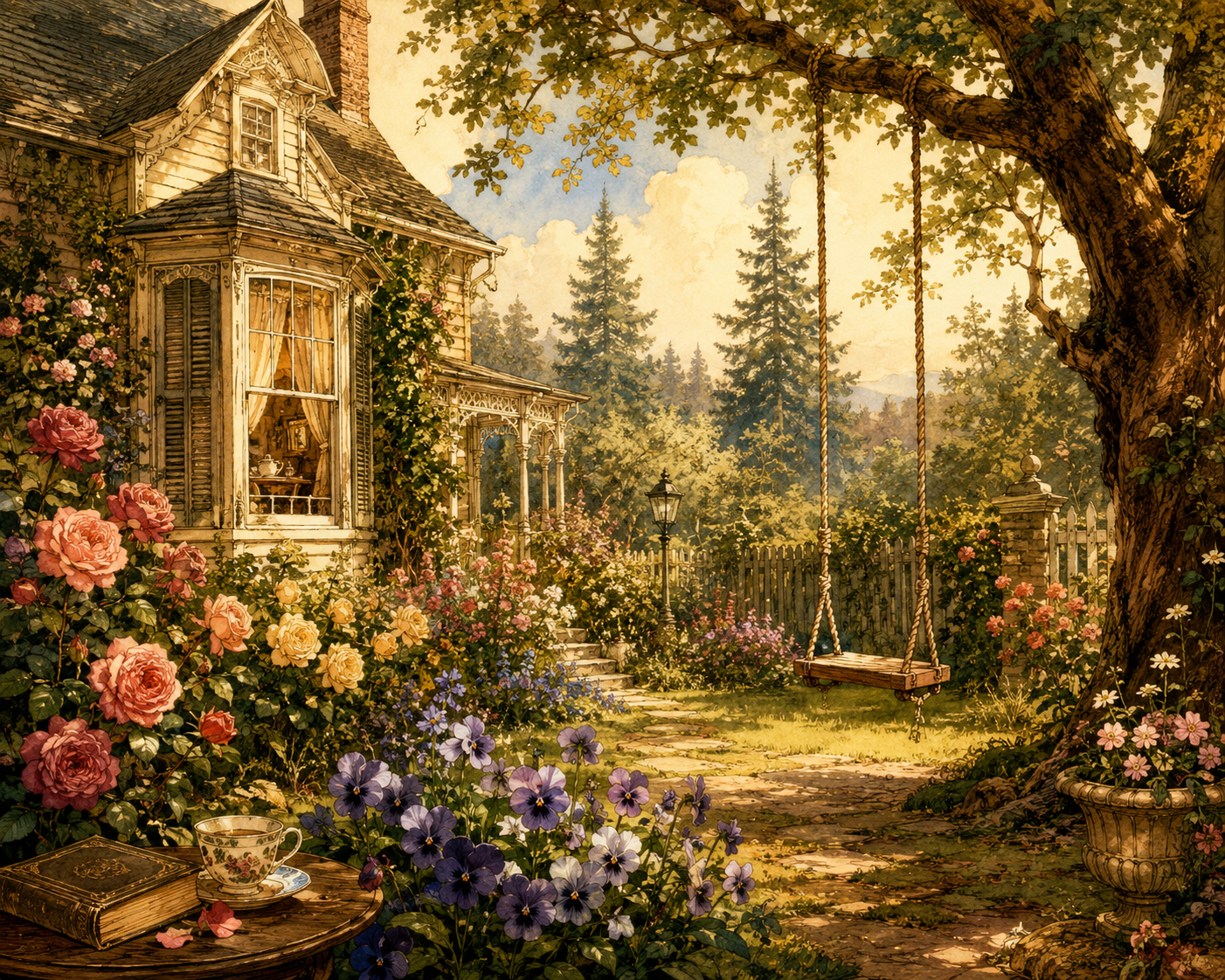
I Remember, I Remember by Thomas Hood
“I Remember, I Remember” by Thomas Hood was published in William Michale Rossetti’s The Poetical Works of Thomas Hodd(1903). The poet has romantically described his childhood that was filled with bliss and timelessness.
About the Poet: Thomas Hood – Biography and Major Works
Thomas Hood was born on May 23, 1799. He was an English poet, journalist and humorist. He is best known for his works “The Bridge of Sighs” and “the Song of the Shirt”.
Summary
I Remember, I Remember is a lyrical poem where the narrator is nostalgic and shares a very detailed description of his childhood. He remembers the house where he spent his childhood and how the sun ignited his morning. He talks about his lovely garden filled with diverse flowers. He also talks about the swing where he used to enjoy the cool breeze. In the last stanza, he says that his imagination was very insightful. He used to wonder at the marvels of nature. The fir trees compelled him to think that it used to touch the sky.
Line by Line Explanation: Stanza-Wise Meaning and Analysis
Stanza 1
I remember, I remember,
The speaker is a little boy who says that he remembers
The house where I was born,
The house where he was born
The little window where the sun
The little window in the house from where the sun
Came peeping in at morn;
Used to peep him in the morning
He never came a wink too soon,
The son is personified as if it is a human being who used to shine a lilt earlier as per the perspective of the little boy
Nor brought too long a day,
But it didn’t bring a lengthy day
But now, I often wish the night
But now he often wishes that
Had borne my breath away!
The night has taken away his breath
Stanza 2
I remember, I remember,
The speakers repeats the first line again that he remembers
The roses, red and white,
The red and white roses
The vi’lets, and the lily-cups,
The violets and the lily cups
Those flowers made of light!
These flowers were made of light
The lilacs where the robin built,
The lilacs with the robin’s nest
And where my brother set
He remembers the flower planted
The laburnum on his birthday,—
The laburnum on his birthday
The tree is living yet!
The tree is still there. This line proves that the speaker is now a grown up who has visited his hometown and his house where he grew up with his brother
Stanza 3
I remember, I remember,
The speaker repeats again that he remembers
Where I was used to swing,
The place of their swing
And thought the air must rush as fresh
He wondered as if the swallows
To swallows on the wing;
Felt the same rush of the wind as was felt by the speaker
My spirit flew in feathers then,
He clams that childhood is without burdens.
That is so heavy now,
The adult life contains so much work that the feeling of being light and unstressful is now a gift for him
And summer pools could hardly cool
The fever on my brow!
The dip in the summer pools that cooled him as a child can barely calm the heat in his brows
Stanza 4
I remember, I remember,
The speaker again repeats the first line that he remembers
The fir trees dark and high;
The fir tress that were high and dark
I used to think their slender tops
As a child he used to think that their slender tops
Were close against the sky:
Were close against the sky. It means that there tops were so close as if it touched the sky
It was a childish ignorance,
It was a childish ignorance
But now ’tis little joy
But now the speaker could realize the burden of adulthood
To know I’m farther off from heav’n
He says that his childhood days were heavenly bliss
Than when I was a boy.
And he is very far from that heavenly bliss now
Analysis
I Remember I Remember is a lyrical poem that captures vivdly the delightful days of the poet’s childhood. It is a four stanza poem with eight lines each. This 32 lines poem makes the readers nostalgic and makes them to remember their childhood. In the whole poem, the message is clear that childhood is that phase of human life which is unforgettable. You dare to forget it but you will not be able to do it. This is such a memorable experience that people often fly back to these memories to tranquilize their stress and pain.
Everyone of us remembers details of our childhood. The poet is also doing the same thing. He has remembered his house, gardens and the place of their swing. Why is this possible after leaving the place for so many years. It is because childhood etches an imprint on one’s memory and makes itself timeless.
The innocence is a bliss that is enjoyed by human beings exclusively in childhood. This innocence is heavenly bliss because the child know s to imagine and can imagine anything it wants to think. The unawareness of adult life and lack of knowledge are important to enjoy the beauty of life without mental and physical burden. And you have guess it right. This is only possible in childhood.
The poem concludes on the timeless appeal of childhood.
Major Themes in I Remember, I Remember: Important Themes of Thomas Hood’s Poem
1. Childhood Innocence, Nostalgia and Loss of Innocence
The poem celebrates the purity, imagination, and happiness of childhood. The speaker longs for a past that can never return. Growing up brings knowledge but also the loss of wonder. The poet remembers the house where he was born and the gardens where he used to play with his brother. The house had a window where sun bid him good morning everyday. He gives a colourful description of the garden in his house full of roses, violets and lily cups. He also remembers the laburnum planted by his brother. The tree has now grown up. There was a place where the speaker or the narrator used to swing and the fresh breeze which enlightens him. He also tells about the fir trees that used to ignite his imagination as a child but now everything is in the past. He could no longer relive those childhood days. This creates a sense of nostalgia in the narrator. While describing everything inch of his childhood days, he also underscores his childhood inncocence. Those were childhood ignorance that mad the narrator wonder about things. He used to think that the fir trees, being very tall, were capable of touching the sky. The poet calls this ignorance heavenly bliss because once an individual reaches adulthood, his ignorance is replaced with knowledge a nd so the imagination gets replaced with mundaneness. The narrator is very nostalgic about his childhood.
2. Passage of Time and Memory: Role of Childhood Memories
Time changes both people and their perception of the world. Memory preserves beautiful moments even when they can no longer be experienced. The childhood is a blissful time which doesnot stay forever. But it is one of the most important time period in every individual’s life. Everyone grow s up in different setting and atmosphere and starts to perceive their surrounding in their own way. The time passes quickly with a lot of preservation of the memories. This is evident through the minute and detailed description of his childhood. The narrator remembers his house, his garden, the place of their swing, how he welcomed sun in the morning as well as the place of the swing.
Literary Devices in I Remember, I Remember: Figures of Speech and Poetic Devices
Repetition
The repeated phrase “I remember, I remember” emphasizes the speaker’s longing for the past.
Imagery
The poem creates vivid pictures of: Roses, Birds, Garden, Sunshine, Blue sky. These images help readers visualize childhood.
Symbolism
• House – Childhood and family
• Garden – Innocence and happiness
• Tree – Growth and the passage of time
• Church – Spiritual guidance
• Heaven – Innocence and purity
Contrast
The entire poem contrasts:
• Childhood vs adulthood
• Joy vs sadness
• Imagination vs reality
• Innocence vs experience
Personification
Nature is described as lively and cheerful, making it seem almost human.
Tone of I Remember, I Remember: Emotional Tone of the Poem
• Nostalgic
• Reflective
• Melancholic
• Gentle
• Regretful
Mood of I Remember, I Remember: Feelings and Emotions
Readers experience Warmth, Happiness, Sentimentality, Sadness and Reflection
Structure of I Remember, I Remember: Stanzas, Lines, Rhyme and Rhythm
The poem is of Four stanzas where there are 8 lines in each stanza. This leads to total 32 lines. It has Regular rhyme and rhythm that resemble a reflective song
Central Idea of I Remember, I Remember: Main Message of the Poem
The poem suggests that childhood is the happiest period of life because it is filled with innocence, imagination, and hope. Although adulthood brings knowledge and maturity, it often takes away the simple joy and wonder that define childhood.
Important Quotations from I Remember, I Remember: Famous Lines with Explanation
“I remember, I remember, The house where I was born.”
This introduces the theme of memory and nostalgia.
“To know I’m farther off from Heaven Than when I was a boy.”
These famous concluding lines express the speaker’s realization that adulthood has distanced him from the innocence and spiritual closeness he once felt as a child.
Frequently Asked Questions
1. What is the main theme of I Remember, I Remember by Thomas Hood?
The main theme of “I Remember, I Remember” is nostalgia for childhood. The poem contrasts the innocence, freedom, imagination and happiness of childhood with the burdens and sadness of adulthood.
2. What is the central idea of I Remember, I Remember?
The central idea is that childhood is a precious and unforgettable period of life. Although people grow older and gain knowledge and maturity, they often lose the innocence, imagination and happiness they experienced during childhood.
3. What does I Remember, I Remember symbolize?
The poem symbolizes childhood innocence, nostalgia, memory and the passage of time. The house represents childhood and family, while the garden represents innocence and happiness.
4. How many stanzas are there in I Remember, I Remember?
“I Remember, I Remember” consists of four stanzas, with eight lines in each stanza, making a total of 32 lines.
5. What are the major themes of I Remember, I Remember?
The major themes include childhood innocence, nostalgia, loss of innocence, passage of time, memory, adulthood, imagination and the contrast between childhood and adult life.
6. What is the tone of I Remember, I Remember?
The tone of the poem is nostalgic, reflective, melancholic, gentle and regretful.
7. What literary devices are used in I Remember, I Remember?
Thomas Hood uses several literary devices, including repetition, imagery, symbolism, contrast and personification.
8. Why is the title I Remember, I Remember significant?
The title emphasizes the speaker’s powerful memories of childhood. The repetition of “I remember” highlights how deeply the experiences of childhood remain preserved in his memory.
9. What does the line “To know I’m farther off from heav’n / Than when I was a boy” mean?
The lines express the speaker’s realization that adulthood has taken him farther away from the innocence, happiness and heavenly bliss he experienced during childhood.
10. What is the significance of childhood in I Remember, I Remember?
Childhood is presented as a period of innocence, freedom, imagination and happiness. The speaker remembers his childhood because adulthood has brought responsibilities and burdens that have reduced the simple joy he once experienced.
Conclusion
“I Remember, I Remember” is a nostalgic poem about childhood, memory, innocence and the passage of time. Thomas Hood beautifully contrasts the freedom and imagination of childhood with the burdens of adulthood. Through vivid descriptions of his childhood home, garden, flowers, swing and trees, the poet shows why childhood remains an unforgettable and precious part of human life.
Read Skimbleshanks: The Railway Cat – T.S. Eliot Summary, Analysis and Full Study Guide
Skimbleshanks: The Railway Cat Question and Answers and Workbook Solutions