
Answer 1.Childhood memories always remain intact within us irrespective of the time elapsed. The poet remembers every ounce of jovialness and happiness that he experienced in his childhood.
The poet recalls how the sun shined in the morning and its rays propagated through the house’s window to wake him up. He personifies sun as a human who is always on time, neither arrives soon nor does it delays.
The poet also describes the vivid variant flowers and the presence of Laburnum tree which his brother planted on one of his birthdays.

Question 2. Name the flowers that are mentioned in the poem.
Answer 2. In the poem ‘I Remember, I Remember’, the poet has mentioned various species of flowers including red and white roses, violet lilies and lilacs. The description of these flowers symbolizes the presence of a heavenly aura that enveloped poet’s childhood.
Question 3. What does the poet say about swallows?
Answer 3.Swallows are migratory birds that migrate thousands of miles each year. They symbolize love, affection and loyalty of the traveler to always return to their kith and kin. They are also used as the emblem of freedom.
There can be two depictions to the usage of swallow that the poet has made in this poem. First, the poet talks about his freedom and how he used to fly in his country boundaries. He didn’t realize how his flight took him miles away from his childhood bliss. Second, the time flies as swallows and the poet realizes that his good days didn’t last long. Now, he carries the weight of the worldly stuff on his shoulder.
Question 4. What is the ‘childish ignorance’ that he refers to in the poem?
Answer 4. In his childhood, the poet used to think that those branches of the fir tree were close enough to heaven. The poet didn’t realize that he himself was in the enclave of heaven. The inability of the poet to count the fathoms between him and the heaven is referred to as ‘childish ignorance’.
For now, the poet is no longer a child and is living cumbersome days of the city life. Today, he rues for his childish ignorance.
Write in about 250 words whether or not you regret the passing of your childhood days-I REMEMBER I REMEMBERIt’s a somber reality that when we’re toddlers, we wish to grow old and when we’re adults, we wish to go back to our childhood days.
Of course, I regret the passing of my childhood days. I really miss those innocuous fights, splendid games, crazy fears and the concern of my parents that acted as a shield to protect me against everything.
Those were the days when I didn’t have to worry about anything. Also, whatever I wished was fulfilled by my parents. This self-centered world was far away from my reach. I was free to do everything and anything and I knew that if I fall, my dad was there to hold me up. But today, I have no one by my side.
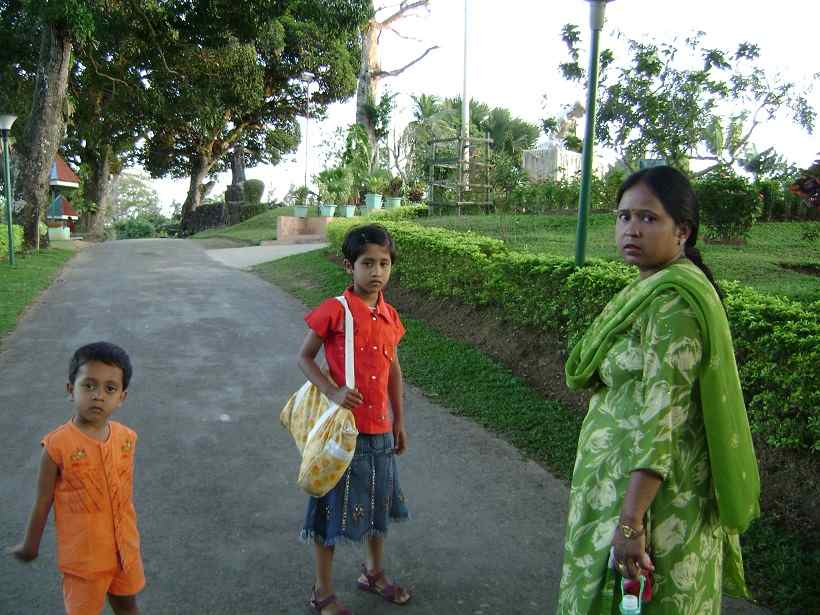
Being a toddler, fights meant not talking for a day and when the demands were not fulfilled, simply shedding off tears did everything. Today, there is no one to lend a shoulder to sob and fights mean “Good Bye for-ever”. I yearn to go back to those blessed days and stay there for an unchanged forever.
Childhood is that period of a man’s life when there’s no worries, work or anxieties and is liberated from the filthy noise of the worldly stuff. A child’s soul is the purest of all and all it desires is of love. It’s said that time flies and so does the childhood. We don’t realize how and when the childhood gets blurred and we enter into our adulthood- a sinful phase of life.
I Remember, I Remember by Thomas Hood – Workbook-Style MCQs and Reference to the Context
Part A: Multiple Choice Questions (MCQs)
1. Who is the poet of I Remember, I Remember?
a) William Wordsworth
b) Samuel Taylor Coleridge
c) Thomas Hood
d) John Keats
Answer: c) Thomas Hood
2. What is the speaker remembering throughout the poem?
a) His school days
b) His childhood home and memories
c) His travels
d) His career
Answer: b) His childhood home and memories
3. Which flower is mentioned in the first stanza?
a) Lily
b) Rose
c) Tulip
d) Daisy
Answer: b) Rose
4. The house remembered by the speaker was where he—
a) Studied
b) Worked
c) Was born
d) Lived after marriage
Answer: c) Was born
5. Which tree is mentioned in the poem?
a) Oak
b) Pine
c) Yew
d) Maple
Answer: c) Yew
6. The birds in the poem symbolize—
a) Fear
b) Freedom and happiness
c) Anger
d) Loneliness
Answer: b) Freedom and happiness
7. The tone of the poem is mainly—
a) Humorous
b) Nostalgic
c) Angry
d) Satirical
Answer: b) Nostalgic
8. The poem mainly contrasts—
a) Rich and poor
b) Town and village
c) Childhood and adulthood
d) Winter and summer
Answer: c) Childhood and adulthood
9. What did the child believe about heaven?
a) It was far away.
b) It was beneath the earth.
c) It was very near.
d) It did not exist.
Answer: c) It was very near.
10. The phrase “I remember” is an example of—
a) Metaphor
b) Simile
c) Repetition
d) Hyperbole
Answer: c) Repetition
11. Which literary device is mainly used in the description of nature?
a) Imagery
b) Irony
c) Oxymoron
d) Euphemism
Answer: a) Imagery
12. The speaker feels that adulthood has made him—
a) Richer
b) Wiser but less innocent
c) Happier
d) Stronger
Answer: b) Wiser but less innocent
13. The final line of the poem suggests that the speaker—
a) Has become closer to heaven.
b) Has lost the innocence of childhood.
c) Wishes to become a priest.
d) Wants to leave his village.
Answer: b) Has lost the innocence of childhood.
14. The central theme of the poem is—
a) War
b) Friendship
c) Nostalgia for childhood
d) Adventure
Answer: c) Nostalgia for childhood
15. The mood created by the poem is—
a) Cheerful throughout
b) Suspenseful
c) Reflective and melancholy
d) Comic
Answer: c) Reflective and melancholy
Part B: Reference to the Context (Workbook Style)
1.
“I remember, I remember,
The house where I was born,”
Questions
a. Who is the speaker?
Answer: The speaker is the poet, Thomas Hood, recalling his childhood.
b. What does the speaker remember?
Answer: He remembers the house where he was born and spent his happy childhood.
c. What mood is created by these opening lines?
Answer: The mood is nostalgic and affectionate.
d. Which literary device is used in the expression “I remember, I remember”?
Answer: Repetition.
e. What theme is introduced here?
Answer: Memory, nostalgia, and childhood.
2.
“The sun came peeping in at morn,
But my sleep was never marred;”
Questions
a. What is meant by “peeping in”?
Answer: It means the morning sunlight gently entered the room.
b. What does this suggest about the speaker’s childhood?
Answer: His childhood was peaceful, happy, and secure.
c. Which literary device is used in “the sun came peeping”?
Answer: Personification.
d. How does nature contribute to the poem?
Answer: Nature reflects the freshness and innocence of childhood.
e. What feeling do these lines evoke?
Answer: Warmth, comfort, and happiness.
3.
“The tree is living yet!”
Questions
a. Which tree is referred to here?
Answer: The tree from the speaker’s childhood garden.
b. Why is the tree significant?
Answer: It symbolizes continuity and reminds the speaker of his lost childhood.
c. What literary device is present?
Answer: Symbolism.
d. How does the speaker react to the tree?
Answer: It fills him with memories and emotional longing.
e. What theme is highlighted?
Answer: Memory and the passage of time.
4.
“My spirit flew in feathers then
That is so heavy now,”
Questions
a. What does “flew in feathers” suggest?
Answer: It suggests freedom, joy, imagination, and youthful energy.
b. Why is the spirit “heavy now”?
Answer: Because adulthood has brought responsibilities, experience, and sorrow.
c. What literary device is used in these lines?
Answer: Metaphor.
d. What contrast is presented?
Answer: The contrast between the carefree spirit of childhood and the burdens of adulthood.
e. What emotion dominates these lines?
Answer: Regret and melancholy.
5.
“To know I’m farther off from Heaven
Than when I was a boy.”
Questions
a. What does “Heaven” symbolize?
Answer: Heaven symbolizes innocence, purity, happiness, and spiritual closeness.
b. Why does the speaker feel farther from Heaven?
Answer: He feels that adulthood has distanced him from the innocence and imagination of childhood.
c. Is the speaker referring to physical distance?
Answer: No. He is referring to emotional and spiritual distance.
d. What is the significance of these concluding lines?
Answer: They express the poem’s central idea that growing older often means losing the purity and wonder of childhood.
e. Name two themes reflected in these lines.
Answer: Childhood innocence and the passage of time.
Higher-Order Thinking Questions (HOTS)
Why does Thomas Hood portray childhood as happier than adulthood?
Do you think memories can be both comforting and painful? Explain with reference to the poem.
How does nature strengthen the emotional appeal of the poem?
Explain the symbolic meaning of “Heaven” in the final stanza.
Why is the last couplet considered one of the most memorable conclusions in English poetry?
Discuss how the poet contrasts innocence with experience.
What message does the poem convey about growing up?
How does repetition contribute to the effectiveness of the poem?
Is the poem merely about childhood, or is it also about the human condition? Give reasons.
How does the poet use simple language to express profound emotions?
they are latringalso not goood latring mara camote me
yes comote ma latring mara
Good
Very long answers
Nice but should have more questions
Excellent answers
☺☺☺😊😊😀😀😁😃😃😄😇😙😚😍
That is the worst answer I have ever seen