
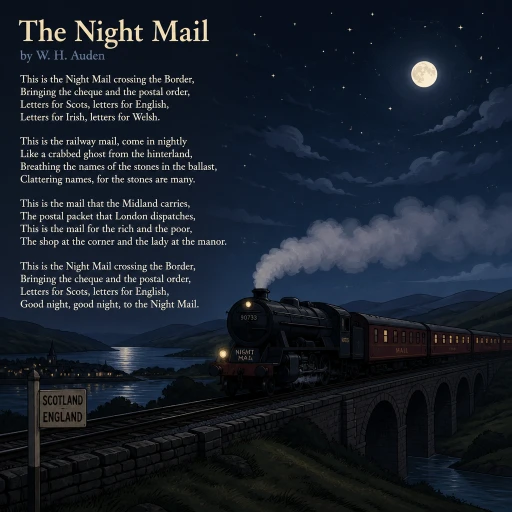
Night Mail Text of the Poem
This is the night mail crossing the Border,
Bringing the cheque and the postal order,
Letters for the rich, letters for the poor,
The shop at the corner, the girl next door.
Pulling up Beattock, a steady climb:
The gradient’s against her, but she’s on time.
Past cotton-grass and moorland boulder
Shovelling white steam over her shoulder,
Snorting noisily as she passes
Silent miles of wind-bent grasses.
Birds turn their heads as she approaches,
Stare from bushes at her blank-faced coaches.
Sheep-dogs cannot turn her course;
They slumber on with paws across.
In the farm she passes no one wakes,
But a jug in a bedroom gently shakes.
Dawn freshens, Her climb is done.
Down towards Glasgow she descends,
Towards the steam tugs yelping down a glade of cranes
Towards the fields of apparatus, the furnaces
Set on the dark plain like gigantic chessmen.
All Scotland waits for her:
In dark glens, beside pale-green lochs
Men long for news.
Letters of thanks, letters from banks,
Letters of joy from girl and boy,
Receipted bills and invitations
To inspect new stock or to visit relations,
And applications for situations,
And timid lovers’ declarations,
And gossip, gossip from all the nations,
News circumstantial, news financial,
Letters with holiday snaps to enlarge in,
Letters with faces scrawled on the margin,
Letters from uncles, cousins, and aunts,
Letters to Scotland from the South of France,
Letters of condolence to Highlands and Lowlands
Written on paper of every hue,
The pink, the violet, the white and the blue,
The chatty, the catty, the boring, the adoring,
The cold and official and the heart’s outpouring,
Clever, stupid, short and long,
The typed and the printed and the spelt all wrong.
Thousands are still asleep,
Dreaming of terrifying monsters
Or of friendly tea beside the band in Cranston’s or Crawford’s:
Asleep in working Glasgow, asleep in well-set Edinburgh,
Asleep in granite Aberdeen,
They continue their dreams,
But shall wake soon and hope for letters,
And none will hear the postman’s knock
Without a quickening of the heart,
For who can bear to feel himself forgotten?
Introduction
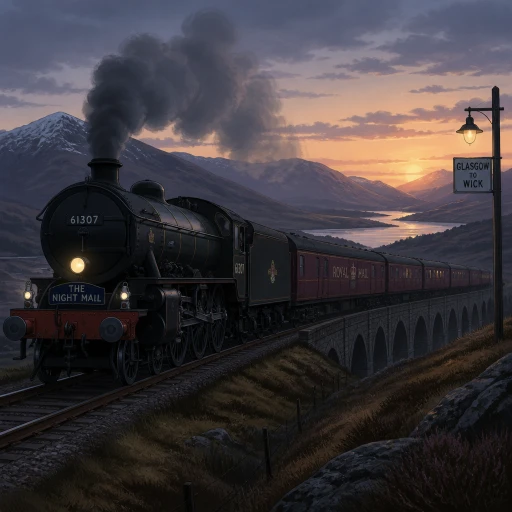
WH Auden’s “The Night Mail” is one of the most celebrated poems. It is about the overnight postal train which carried letters from London to Scotland. This poem was written for the documentary film Night Mail, produced by the GPO Film Unit.
About the Poet
W. H. Auden (1907–1973) was one of the greatest English poets of the twentieth century. His poetry deals with society, politics, psychology, love, and human relationships.
Background of the Poem
The poem was specially written for the documentary Night Mail, which follows the journey of a mail train travelling overnight from London to Glasgow. We can see the artistry of Auden where he matches the rhythm of his verses to that of the train’s movement. As the train speeds up, slows down, and climbs hills, the poem’s rhythm changes accordingly, making readers almost hear the train’s wheels on the tracks.
Night Mail Summary and Analysis
The Journey Begins
The poem commences with the Night Mail running through Scotland. It carries letters from London to Scotland various types of letters, cheques and postal orders. While carrying the letters, there is no discrimination between the rich letters and that of poor. It carries mails for people—from wealthy businessmen to ordinary villagers. The train symbolizes equality because it serves both rich and poor alike.
The Difficult Climb
The train now embarks to climb the steep terrain of Beattock. Although the gradient is difficult, the train continues steadily and remains perfectly on schedule. The train produces white steam while passing moorlands, cotton grass and rocky landscapes. The train is working extremely hard to deliver the letters. it is determined to complete the job.
Through the Silent Countryside
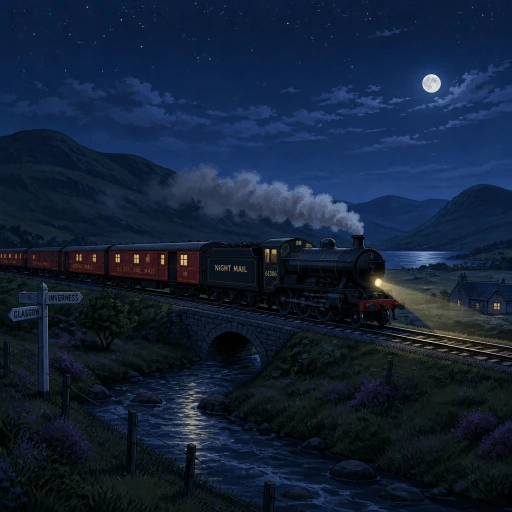
Now, the speaker describes the aesthetic rural landscape where the train passes. The birds stare at the mail; Sheepdogs cannot stop its journey; farmers are asleep in their homes while only jugs of water are affected by the movement of the train. The train moves powerfully without disturbing the peaceful night.
Arrival Towards Glasgow
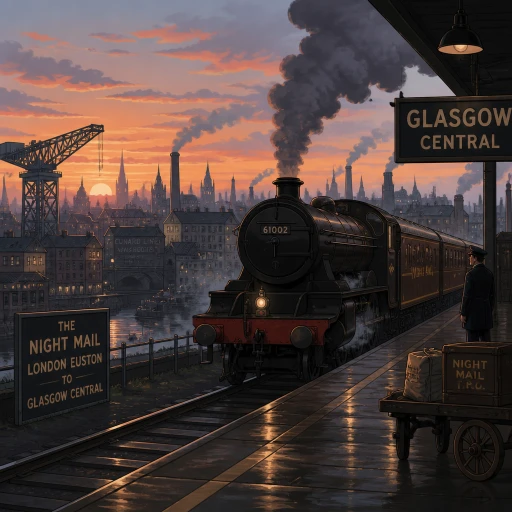
When the dawn arrives, the train reaches the industrial, urban landscape. Auden mention specific parts related to industry like Steam engines Cranes, Furnaces and Factories.The poet compares the furnaces to gigantic chess pieces standing across the plain. The entire country eagerly waits for the arrival of the mail because people long to receive news from loved ones.
The Many Types of Letters
The poet lists an astonishing variety of letters carried by the train: Business letters, Invitations, Bills, Job applications, Love letters, Family letters, Holiday photographs, Condolence letters, Financial documents, Gossip and Official correspondence. These letters differ in: Colour, Length, Tone and Purpose. This long catalogue emphasizes the diversity of human life.
Emotional Ending
Most people are still asleep while the train travels. Soon they will wake and eagerly wait for the postman’s knock.The poem ends with one of its most memorable lines:
“For who can bear to feel himself forgotten?”
This expresses the universal human desire to be remembered and loved.
Night Mail Line by line explanation
This is the night mail crossing the Border,
Bringing the cheque and the postal order,
The speaker introduces us to the night train that crosses the border bringing cheques and postal orders.
Letters for the rich, letters for the poor,
The shop at the corner, the girl next door.
It brings letters for the rich as well as poors. The letters also include letter for the shop at the corner and the girl next door.
Pulling up Beattock, a steady climb:
The gradient’s against her, but she’s on time.
The train is crossing the village of Beattcock, which is a village of Scotland. The gradient or the slope of the village is not favourable to the train. But the night mail manages to be on time.
Past cotton-grass and moorland boulder
Shovelling white steam over her shoulder,
She passes the cotton grass and boulders of the moorland. In the process of crossing the terrain, steam comes from her nozzle passing the body of the train.
Snorting noisily as she passes
Silent miles of wind-bent grasses.
She makes a lots of noise while covering miles of distance.
Birds turn their heads as she approaches,
Stare from bushes at her blank-faced coaches.
The birds stare at the night mail when she approaches. They also stare from the bushes at her blank faced coaches.
Sheep-dogs cannot turn her course;
They slumber on with paws across.
The night mail has got an assertive power due to her gaint body. Sheep and dogs are forced to turn their course.
In the farm she passes no one wakes,
But a jug in a bedroom gently shakes.
When she passes near the farm, no one wakes up. But only the jug present in the bedroom shakes.
Dawn freshens, Her climb is done.
Down towards Glasgow she descends,
Towards the steam tugs yelping down a glade of cranes
Towards the fields of apparatus, the furnaces
Set on the dark plain like gigantic chessmen.
When dawn approaches, the night mail running time is over. She reaches Glasgow, coming from the quiet natural space to the urban landscape. The mention of cranes show that the night mail has reached the industrial belt near the dockyard. The “apparatus” and “furnaces” represent the factories and industrial infrastructure that power the city. The industrial appearance of the area has been compared to the gigantic chess piece.
All Scotland waits for her:
In dark glens, beside pale-green lochs
Men long for news.Letters of thanks, letters from banks,
Letters of joy from girl and boy,
Receipted bills and invitations
To inspect new stock or to visit relations,
And applications for situations,
And timid lovers’ declarations,
And gossip, gossip from all the nations,
News circumstantial, news financial,
Letters with holiday snaps to enlarge in,
Letters with faces scrawled on the margin,
Letters from uncles, cousins, and aunts,
Letters to Scotland from the South of France,
Letters of condolence to Highlands and Lowlands
Written on paper of every hue,
The pink, the violet, the white and the blue,
The chatty, the catty, the boring, the adoring,
The cold and official and the heart’s outpouring,
Clever, stupid, short and long,
The typed and the printed and the spelt all wrong.
In this excerpt, the poet shows that the whole of Scotland eagerly waits for the arrival of the Night Mail train because it brings letters that connect people with their families, friends, and the outside world. People living in remote valleys and beside beautiful lakes anxiously wait for news of every kind.
The train carries letters of thanks, bank letters, happy messages from children, paid bills, invitations, job applications, love letters, gossip, business and financial news, holiday photographs, and letters from relatives both within Britain and abroad. It also delivers letters of sympathy to people who have suffered a loss.
The poet further explains that these letters are written on papers of different colours and vary in style and tone—some are friendly, some critical, some formal, some full of love, some intelligent, some foolish, some short, some long, and some even contain spelling mistakes. Through this long and rhythmic list, the poet emphasizes that the Night Mail carries not just letters but also the emotions, hopes, joys, sorrows, and relationships of countless people, making it an essential link that unites the entire nation.
Thousands are still asleep,
Dreaming of terrifying monsters
Or of friendly tea beside the band in Cranston’s or Crawford’s:
Asleep in working Glasgow, asleep in well-set Edinburgh,
Asleep in granite Aberdeen,
They continue their dreams,
But shall wake soon and hope for letters,
And none will hear the postman’s knock
Without a quickening of the heart,
For who can bear to feel himself forgotten?
In this concluding excerpt, the poet describes how thousands of people across Scotland are still asleep, dreaming either of frightening nightmares or pleasant experiences such as enjoying tea with friends. People in the busy industrial city of Glasgow, the beautiful city of Edinburgh, and the granite city of Aberdeen are all sleeping peacefully, unaware that the Night Mail is carrying letters towards them. Soon they will wake up and eagerly wait for the postman, hoping to receive letters from their loved ones, friends, or business associates.
The poet observes that whenever the postman knocks on the door, it fills people with excitement and anticipation because a letter makes them feel remembered, valued, and connected. The final line, “For who can bear to feel himself forgotten?”, expresses the universal human desire to be loved, remembered, and cared for. Through these lines, the poet emphasizes that letters are much more than pieces of paper—they carry affection, hope, comfort, and a sense of belonging, making the Night Mail an important link that connects people across the country.
Major Themes
Human Connection and Communication
Letters connect families, lovers, friends, and businesses across long distances. Before telephones and the internet became common, letters were the primary means of communication.The poem celebrates the importance of the postal system.
Duty and Dedication
The Night Mail performs its work regardless of: Weather, Distance and Difficult terrain. It symbolizes responsibility and commitment.
Literary Devices
Personification
The train is treated like a living being.
Imagery
The poet creates vivid pictures of:
- Steam
- Hills
- Grasslands
- Birds
- Sleeping villages
- Industrial Glasgow
Onomatopoeia
Words imitate the sounds of the train:
- Snorting
- Pulling
- Shovelling
These make the journey seem realistic.
Symbolism
| Symbol | Meaning |
|---|---|
| Night Mail Train | Duty, progress, communication |
| Letters | Human emotions, relationships, hope |
| Journey | Life’s continuous movement |
| Dawn | New beginnings and fresh hopes |
Tone
The tone changes throughout the poem:
- Energetic during the journey
- Calm in the countryside
- Excited while listing the letters
- Emotional and reflective at the end
Examination Points
- Poet: W. H. Auden
- Year Written: 1935–1936
- Form: Narrative poem written for a documentary film
- Setting: Overnight railway journey from London to Glasgow
- Major Themes: Communication, duty, equality, hope, human relationships
- Most Famous Line: “For who can bear to feel himself forgotten?
FAQ on “Night Mail”
1. What is The Night Mail by W. H. Auden about?
The Night Mail is a narrative poem by W. H. Auden that celebrates the overnight mail train carrying letters from London to Scotland. It highlights the importance of communication, human relationships, and the dedication of postal workers in connecting people across the country.
2. What is the central theme of The Night Mail?
The central theme of The Night Mail is human connection through communication. The poem shows how letters carry love, hope, business, sympathy, and important news, bringing people together regardless of distance or social status.
3. Why does W. H. Auden personify the Night Mail train?
Auden personifies the Night Mail train by referring to it as “she” to emphasize its strength, reliability, and tireless dedication. This personification makes the train appear as a hardworking and caring figure faithfully delivering letters to people throughout Scotland.
4. What are the major literary devices used in The Night Mail?
The poem uses several literary devices, including personification, imagery, simile, onomatopoeia, alliteration, repetition, catalogue (listing), and symbolism. These devices create vivid descriptions, imitate the rhythm of the moving train, and reinforce the poem’s themes of communication and duty.
5. What is the significance of the final line, “For who can bear to feel himself forgotten?”?
The final line expresses the universal human desire to be remembered and valued. It suggests that letters are more than written messages—they symbolize love, care, friendship, and emotional connection. Auden concludes the poem by reminding readers that everyone longs to feel connected rather than forgotten.
Read Official information about W. H. Auden (Poetry Foundation) and British Library article on W. H. Auden
According to the poet of “The Night Mail”, do all people have same kind of dream?
Q's/ans for 7th night mail by w h auden