
Introduction
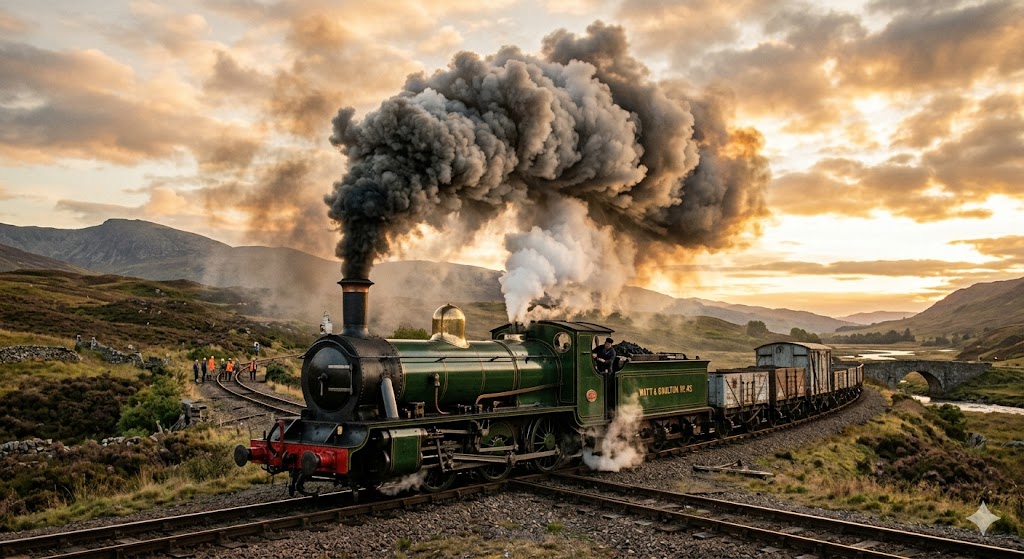
Steam whistles piercing smoky skies, factories humming 24/7, children laboring looms – welcome to the Industrial Revolution ICSE Class 9, the game-changer that birthed modern world! Starting Britain 1760-1840, it swapped handcrafts for machines.
Why must-master? High-scoring chapter (15-20 marks), questions on causes, capitalism/socialism. Links Modern Europe. Nail unit tests, prelims, boards – understand smartphones’ factory roots.
This ultimate guide: Simple notes, 150+ exam Qs/answers, timelines, mnemonics, HOTS. From Watt’s engine to Marx’s ideas – revolutionize your prep!
Chapter Overview
Industrial Revolution ICSE Class 9 defines shift to machine production (1760s Britain). Causes (capital, inventions); capitalism (private profit) rise; socialism (workers’ ownership) response to exploitation.
Themes: Innovation boom, social divide, economic ideologies.
Learning Objectives
After this, you’ll:
Define IR, list 6 causes.
Explain capitalism/socialism with examples.
Analyze pros/cons via tables.
Answer HOTS on modern links.
Detailed Explanation of the Chapter
Definition of Industrial Revolution
Machine-based mass production replacing manual labor/artisans. Phases: 1st (1760-1840: steam/textiles), 2nd (1870s: steel/electricity).
Key Change: Agrarian to industrial society; rural-urban migration.
Example: Hand-spinning → Arkwright’s water frame (1769).
Causes of Industrial Revolution
Geographical: Britain’s coal/iron.
Economic: Enclosures (1760s: farms → pastures, laborers free).
Inventions: Steam engine (Watt 1769), spinning jenny (Hargreaves 1764).
Capital: Colonies, trade profits.
Population Growth: Cheap labor.
Scientific: Royal Society.
Table: Causes
Cause-Effect: Enclosures displaced workers → factory labor pool.
Meaning of Capitalism and Causes for Rise
Capitalism: Private ownership, profit motive, free market (Adam Smith “Wealth of Nations” 1776).
Rise Causes:
Capital accumulation (merchants).
Laissez-faire govt.
Colonies raw materials.
Banking (Bank of England 1694).
Example: Factory owners rich, workers poor.
Meaning of Socialism and Causes for Rise
Socialism: Collective ownership, equality (Robert Owen, Karl Marx “Communist Manifesto” 1848).
Rise Causes:
Factory exploitation (12-hr days, child labor).
Luddites (1811: smashed machines).
Poverty, slums.
Thinkers: Marx (class struggle).
Example: Unions, later USSR.
Comparison Table: Capitalism vs Socialism
Did You Know? Luddites named after Ned Ludd – machine breakers.
Important Dates and Events
1694: Bank of England.
1764: Spinning Jenny.
1769: Watt steam.
1776: Smith book.
1811: Luddites.
1848: Marx Manifesto.
Important Terms and Definitions
Enclosures: Fencing commons.
Laissez-faire: No govt interference.
Proletariat: Workers.
Important Personalities
Timeline of Events
1760s: Textiles Britain

1769: Steam perfected

1780s: Iron/steam spread

1840s: Railways boomMnemonic: “Spinning Steam Power Looms Railways” (1764,69,85,1840s).
Cause and Effects Table
Differences Between Concepts
Comparison Tables
Pros Cons IR
Flowcharts: IR Process
Agriculture → Enclosures → Labor free → Factories → Capitalism → Exploitation → SocialismMnemonics: Causes IR
“Cool Inventions Capital Population Science” (C I C P S + enclosures).
Summary Notes for Quick Revision
IR: Machines 1760 Britain.
Causes: 6 (geo, econ).
Capitalism: Private.
Socialism: Reaction.
Exam-Oriented Study Material
Very Short Answer Questions (1 Mark)
Q1: IR start year/place?
A: 1760s Britain.
Q2: Steam improver?
A: James Watt.
Q3: Capitalism father?
A: Adam Smith.
Q4: Socialism book?
A: Communist Manifesto.
Q5: Luddites did?
A: Broke machines.
Short Answer Questions (2-3 Marks)
Q1: Two causes IR.
A: Coal resources, inventions.
Q2: Define capitalism.
A: Private ownership profit.
Q3: Why socialism rose?
A: Worker exploitation.
Q4: Enclosures effect?
A: Labor to cities.
Q5: Spinning jenny inventor?
A: Hargreaves 1764.
Descriptive Questions (5 Marks)
Q1: Explain causes IR with examples.
A: Geo (coal), inventions (jenny), capital (trade), population, enclosures, science.
Q2: Features capitalism rise.
A: Laissez-faire, banks, colonies.
Long Answer Questions (8-10 Marks)
Q1: Discuss causes IR & capitalism rise. ⭐
A: Detailed 6 causes + 4 capitalism, examples, effects.
Q2: Socialism causes as IR reaction. ⭐
A: Exploitation details, Marx, Luddites.
Q3: Positive/negative IR impacts. ⭐
A: Pros (jobs, transport); cons (slums, labor).
Assertion and Reason Questions
Q1: A: IR started Britain. R: Coal/iron.
A: Both true, R explains.
Q2: A: Capitalism = equality. R: Profit motive.
A: A false.
Match the Following
Fill in the Blanks
IR began in ___ (1760s Britain).
___ improved steam engine (Watt).
Capitalism book ___ (Wealth of Nations).
Luddites opposed ___ (machines).
Socialism thinker ___ (Marx).
True or False
IR only positive. (False)
Enclosures created labor. (True)
Socialism before capitalism. (False)
Watt invented steam first. (False – Newcomen)
Railways IR 2nd phase. (True)
Choose the Correct Option (MCQs)
Q1: IR key invention?
a) Wheel b) Steam c) Computer d) Car
Q2: Capitalism theorist?
a) Marx b) Smith c) Owen d) Ricardo
Q3: Luddites smashed?
a) Factories b) Machines c) Banks d) Farms
Q4: Rise socialism due?
a) Wealth b) Exploitation c) Inventions d) Trade
Q5: Enclosures in?
a) France b) Britain c) USA d) Germany
Case Study-Based Questions
Case: 1811 Nottingham, Luddites destroy looms fearing jobs loss.
Q1: Context? (2m)
A: IR unemployment.
Q2: Link socialism? (3m)
A: Worker protest precursor.
Source-Based Questions
Source: “Invisible hand” – Smith.
Q: Book? Principle?
A: Wealth of Nations, market self-regulate.
Source 2: “Workers arise” – Marx.
A: Manifesto, class struggle.
HOTS Questions (Higher Order Thinking Skills)
Q1: IR caused world wars? How? ⭐ (5m)
A: Imperialism, inequality.
Q2: Modern IR 4.0 comparison? ⭐
A: AI vs steam.
Competency-Based Questions
Q1: If no IR, today world?
A: Agrarian slower progress.
Picture-Based Questions
(Steam engine pic)
Q: Inventor? Significance?
A: Watt, power revolution.
(Factory kids) Child labor issue.
Previous Year ICSE Questions (with answers)
2024 Q: Causes IR (5m). ⭐
A: As above.
2023 Q: Capitalism socialism diff (3m).
A: Table points.
Expected Questions for Exams
Long causes capitalism.
IR effects table.
Most Important Questions ⭐
Causes IR detailed.
Rise capitalism/socialism.
Pros cons IR.
Special Student-Friendly Features
Exam Tips
Tables for causes/comparisons = full marks.
Link to today (AI revolution).
Common Mistakes:
IR France not Britain first.
Socialism = communism (no, broader).
Smart Revision Strategies:
Mnemonic flashcards.
Draw timeline inventions.
Frequently Confused Concepts:
Capitalism (profit) vs Socialism (share).
Teacher Tips:
Watch “Industrial Revolution documentary” clips.
Debate cap vs soc.
Last-Minute Revision Notes:
Causes: Geo-resources, inventions (jenny, steam, loom), capital, pop, enclosures, science.
Cap: Smith, laissez-faire.
Soc: Marx, labor abuse.
Remember This Box:
Watt’s steam: “Separate condenser” key improvement!
Did You Know? Facts
1st factory: Lombe silk 1717.
Marx wrote in British Museum (IR heart).
Women 50% factory workers.
FAQ Schema Questions with Answers (Industrial Revolution)
1. What is the definition of Industrial Revolution in ICSE Class 9?
The Industrial Revolution was the period of rapid industrial growth that began in Britain during the 18th century. During this time, machines replaced hand production, factories were established, and new methods of manufacturing transformed industries, transportation, and society.
2. What were the main causes of the Industrial Revolution in Britain?
The main causes of the Industrial Revolution in Britain were the availability of natural resources such as coal and iron, the growth of trade and colonies, agricultural improvements, the availability of capital, political stability, and important inventions in machinery and transportation. Britain’s strong navy and expanding markets also encouraged industrial growth.
3. What is the meaning of capitalism and what were the causes for its rise?
Capitalism is an economic system in which industries, businesses, and means of production are privately owned and operated for profit. The rise of capitalism was caused by the growth of trade and commerce, industrialization, colonial expansion, banking development, and the accumulation of wealth by merchants and industrialists during the Industrial Revolution.
4. What is socialism and what were the reasons for its rise?
Socialism is an economic and political system that supports collective or government ownership of industries and aims at reducing social inequality. Socialism rose because factory workers suffered from low wages, poor working conditions, unemployment, and exploitation during the Industrial Revolution. Thinkers and reformers demanded greater social and economic equality for workers.
5. What were the positive and negative effects of the Industrial Revolution?
The Industrial Revolution had many positive effects such as increased production, technological progress, improved transportation, growth of trade, and higher standards of living for many people. However, it also had negative effects including overcrowded cities, pollution, child labor, poor working conditions, exploitation of workers, and a widening gap between the rich and the poor.
Conclusion
Industrial Revolution ICSE Class 9 recaps machines reshaping world, sparking capitalism’s wealth & socialism’s equity fight. Causes locked, ideologies clear – you’re powered up!
Revise timelines, practice Qs – like factories churning A’s! Boards call – innovate victory. Favorite invention? Comment!