

Introduction to History
The story of human civilisation can be broadly divided into ancient, medieval and modern. Of these, the Ancient period is the longest one. It is said that about 3.6 million years ago, primates which came to be known as hominids began to be differentiated from the anthropoid apes such as the chimpanzees and gibbons. Many species of hominids appeared on earth over the next three million years, at last giving rise to species Homo Sapiens, the modern man.
The ancient age has been divided into three divisions-Pre-historic age, Proto-historic age and Historic age.
3 divisions of the ancient period
As we already know, the ancient period is divided into three ages: pre-historic age , proto-historic age and historic age.
Pre-historic period
The term “pre-history” means “before the recorded history.” It was first used in the 1830s by the French archaeologist Paul Tournal while describing some caves that he had discovered in France. It was first used in English by Daniel Wilson, in 1851.
This term refers to the period from the dawn of human civilisation to that stage of human development for which no literary records are avaiable , and historians are solely dependent on archaeological records.
Pre- history is the history of the period before writing was invented. there are no written clues or records of this period. our knowledge of prehistory is based solely on archaeology.
Archaeology is the study of material remains of the distant past. it is also referred as the digging up of the past since many of these ancient remains have been found buried under the earth.
Prehistory is studied and reconstructed with the help of Archaeological remains such as bones coins tools jewellery ruins of buildings and so on.
Archaelogists study the tools, weapons, pottery, artefacts, remnants of settlements etc to build up a picture of the contemporary state of human development.
It is difficult to date the ancient tools and artefacts found by excavators, chronological accuracy is often impossible to achieve for this period.
Pre-history has been divided into more sub-periods, characterized by the level of tool-making of each period. These three periods are the Paleolithic Age, the Mesolithic Age, and the Neolithic Age.
The age of Pre-history ends when written records are available for an age.
Proto-Historic Age
The time frame of this period has been calculated by the historians on the basis of three separate assumptions. The first assumption is certain cultures had the knowledge of writing and had invented a script, but that script has not yet deciphered. Proto-history refers to a period between pre-history and history when a culture had not developed literacy, but had been mentioned in the historical records of more advanced people. In its simplest form, proto- history refers to a chronological division of cultures based on the level of advancement in their use of metals.
Thus, it denotes the period starting from the Copper Age, including the Bronze Age and continuing till the advent of the Iron Age.
The Historic Age| What is history and its importance
The period after the invention of writing is known as the history.
Writing developed about 5000 years ago. our knowledge of history is largely based on written records
The early writings was on rocks stone walls pillars clay tablets skins of goats and sheep known as parchments Palm leaves and the bark of birds trees
Paper was invented much later and used for writing.
History is the fascinating and true story of human growth from barbarism to civilization.
It is a record of people places and events of the past arranged in chronological order. the story of our ancestors their lifestyles occupations customs and traditions religious beliefs social and political systems and cultural patterns.
Historians are people who study and tell us about the past. the gather information from many sources and help us to understand how people lived and worked from earliest times to the present day.
A period began when a culture of writing developed and began to take shape properly.
In Egypt and Mesopotamia, writings was invented around 3000 B.C. , and the scripts have been deciphered. From the inscriptions and records of this time, a large volume
In India, though a vast body of literary sources of the Aryan civilisation is available in the form of Vedic literature, it is believed that the Aryans had no knowledge of writing. The generally accepted view is that recorded history began in India with the Ashokan edicts issued after 260 B.C.
Sources of History
Definition and Classification of Sources| Types of historical sources in history
The various sources of history are like the many pieces of a Jigsaw puzzle. A historian solves the puzzle of our remote past by painstakingly and intelligently putting together these pieces to form a clear and well defined picture.
These pieces of the puzzle or the clues which help the historian to put together a period of history are known as sources.
The sources can be broadly classified into two groups archaeological and literary sources of history.
What are the Archaeological sources and its various types
Great civilizations have blossomed and disintegrated and have been forgotten by humans for thousands of years.They were dug up centuries later by archaeologists. Archaeological sources are of three kinds
- monuments and objects
- coins and
- inscriptions and edits
- humans or animals skulls and fossils of animals humans are plants provide historians with valuable insights into the pastbjects
Monuments And Objects
Monuments are old buildings such as temples palaces and Forts which are valuable sources of information about the lives and times of people.

Objects
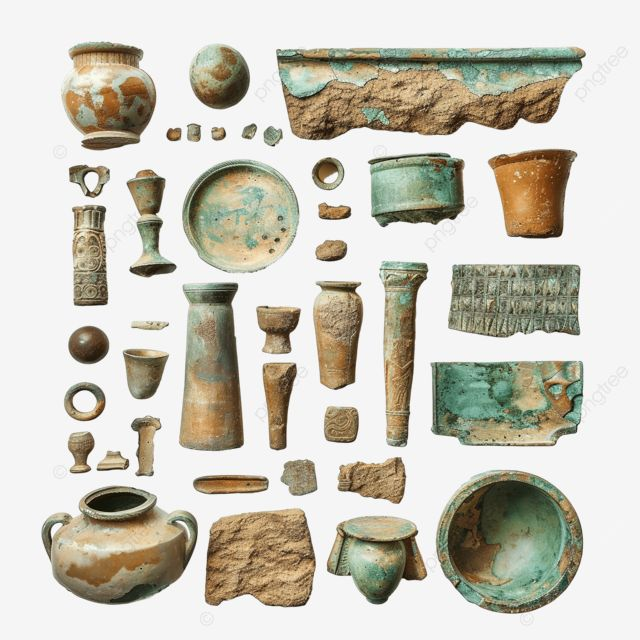
objects such as tools weapons pottery statues ornaments seals toys paintings coins etc help historians to reconstruct the past about which there are no written records.
Fossils
From the inception of Earth’s birth, it has experienced various changes in the environment and geological composition which are oftenr defined as ‘geologic ages”. The world of flora and fauna was also affected by these changes , leading to the extinction of many species of plants and animals. The fossils of these plants and animals formmprimary source material for the historians. The differences in the shapes of the jaw, cranium teeth and other features of skull have helped in the evolution of the human race.
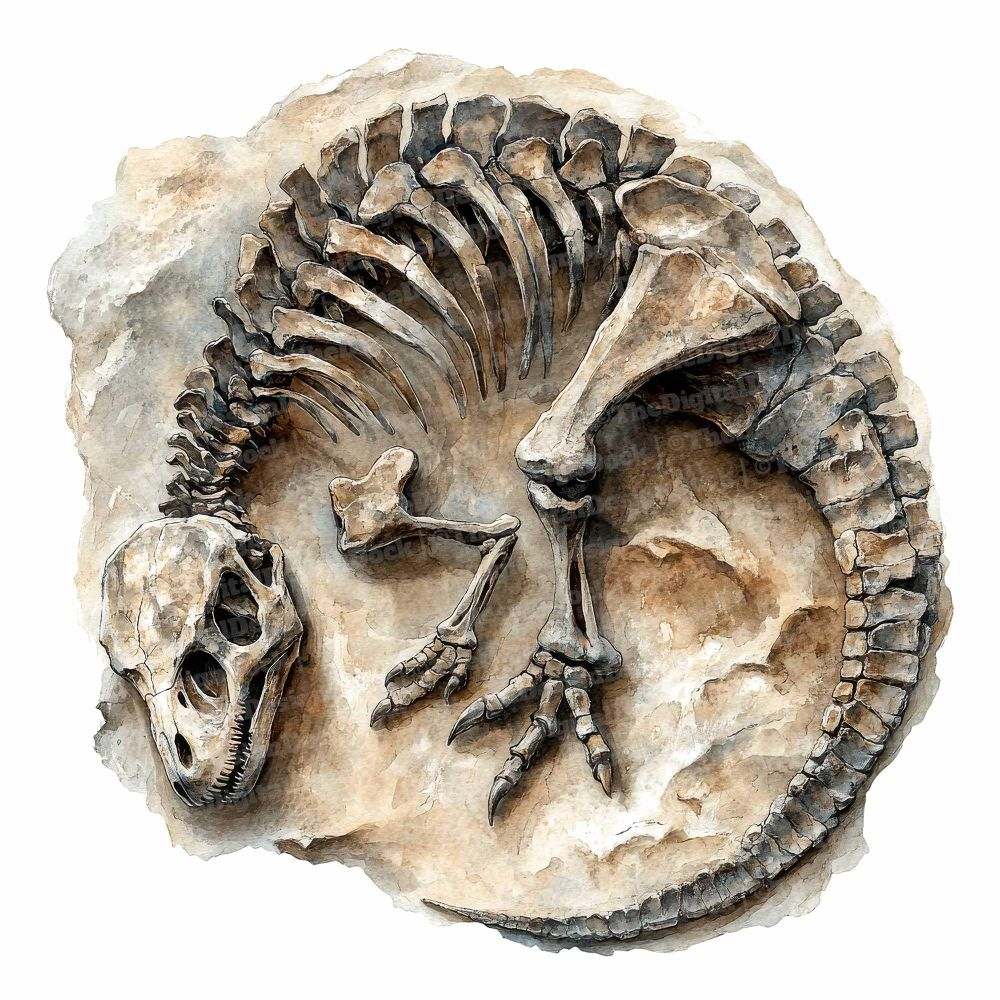
Humans or animals skulls and fossils of animals humans are plants provide historians with valuable insights into the past.
Example: Fossil remains of the hominid Ramapithecus, discovered in Kenya, of Australopithecus, discovered in South Africa and of the Peking man, Heidelberg man, neanderthal Man, Rhodeshian Man, and Cromagnon man have enriched the understanding of the evolution of modern man.
Coins
The study of coins is known as numismatics. Numerous gold silver copper and lead coins have been found they are an important source of information about the reign of Kings, the extent of their Empires, economic conditions, trade, art and religion of that era. The metal or alloy in used also indicates the level of scientific advancement during that age. Many aspects of the Kushan Empire have been reconstructed from the gold and copper coins issued later during that period
Inscriptions And Edits
Inscriptions are the engravings on solid objects such as metal and stone tablets rocks pillars cave walls etc these inscriptions provide us with valuable information about rulers the extent of the empires, important events and many other aspects of the political conditions of a particular period. They also tell us a great deal about the religious and cultural life of the people. sons are reliable and useful of information since they were written during the reign of great kings and are preserved in their original form. The study of epigraphs or old inscriptions is known as epigraphy. The study of ancient scripts is called Paleography. It includes the reading , decipherment and dating of ancient scripts, inscriptions and manuscripts.
Different ancient scripts of the world
The Sumerian Script
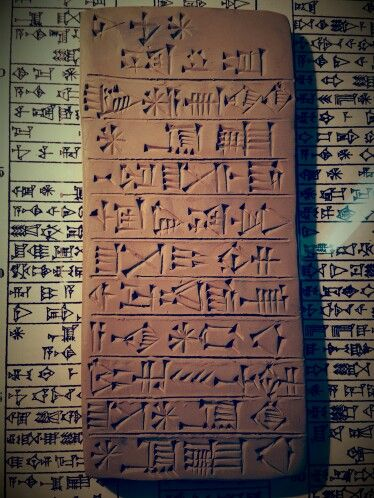
- The ancient Sumerians were supposed to be the first people to have invented a script. It was pictographic in form, but later cuneiform, the script with wedge-shaped letters, was developed.
- The Sumerians used a sharp stylus to inscribe letters on the clay tablets and then these tablets were baked.
- It was written from left to right .
- These scripts have been discovered in Akkad.
The famous code of Hammurabi is a set of laws inscribed in the cuneiform scriptupon anoctagonal clay tablet. It is one of the oldest deciphered writings and is the longest surviving text from the Babylonian period. It is the world’s earliest law digest and was compiled by Emperor Hammurabi himself. It conssits of 282 laws arranged logically and with care in orderly groups intended for public view. The laws covered thr major subjects of religion, military service, trade and commerce, slavery, duties of workers, punishment for theft, terms of contract and transactions as well as issues of household and family relationships.
The Egyptian script
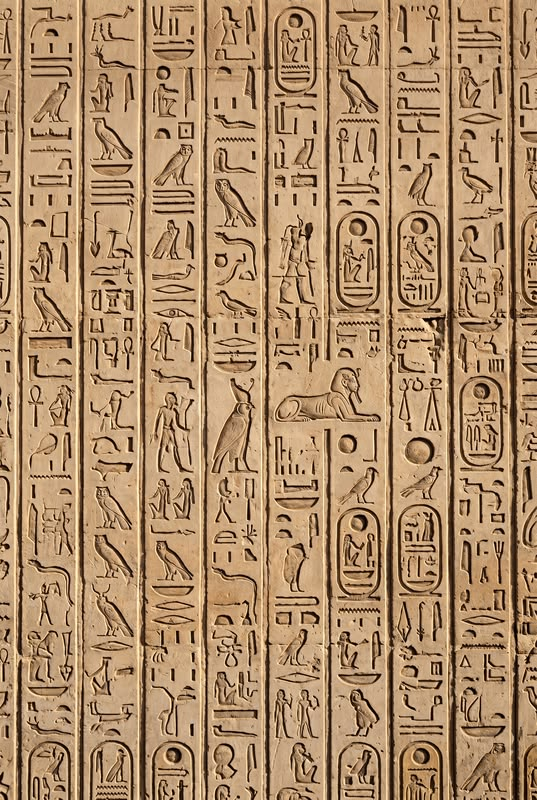
The Egyptian developed their own scripts after the Sumerians. It is called Hieroglyphic which was pictorial in form.
- It was used to record information on temple walls or on the pyramids. These inscriptions generally dealt with state matters or religious subjects
- It was a very complex script and not suitable for merchants or traders to use as a language of transaction.
- Later, the more simplified versions of the script emerged called the Hieractic and the demotic Scripts.
- The Demotic script was used by the common people.
- The ancient Egyptians used the leaves of the papyrus plant to write.
The Indus Script
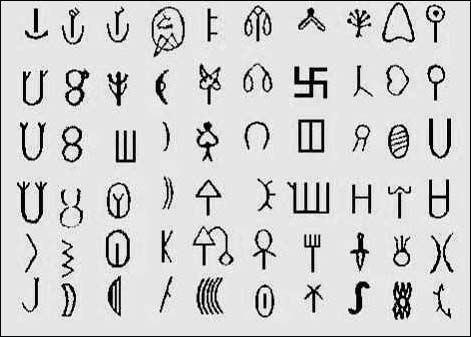
- The people of the Harappan Civilisation also developed a script called the Indus script.
- Plenty of seals inscribed with these symbols have been discovered in Mohenjodaro, Harappa and other archaeological sites of this civilisation.
- Many scholars such as Father Heras, Smith, Langdon, Hunter, Allchin and Swami Shankarananda have tried to decipher this script, none have been able to unravel its mystery.
Edicts
Edicts are royal commands issued by the rulers. The Ashokan edicts inscribed on rocks and pillars have helped modern in story historians to reconstruct important facts about the Mauryan period.
Literary sources
Handwritten records of the past in the form of books are known as manuscripts.
Records were written on a variety of surfaces dried sheep or goat skin dried Palm leaf of birds trees and much later on paper. India has a very rich collection of ancient manuscripts
Literary sources can be divided into two categories religious and secular.
Early Human Life
Now, let us proceed to the early humans and their lives in order to get a clear frameowork and chronology of human development
Introduction to Early Human Life and Evolution
Planet Earth’s story and its first human inhabitants continue to puzzle scientists even today.
The evolution of humans from apes to the present form started about 1500 million years ago, and it took many millions of years to complete this process of physical evolution.
In the earliest stages of physical development, humans or hominids walked on four legs.
Over a period of time, they began to walk upright. The erect posture of humans, or Homo erectus, helped them to see further in all directions and also allowed them to freely use both their hands.
In earliest times, prehistoric humans lived alone in caves or natural shelters such as trees and groves. They ate wild berries, roots, fruits, insects, worms, and the flesh of small animals that they killed. They had no weapons and used their bare hands to kill. Their bodies were covered with thick hair, and they did not wear any clothes.
The modern humans, Homo sapiens, finally appeared about 40,000 years ago. They had mastered the art of making tools. Till 3000 BCE, early humans used stone on a large scale for various purposes. This period is known as the Stone Age.
The Prehistoric period or Stone Age can be further divided into four broad periods:
- Paleolithic Age or Old Stone Age
- Mesolithic Age or Middle Stone Age
- Neolithic Age or New Stone Age
- Chalcolithic Age or Copper Stone Age
The Earth is over 4000 milion years old. The evolution of its crust shows four stages.
The fourth stage is called the Quaternary, which is divided into Pleistocene(most recent) and Holocene(present); the former lasted betweeen 2,000,000 and 10, 000 years before the present and the latter began about 10,000 years ago.
Man is said to appear on the Earth in the early pleistocene, when true ox, elephant and horse also originated.
The earliest period is called the Paleolithic Age. This comes from two Greek words, “paleo” , meaning old , and “lithos” , meaning stone.
Paleolithic Age or Old Stone Age: Key Features and Lifestyle of Early Humans
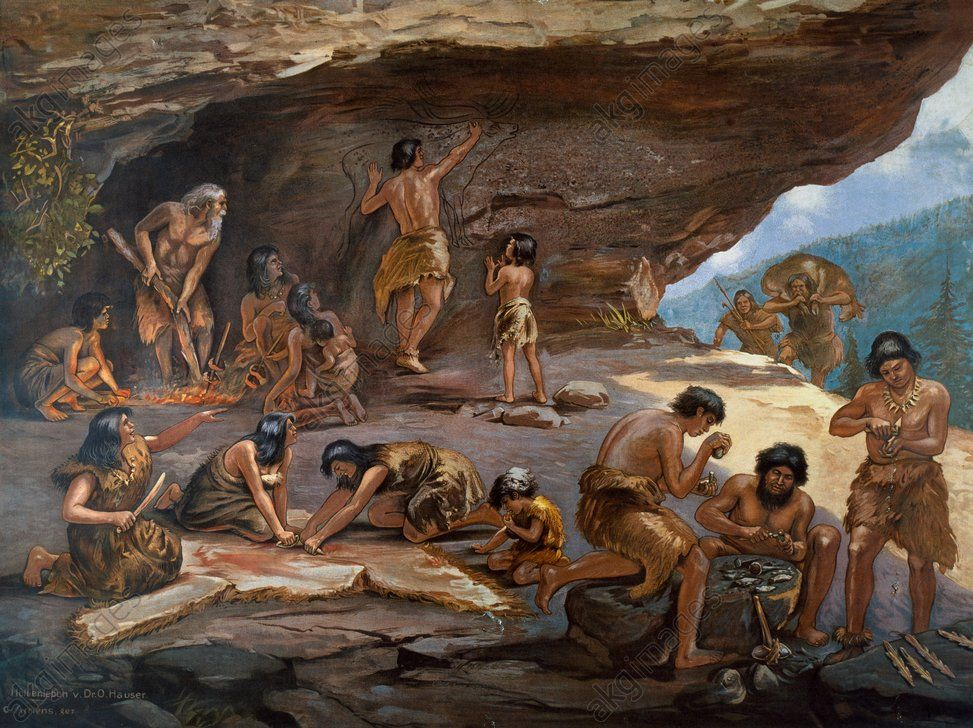
The first stage of human civilization is known as the Old Stone Age or the Paleolithic Age.
This period extended roughly from 500,000 BCE to 10,000 BCE.
During this period, humans made crude stone tools.
The humans of the Old Stone Age used their enlarged brains and flexible hands to make their lives better and more secure than the apes.
Main Features of the Old Stone Age
Crude Stone Tools Used by Paleolithic Humans
The Paleolithic humans were the first to make stone tools. They began making crude, unpolished stone tools. Large pieces of stones were shaped into hammers, scrapers, and axe heads. These tools were used for cutting trees, killing and skinning animals, chopping meat, and digging up roots.
Food and Hunting Practices of Old Stone Age Humans
The humans of the Old Stone Age were hunters and food gatherers. They did not know how to grow crops. Their food consisted of fruits, nuts, eggs of birds, and raw flesh of animals and birds.
Shelter and Cave Dwellings in the Paleolithic Age
Early humans did not build houses. To protect themselves from wild animals, they took refuge in caves or on trees. Caves protected them from the elements of nature and bad weather conditions.
Clothing and Protection from the Elements
During this period, humans did not wear clothes. Gradually, they learnt to use the barks of trees, leaves, and animal skins to protect their bodies from the cold and the rain. Later, they made clothes by stitching animal skins with bone needles.
Social Life and Nomadic Lifestyle of Early Humans
To protect themselves from wild animals, early humans began to form small groups. They lived a nomadic life, moving from place to place in search of food.
Cave Paintings and Artistic Expression of Primitive Humans
Primitive humans were skillful artists. They painted animal pictures and hunting scenes on cave walls. These pictures were lively and colourful. They also engraved pictures on ivory horns and flat bones.
Discovery of Fire: A Major Achievement of Early Humans
The greatest achievement of early humans was the discovery and use of fire. Initially, humans used naturally caused fire, for example, bush or forest fires or lightning. Later, they found that rubbing two dry stones together produced sparks of fire. They learnt to roast meat, keep themselves warm, and frighten animals by keeping a fire burning at the entrance of their caves.
Phases in the Paleolithic Age
The Paleolithic Age in India is divided into three phases according to the nature of the stone tools used by the people.
Lower Phase : Also, called Lower Paleolithic. It can be placed broadly between 500,000 B.C. and 50,000 B.C.The first phase tools have been located at the site of Pallavaram near Chennai by Robert Bruce Foote in 1863. He found many prehistoric sites, when he extensively surveyed different parts of South India. It covers the greater part of the Ice Age. Its characteristic feature is the use of hand axes, cleavers and choppers. The sites are found in the valley of river Soam or Sohan in Punjab .
Middle Phase: It can be broadly placed between 50,000 B.C. and 40,000 B.C. The tools belonging to Middle phase has been found near Deccan.
Upper Phase: It can be broadly placed between 40,000 B.C. and 10,000 B.C.
Middle Stone Age: Transition Period in Human Evolution
The Paleolithic Age was followed by the Middle Stone Age or the Mesolithic Age.
This period extended roughly from 10,000 BCE to 8,000 BCE.
This period was much shorter as compared to the previous age.
It was actually a transition period leading to the next distinctive phase of evolution, that is, the Neolithic Age.
Main Features of the Middle Stone Age
Advanced Stone Tools and Microliths of the Mesolithic Age
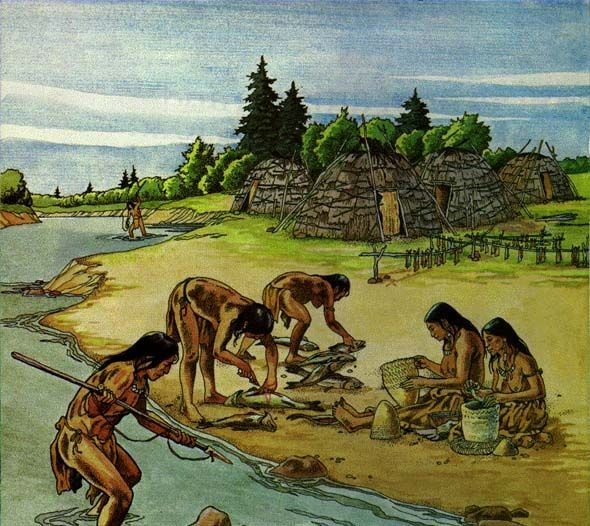
The tools used during this period were more advanced than Paleolithic tools. These tools, called microliths, were smaller, sharper, and more effective than those of the Old Stone Age. Besides stone, animal bones and horns were also used to make scrapers, hooks, borers, hammers, and arrowheads.
Occupation and Early Agriculture in the Middle Stone Age
Humans were hunters and food gatherers during this period. Towards the end of this period, they learnt about growing crops and cultivation.
Neolithic Age or New Stone Age: Transition from Food Gatherers to Food Producers
The New Stone Age or the Neolithic Age is the period extending roughly from 8,000 BCE to 4,000 BCE.
During this period, humans improved their lifestyles.
They built mud houses, grew crops, domesticated animals, and invented the wheel.
They gave up their nomadic life and settled down, transforming themselves from food gatherers to food producers.
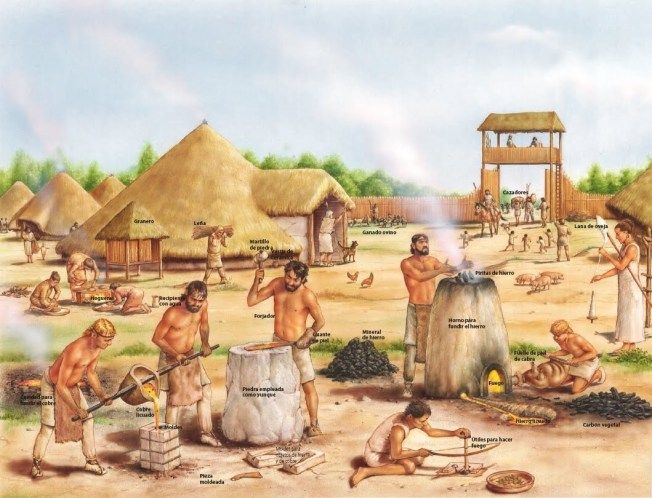
Main Features of the New Stone Age
Improved Stone Tools and Polished Implements
One of the important characteristics of the New Stone Age was the marked improvement in the quality of stone tools. The stone tools were well-shaped and polished. Humans used digging sticks to till the soil and stone sickles to reap the crops. Their axes were larger and attached to wooden handles. Well-chiselled stone knives were used to cut plants, fruits, and meat. Bone tools were widely used during this period.
Agriculture and the Beginning of Farming in the Neolithic Age
Farming began in this period, probably after humans discovered that wheat and barley were edible. Humans might have observed that grains buried in the soil grew and yielded food crops.
Domestication of Animals for Food and Labour
Taming animals to serve their needs was an important development of the Neolithic Age. Dogs, goats, sheep, and cattle were domesticated. These animals supplied milk, meat, and skins. Now humans did not have to go on dangerous hunting trips in search of food. Life became safer and easier. Bullocks, donkeys, and horses were later used to plough the fields.
Invention of the Wheel and Its Impact on Civilization
The invention and use of the wheel was a major milestone in the evolution of civilized humans. It brought about a great transformation and made life easier and more comfortable. The potter’s wheel was used to make better pottery. Sometime later, the wheel was used for transportation and for carrying loads.
Pottery and Utensils for Storage and Cooking
Humans needed pots to store grains, water, and food. They had learnt to cook and needed utensils for cooking. At first, they made wicker baskets plastered with clay. The invention of the potter’s wheel was a boon for potters. They made pots of various shapes and sizes. Pots were often decorated with floral designs and geometrical patterns.
Settlements and Early Villages in the New Stone Age
Agriculture and domestication of animals brought about a dramatic change in the life of humans. They gave up the nomadic lifestyle and settled down. They built mud houses with thatched roofs and lived in groups in small villages.
The population increased, and human life became more organised.
Division of Labour and New Occupations in Neolithic Society
Humans now lived a settled life. This led to new occupations and specialization of labour. Agriculture was the main occupation. Some people kept herds of animals and became shepherds. Fishing and domestication of animals were important occupations too. Hunting became a sport or a pastime. The need for pottery, tools, clothes, and flint or hard stones led to specialization in occupations.
Dress and the Art of Spinning and Weaving
Humans had developed the art of spinning and weaving. Cotton and woollen clothes replaced the clothes made of skins of animals and barks of trees.
Barter System and the Early Economy of Villages
The villages became self-sufficient. The needs of humans were simple. Everything they needed was produced in the village. Payment for services was made in kind, not in cash. For example, the potter got food grains in exchange for pots and vice versa. This system of exchanging services and goods is known as the barter system.
Social Life and the Emergence of Village Headmen
From the earliest times, people had been living in groups. As the population increased, it became necessary to have a code of life to regulate and control the activities of people. With the passage of time, these rules became established customs. The oldest, wisest, or the strongest man in the village was chosen as the village headman. He maintained law and order in the village and protected the people from enemies.
Religion and Worship of Nature in Early Human Societies
Early humans did not understand natural phenomena. They were afraid of lightning, thunder, seasonal changes, and natural calamities such as floods and earthquakes. They saw them as mysteries that were beyond their control. So, they began to worship the forces of nature, and the sky, sun, rain, thunder, lightning, etc., became their gods. Ceremonies were performed to please them.
Neolithic Sites discovered in India
The only neolithic settlement in th eIndian subcontinent attributed to 7000B.C. lies in Mehrgarh, which is situated in Baluchistan, a province of Pakistan.
After that, the neolithic sites found in India are on the northern spurs of the Vindhyas that are as old as 5000B.C. The second group of neolithic people lived in South India, south of the Godavari river. they usually settled on the tops of granite hills or plateaus near the river banks. The third area from ehich neolithic tools have been recovered is in the hills of Assam. They are also found in the Garo hills in Meghalaya on the north-easatern frontier of india.
Copper Stone Age: Transition to the Age of Metals
This period, known as the Copper Stone Age or Chalcolithic Age, was a brief but significant period in the life of humans.
This period extended roughly from 4,000 BCE to 2,000 BCE.
It was an age during which both copper and stone tools were used.
This age was a period of transition.
It marked the end of the New Stone Age and the beginning of the Age of Metals.
Main Features of the Copper Stone Age
Discovery of Metals and the Use of Copper Tools
The first metal discovered by humans was copper. Copper implements such as axes, knives, swords, and spearheads were better and more useful than stone tools. In course of time, humans learnt the art of making copper alloy, that is, mixing copper with tin to form a harder and stronger metal called bronze.
Society and Economy in Chalcolithic Settlements
Chalcolithic settlements were rural in nature. They were producing far more food than they needed and in much less time. This freed them from the burden of hard labour. They now had enough time to devote to other activities. Division of labour became more organised and specific. Society became classified into different groups.
Beginning of the Iron Age and Its Significance
An important advancement occurred in the history of humans with the discovery and use of iron. Iron is harder than copper and bronze and was available easily and in plenty. The Iron Age began in about 1200 BCE, when iron implements began to be used.
Frequently Asked Questions (FAQs)
Q1: What is the Stone Age and how is it divided?
A: The Stone Age is the prehistoric period when early humans widely used stone to make tools and weapons. It is divided into the Paleolithic (Old Stone Age), Mesolithic (Middle Stone Age), Neolithic (New Stone Age), and Chalcolithic (Copper Stone Age).
Q2: What were the main features of the Old Stone Age?
A: The Old Stone Age was characterized by crude stone tools, a nomadic lifestyle, hunting and food gathering, cave shelters, cave paintings, and the discovery of fire.
Q3: How did early humans discover fire?
A: Early humans first used naturally occurring fire from forest fires or lightning. Later, they learned to create fire by rubbing two dry stones together to produce sparks.
Q4: What is the difference between the Paleolithic and Neolithic Ages?
A: The Paleolithic Age was a period of nomadic hunters and food gatherers using crude stone tools, while the Neolithic Age marked the transition to settled farming communities, polished stone tools, domestication of animals, and the invention of the wheel.
Q5: What was the barter system in early human societies?
A: The barter system was a method of exchange where goods and services were traded directly without using money. For example, a potter would exchange pots for food grains from a farmer.
Q6: Why did early humans worship nature?
A: Early humans did not understand natural phenomena like lightning, thunder, floods, and earthquakes. They believed these forces were controlled by powerful spirits or gods, so they worshipped the sun, rain, sky, and other natural elements to seek protection and favour.
Q: What is the difference between prehistory and history?
A: Prehistory refers to the period before writing was invented, relying solely on archaeological findings. History begins after the invention of writing (about 5000 years ago), which allows for written records.
Q: What are the two main sources of history?
A: The two main sources are Archaeological (physical remains like monuments, coins, and inscriptions) and Literary (written records like manuscripts, religious texts, and secular books).
Q: What is the study of coins called?
A: The study of coins is known as Numismatics.
Q: What are edicts in history?
A: Edicts are royal commands issued by rulers. A famous example is the Ashokan edicts, which were inscribed on rocks and pillars to convey the king’s messages.
Conclusion
The journey of early human life from primitive wanderers to settled farmers is one of the most remarkable stories in world history. From the crude stone tools of the Old Stone Age to the polished implements of the New Stone Age, and finally to the discovery of metals in the Copper and Iron Ages, each phase brought significant advancements. The discovery of fire, the domestication of animals, the invention of the wheel, and the rise of agriculture transformed human existence, laying the foundation for modern civilization. Understanding these early human societies helps us appreciate the ingenuity and resilience of our ancestors, who overcame immense challenges to build the world we live in today.